Water for Sale: The Business of Thirst

Njoki Kangethe
There is a strange irony at the heart of water inequality in many African cities: the people with the least often pay the most for water.

In wealthy neighborhoods, water usually arrives quietly. It flows through kitchen taps into filtered dispensers, rooftop tanks, bathtubs, swimming pools, and carefully watered gardens. Shortages, when they happen, are often softened by generators, boreholes, storage systems, or the ability to order private deliveries.

But in many low-income communities across the continent, water is rarely invisible. It is seen, carried, queued for, negotiated over, rationed, and bought expensively in small quantities every single day.

For millions of urban residents, access to water depends less on public infrastructure and more on an informal economy built around scarcity itself. And business, as always, finds opportunity where systems fail.
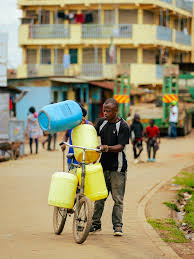
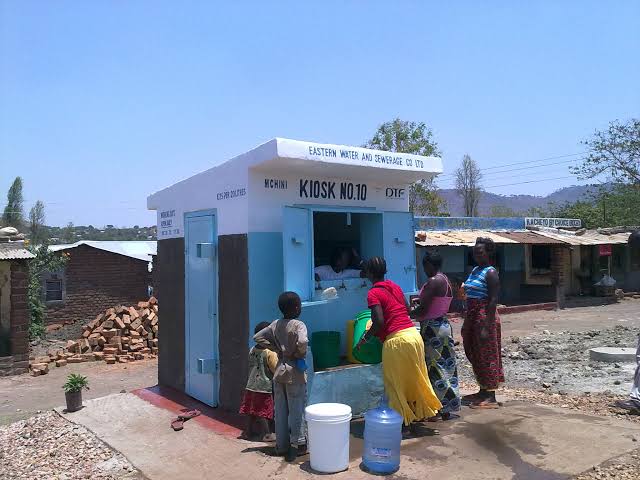
Across cities like Nairobi, water vendors have become woven into the fabric of everyday life. In informal settlements where piped water systems are unreliable or entirely absent, vendors move through neighborhoods selling water transported in carts, motorcycles, tanks, or jerricans. Small kiosks connected to communal pipes become lifelines for entire communities. During shortages, queues lengthen and prices rise.

A household that could normally afford water one week may suddenly struggle the next, particularly during droughts or supply interruptions. In some cases, residents living in informal settlements end up paying several times more per litre than residents in affluent neighborhoods connected to municipal systems. It is one of the cruelest dynamics of urban inequality: scarcity becomes most expensive for those least able to afford it.
For families already balancing rent, transport, school fees, and food prices, the cost of water can quietly consume a significant portion of household income. Yet unlike other expenses, water is not optional. People can postpone buying new clothes or delay certain purchases, but they cannot postpone thirst.
And so people adapt.
They wake up before sunrise when prices are lower. They store water in every available container.
They reduce bathing and laundry during shortages.
They queue for hours because there are few alternatives.
Entire routines begin revolving around uncertainty.
The growth of informal water economies across Africa reflects a larger reality: many cities are expanding faster than infrastructure systems can support them.
Urban populations have surged dramatically over the last few decades, but investments in pipelines, reservoirs, treatment plants, and distribution systems have often failed to keep pace. Aging infrastructure leaks enormous amounts of treated water before it ever reaches households, while rapidly growing informal settlements are frequently excluded from formal urban planning altogether. Where public systems weaken, private systems emerge.
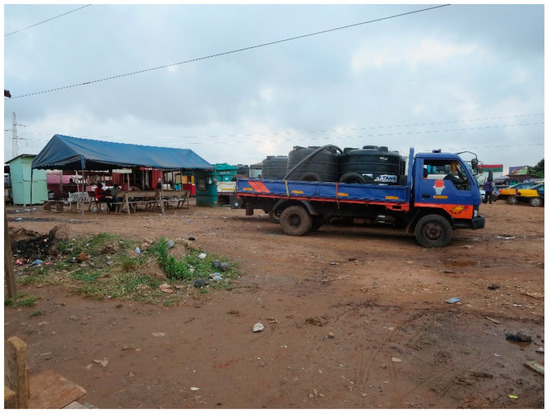
In Lagos, water tankers have become an ordinary part of urban life. Massive trucks move through crowded roads delivering water to homes, estates, businesses, and neighborhoods disconnected from reliable municipal supply. Entire informal economies now operate around storage, delivery, drilling, and resale.
For middle- and upper-income households, private boreholes have increasingly become the preferred solution to unreliable public systems. Across many African cities, the ability to drill a borehole now functions almost like a form of urban insurance; a way of buying independence from state failure.But this growing dependence on groundwater extraction carries consequences of its own.
Environmental experts have raised concerns about unsustainable borehole drilling, falling groundwater levels, and contamination risks in rapidly urbanizing areas. In cities where regulation is weak and climate stress is increasing, excessive extraction may create future crises hidden beneath the surface.
Still, for many residents, these private solutions feel necessary because public trust in reliable supply has eroded.
People do not drill boreholes because they enjoy spending thousands of dollars. They drill them because uncertainty has become exhausting.
Yet perhaps the most overlooked part of this crisis is the labor behind it.
Across countless households, women and children continue carrying the heaviest burden of water insecurity. In many communities, women are responsible not only for collecting water, but also for managing every aspect of household life around its availability. They plan meals according to supply schedules, ration usage during shortages, wake up at odd hours when deliveries arrive, and spend hours navigating queues or searching for affordable vendors.
Children, too, become part of this infrastructure of survival. Girls especially are often pulled into the daily labor of carrying jerricans, storing water, or waiting at communal taps before and after school. Over time, water scarcity becomes normalized not as a crisis, but as routine domestic work quietly absorbed by families.
And because this labor happens privately and repeatedly, its emotional and physical toll is often underestimated. Water insecurity is not only about dehydration or drought.
It is about time.
Energy.
Stress.
Dignity.
And the quiet exhaustion of constantly managing uncertainty.
The commercialization of water has also intensified larger political and ethical debates about privatization and public responsibility. Supporters of private-sector participation argue that governments alone cannot finance the enormous infrastructure investments needed to support rapidly urbanizing populations. Private suppliers, they argue, help close critical gaps in service delivery where public systems have failed.
Critics, however, warn that market-driven systems risk deepening inequality by turning access to water into a question of purchasing power rather than public right. And perhaps this is the uncomfortable reality sitting beneath many African urban water systems today: water exists, but access is unequal.
The crisis is not always absolute scarcity. In many cities, water is available somewhere; underground in boreholes, inside private tanks, moving through tanker routes, or flowing consistently in wealthier neighborhoods. The deeper issue is who can reliably access it, who can afford alternatives, and who is left waiting at communal taps with empty jerricans, and that distinction matters.
Because when access to water becomes increasingly tied to money, inequality hardens into the structure of everyday life itself.
What makes all of this especially complicated is that informal water economies are not entirely exploitative. In many cases, vendors and distributors are providing genuinely essential services where governments have failed to do so. Entire neighborhoods depend on them.
The problem is not simply that these systems exist. The problem is what their existence reveals about urban inequality, infrastructure failure, and the growing privatization of survival.
In cities across Africa, water is becoming more than a public utility. It is becoming a marketplace shaped by class, geography, and power. And perhaps that is why the old saying resonates so deeply today:
Water no longer flows toward gravity.It flows toward money.
References
• World Bank (2021). Water Supply and Sanitation in Sub-Saharan Africa
• UN-Habitat (2022). Urban Water Access and Inequality
• African Development Bank (2023). Urban Infrastructure and Water Security
• OECD (2022). Water Governance and Urban Inequality
• Research on groundwater extraction and informal water economies in African cities.
RELATED: