Faith Nyasuguta

Nigeria has begun documenting businesses, vehicles, homes, and other investments abandoned by citizens returning from South Africa, signaling that Abuja is preparing to seek compensation as anti-immigration tensions strain relations between Africa’s two largest economies.
The move follows a wave of voluntary evacuations launched amid growing fears of xenophobic violence during nationwide anti-immigration demonstrations in South Africa. While the Nigerian government has focused on bringing its citizens home safely, officials now say protecting the wealth they built over many years is becoming the next priority.

Nigeria’s Acting High Commissioner to South Africa, Alexander Ajayi, confirmed that affected citizens have been instructed to compile detailed records of all assets they were forced to leave behind before returning home.

The documentation includes businesses, shops, vehicles, equipment, residential properties, and other movable and immovable assets that may have been abandoned as families rushed to leave.

Speaking during an interview with Channels Television, Ajayi said Nigeria’s response would extend far beyond emergency evacuations.
“Our responsibility does not end with bringing our citizens home,” he explained, noting that the government also has a duty to pursue their economic interests after years of investment abroad.

According to the Acting High Commissioner, discussions have already begun with South African officials regarding the fate of Nigerian-owned businesses and investments.
Ajayi disclosed that he recently met South Africa’s Deputy Minister of Finance, where the issue of abandoned assets featured prominently during bilateral discussions.
He revealed that Nigerian authorities have directed every returning citizen to carefully document the value of businesses, cars, commercial equipment, and other properties left behind.
The information, he said, will help establish the scale of financial losses and could form the basis of future compensation claims should formal negotiations proceed.
Although the Nigerian government has not yet announced the legal framework it intends to rely on, the exercise suggests Abuja is preparing to elevate the matter from a consular issue into a broader diplomatic engagement with Pretoria.
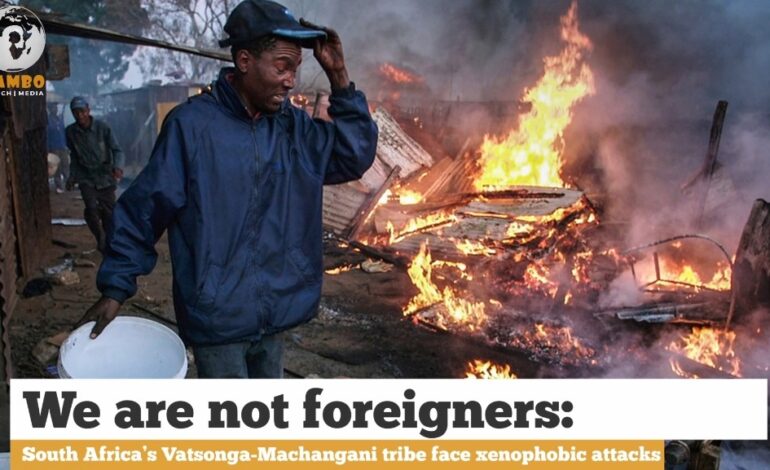
The latest developments come against the backdrop of heightened anti-immigration protests across South Africa.
Citizen groups organizing demonstrations have demanded tougher action against undocumented migrants, arguing that illegal immigration has worsened unemployment, crime, and pressure on public services.
South African authorities, however, have repeatedly stressed that while peaceful protest is protected under the Constitution, intimidation, violence, and vigilante actions will not be tolerated.
President Cyril Ramaphosa has urged demonstrators to remain peaceful and warned that only the state has the authority to enforce immigration laws.
Despite those assurances, fears of possible violence prompted several foreign governments to activate evacuation plans for citizens wishing to leave voluntarily.
Nigeria has already repatriated hundreds of its nationals, many of whom chose to return not because they lacked legal status, but because they feared the protests could threaten their businesses, livelihoods, and personal safety.
Ajayi noted that many Nigerians had spent years building successful enterprises in South Africa and should not be expected to lose everything simply because they decided to leave during a period of heightened uncertainty.
The protests have also attracted international attention. The United States Mission to South Africa temporarily reduced operations at diplomatic facilities in Pretoria, Johannesburg, Durban, and Cape Town, citing security concerns linked to the demonstrations.
While Nigerian officials estimate that roughly 500,000 Nigerians in South Africa may be undocumented, that figure has not been independently verified.
Whether South Africa ultimately accepts responsibility for privately owned businesses and assets abandoned during the voluntary departures remains uncertain. Nevertheless, Nigeria’s decision to systematically document every reported loss marks a significant shift in strategy.
Rather than treating the crisis solely as a humanitarian evacuation, Abuja is laying the groundwork for possible financial claims, adding a new diplomatic dimension to an already sensitive migration debate.
As discussions continue between the two governments, the outcome could shape not only the future of compensation for affected Nigerians but also how African states respond when regional migration crises threaten the investments and livelihoods of their citizens abroad.
RELATED: