
June 26, 2026
WORLD VIDEOS LAW & JUSTICE

US SUPREME COURT LETS THE TRUMP ADMIN. END LEGAL PROTECTION FOR HAITIANS & SYRIANS

US SUPREME COURT LETS THE TRUMP ADMIN. END LEGAL PROTECTION FOR HAITIANS & SYRIANS
Spread the love

Wayne Lumbasi

Advertisement

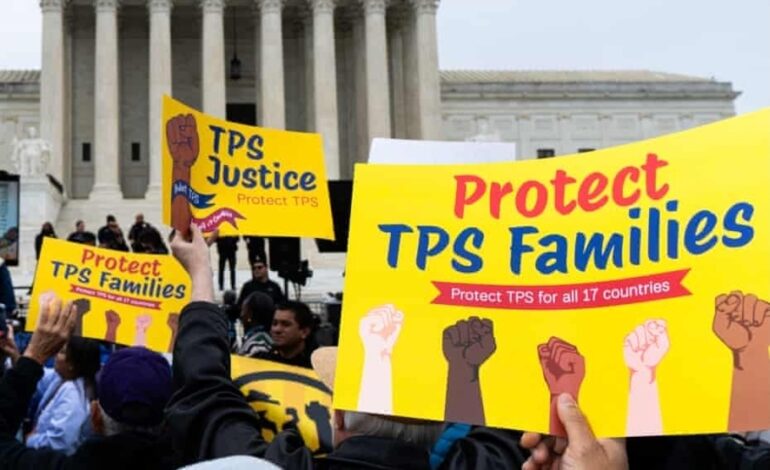
In a major legal victory for the White House, the U.S. Supreme Court handed down a decisive 6-3 ruling on Thursday, declaring that the executive branch holds sweeping, virtually unchecked authority to terminate Temporary Protected Status (TPS) designations.

The high court’s decision in Mullin v. Doe immediately dissolves lower-court injunctions that had blocked the Department of Homeland Security (DHS) from ending humanitarian protections for approximately 350,000 Haitians and 6,000 Syrians.

Legal analysts warn the decision establishes a potent precedent that leaves nearly 1.3 million immigrants from 17 countries vulnerable to what immigration experts are calling the largest “de-documentation” moment in modern U.S. history.

The case was decided by a 6-3 vote, a margin that highlights a clear ideological divide on the nine-justice bench. In U.S. Supreme Court rulings, a 6-3 split means that six justices in this case, the court’s entire conservative majority voted together to pass the ruling, completely outvoting the three dissenting liberal justices. This comfortable margin sets a powerful legal standard that is incredibly difficult to challenge or overturn in the future.


Writing for the six-justice majority,

Advertisement

Justice Samuel Alito stated that the language of the 1990 TPS statute explicitly deprives federal courts of jurisdiction over non-constitutional challenges regarding how the administration manages country designations. The majority concluded that even if DHS bypassed internal procedural or consulting requirements mandated by Congress to evaluate whether conditions on the ground had actually improved, the statutory bar on judicial review remains absolute. Essentially, the court ruled that judges simply do not have the legal authority to intervene.

Advertisement

The protracted litigation followed formal termination notices issued late last year by then-DHS Secretary Kristi Noem. Plaintiffs argued that the government failed to properly evaluate the persistent humanitarian crises and conflict zones in both nations. Lawyers representing the Haitian plaintiffs also mounted an equal protection claim under the Fifth Amendment, pointing to highly publicized, racially inflected remarks made by Donald Trump on the campaign trail as evidence of discriminatory intent.

Advertisement

However, the Court’s majority rejected the constitutional challenge, finding the claims unlikely to succeed on the merits. The opinion noted that the administration’s broader, institutional opposition to the historic scope of the TPS program provided a legitimate, race-neutral explanation for the policy change.

Advertisement

In a sharp dissent representing the three opposing votes, Justice Elena Kagan, joined by Justices Sonia Sotomayor and Ketanji Brown Jackson, argued that the ruling essentially permits the executive branch to ignore statutory guidelines set by Congress. Kagan noted that federal courts possess a fundamental duty to ensure administrative agencies adhere to legally mandated procedures before uprooting vulnerable populations, writing that the plaintiffs “deserved better than today’s decision.

“Immigration advocacy groups expressed immediate alarm over the decision, warning of severe human and economic fallout. Conversely, immigration restrictionists and administration officials welcomed the decision as a critical restoration of executive discretion.

DHS General Counsel James Percival called the ruling “a win for the rule of law and common sense,” emphasizing that the humanitarian program was never intended to serve as a pathway to permanent residency.

For the hundreds of thousands of Haitian and Syrian nationals currently residing legally in the U.S., the conclusion of the litigation means that their employment authorization documents (EADs) and shields from removal will lapse as soon as the formal grace periods expire.

U.S. industries are bracing for significant logistical adjustments. Compliance experts note that tens of thousands of businesses nationwide will be required to reverify the Form I-9 employment eligibility of affected personnel, forcing companies to either terminate staff or face statutory penalties for unauthorized employment if those workers cannot secure alternative lawful pathways.

RELATED

About Author

Wayne Lumbasi

Leave a Reply

Your email address will not be published. Required fields are marked *