Faith Nyasuguta

A major diplomatic confrontation is erupting across the Middle East and the Horn of Africa after Somaliland announced plans to open a diplomatic mission in Jerusalem following formal recognition by Israel.
Saudi Arabia, Egypt, Turkey and several Muslim-majority nations have condemned the move, warning it violates international law, undermines the status of East Jerusalem, and threatens to inflame already volatile regional tensions surrounding Palestine, Red Sea security, and Somali sovereignty.

The outrage follows Israel’s landmark decision in December 2025 to formally recognize Somaliland as an independent state, making it the first United Nations member country to do so since Somaliland declared independence from Somalia in 1991.

Now, what once looked like a diplomatic breakthrough for Somaliland is rapidly becoming a geopolitical flashpoint.

In a sharply worded joint statement carried by Qatar News Agency, a coalition including Jordan, Pakistan, Indonesia, Djibouti, Algeria, Sudan, Yemen, Oman, Lebanon, Mauritania, Palestine, and Somalia accused Somaliland of violating international law by planning diplomatic representation in Jerusalem, a city whose status remains one of the most explosive issues in global politics.
The coalition insisted East Jerusalem remains occupied Palestinian territory under international law and warned against any actions that could legitimize Israeli control over the contested city. But beneath the diplomatic language lies a much larger geopolitical battle.

For Israel, Somaliland has emerged as a valuable strategic partner sitting directly along the Gulf of Aden near the Bab el-Mandeb Strait, one of the world’s most critical shipping chokepoints. The narrow maritime corridor links the Red Sea to global trade routes used for oil, cargo, and military operations.
As attacks by Iran-linked Houthi forces in nearby Yemen continue disrupting maritime traffic, Israel increasingly views Somaliland as a potential security and intelligence ally capable of helping monitor one of the world’s most volatile waterways.
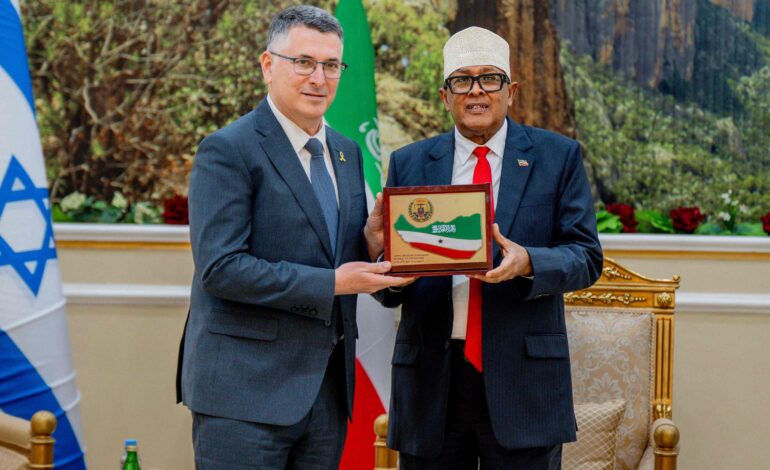
Israeli Prime Minister Benjamin Netanyahu framed Somaliland’s recognition as part of a broader regional realignment strategy, while Somaliland President Abdirahman Mohamed Abdullahi celebrated the move as a “historic moment” for Somaliland’s decades-long push for international legitimacy.
Somaliland has also signaled interest in joining the Abraham Accords, the U.S.-backed normalization framework that reshaped relations between Israel and several Arab states.That possibility is now sending shockwaves through parts of the Arab world.
For Somalia, the developments are deeply alarming. Mogadishu continues to insist Somaliland remains part of Somalia under international law and has accused Somaliland authorities of undermining Somali sovereignty through independent diplomatic deals.
The dispute is also intensifying broader competition for influence across the Red Sea corridor, where Gulf powers, Turkey, Western governments, China, and regional African states are all competing for military, commercial, and strategic leverage.
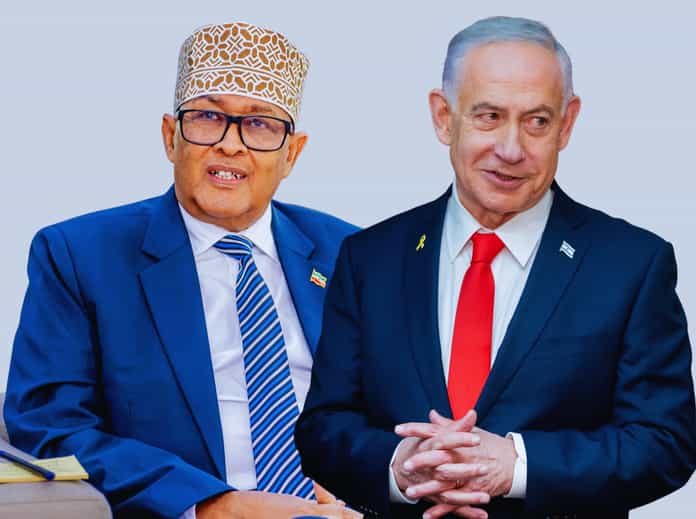
Analysts warn that Somaliland’s growing partnership with Israel could dramatically reshape alliances across the Horn of Africa while pulling the breakaway territory deeper into some of the world’s most sensitive geopolitical rivalries.
What began as a recognition dispute is now evolving into a battle over sovereignty, shipping routes, diplomacy, and control of one of the planet’s most strategic maritime regions.
RELATED: