Faith Nyasuguta

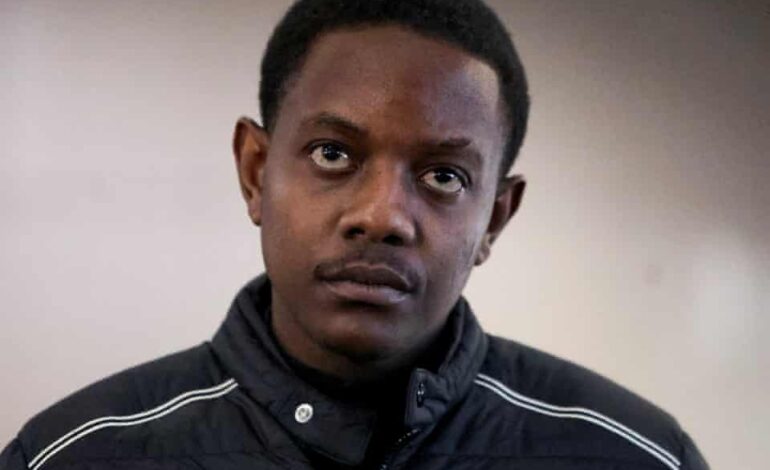
South Africa has deported Bellarmine Chatunga Mugabe following a court ruling that found him guilty of immigration and firearm-related offences, marking the latest development in a case that has drawn significant public attention.
The decision comes just two months after a shooting incident at the Mugabe family home in an affluent suburb of Johannesburg, where a 23-year-old employee, Sipho Mahlangu, was shot in the back. Initially, Mugabe and his cousin, Tobias Mugabe Matonhodze, were both charged with attempted murder in connection with the February 19 incident.

However, the legal proceedings took a different turn. Earlier in the month, Matonhodze pleaded guilty to attempted murder, along with firearms offences, defeating the ends of justice, and violating immigration laws. He was subsequently sentenced to three years in prison.

Mugabe, on the other hand, was not convicted for the shooting. Instead, he pleaded guilty to two separate charges stemming from unrelated incidents. The first involved pointing a toy gun in a manner that could reasonably be perceived as a real firearm during an incident in 2023. For this, he was fined 400,000 rand (approximately $21,500). The second charge related to violations of South Africa’s immigration laws, resulting in an additional fine of 200,000 rand (approximately $10,800).

Following the ruling, Magistrate Renier Boshoff ordered that Mugabe be deported. Authorities escorted him to Johannesburg’s main international airport for removal to Zimbabwe.
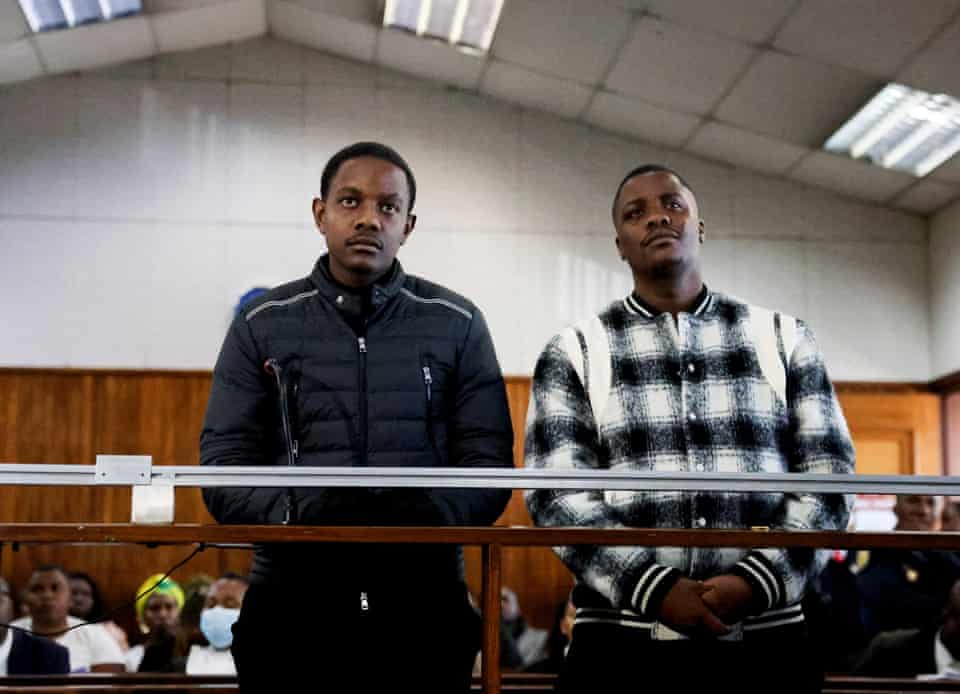
In delivering the judgment, the magistrate noted that the court could only act on the evidence presented. He also acknowledged uncertainty surrounding the dynamics of the case, remarking that it was unclear whether one accused had taken greater responsibility than the other. Nonetheless, the court emphasized that its decision was based strictly on the legal record before it.

Several factors influenced the sentencing. Both Mugabe and his cousin had spent time in custody following the February shooting and were considered first-time offenders in the context of the charges before the court. Additionally, the victim, Mahlangu, had expressed a desire to withdraw the case after receiving financial compensation.
According to testimony presented during the sentencing hearing, Mahlangu was paid 250,000 rand (approximately $13,500), with a further 150,000 rand (about $8,100) reportedly promised. While prosecutors had pushed for harsher penalties, the court took into account the guilty pleas and the victim’s position when determining the final outcome.
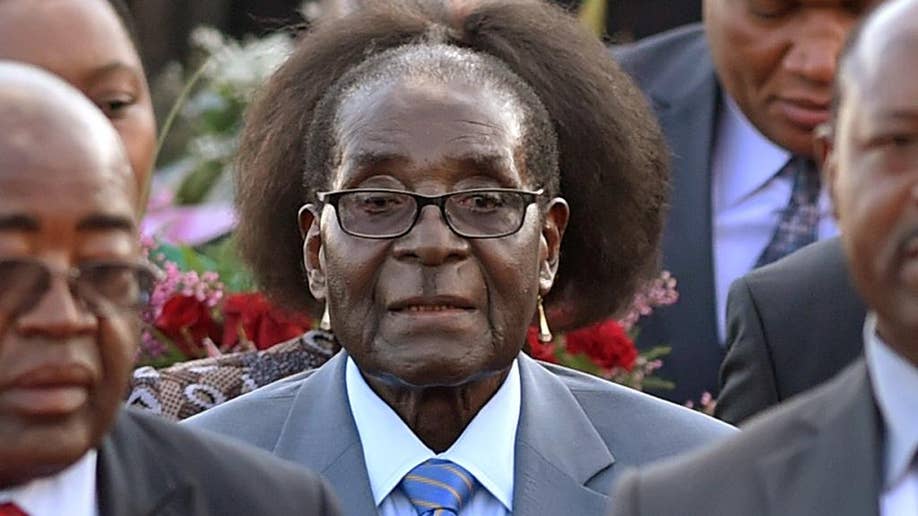
The case has also reignited public scrutiny around the Mugabe family, long known for its political legacy and controversial reputation. Bellarmine Chatunga Mugabe is the youngest son of the late Robert Mugabe, who ruled Zimbabwe for nearly four decades. Once celebrated for leading the country to independence, Robert Mugabe’s tenure later became associated with authoritarian governance and economic decline before he was removed from power in 2017.
In recent years, Chatunga Mugabe and his brother Robert Junior gained notoriety for showcasing a lavish lifestyle on social media, often drawing criticism both at home and abroad.
This is not the first time the family has faced legal controversy in South Africa. In 2017, their mother, Grace Mugabe, avoided prosecution after being accused of assaulting a model by invoking diplomatic immunity.
Separately, reports from Zimbabwe suggest that Chatunga Mugabe has had previous encounters with law enforcement. In 2024, he was reportedly arrested for allegedly assaulting a police officer at a roadblock. In another incident the following year, he was detained and later released on bail over allegations of assault involving a security guard at a goldmine. The status of those cases remains unclear.
The deportation marks a decisive end to his legal troubles in South Africa for now, while leaving lingering questions about accountability and the broader implications of high-profile cases involving politically connected individuals.
RELATED: