Trash to Cash: The Rise of Africa’s Waste Entrepreneurs

Njoki Kangethe
Introduction: Rethinking Waste

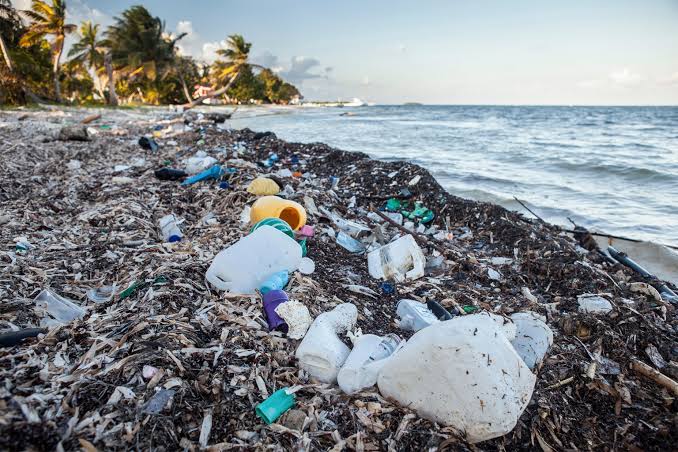
For decades, waste in Africa has been framed almost exclusively as a crisis: a visible sign of rapid urbanization, weak infrastructure, and governance challenges. It has been discussed in terms of sanitation, public health, and environmental degradation, rarely in terms of opportunity. But across the continent, a quiet shift is underway.

A growing number of entrepreneurs are beginning to see waste differently; not as something to be removed, but as something to be used. In cities such as Lagos, Nairobi, and Accra, waste is increasingly being treated as a resource: that can be processed, and reintroduced into the economy.

What emerges from this shift is not just a set of isolated businesses, but the early formation of an industry that sits at the intersection of sustainability, innovation, and economic growth.
The Economics of Waste

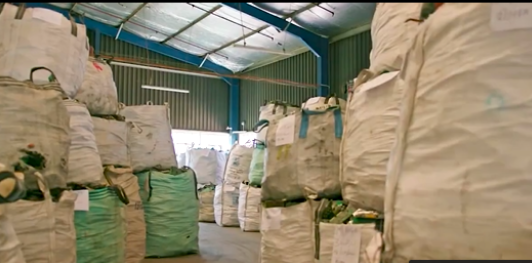
At its core, the business of waste is a business of materials. Plastics, metals, paper, and organic matter all retain value beyond their initial use, particularly in economies where demand for raw inputs remains high.
Globally, recycling has become a multi-billion-dollar industry, driven by the need to reduce resource extraction and manage environmental impact (World Bank, 2018). In Africa, where urban populations are growing and consumption patterns are shifting, the volume of recoverable materials is increasing rapidly,yet much of it remains underutilized.
This creates a unique economic proposition. Waste is both abundant and, in many cases, inexpensive to access. For entrepreneurs able to build efficient collection and processing systems, it represents a relatively untapped supply chain.
What distinguishes this sector is not just the availability of materials, but the consistency of supply. Unlike many industries that rely on fluctuating inputs, waste is generated daily, across all urban contexts. This reliability makes it an attractive foundation for business development.
Building Businesses from Waste
Across the continent, a range of enterprises is emerging to capture this value.
In Lagos, companies such as Wecyclers have developed decentralized collection systems that engage households directly. By offering incentives in exchange for recyclable materials, they are able to aggregate waste at scale while simultaneously encouraging behavioral change.
In Nairobi, Mr. Green Africa operates within a more industrial framework, sourcing plastic waste through networks of informal collectors and supplying processed materials to manufacturing companies. In doing so, it links local waste streams to global supply chains, demonstrating how recycling can operate at a commercial scale.
Other models focus on organic waste. Sanergy, for instance, has built a system that collects organic and human waste from urban settlements and converts it into agricultural inputs such as fertilizer and animal feed. This approach not only addresses waste management challenges, but also creates value in entirely different sectors.
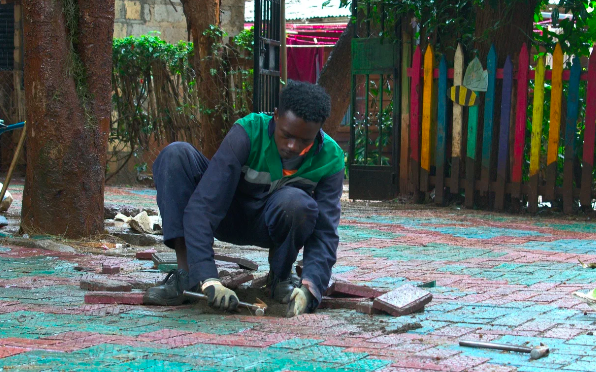
In Accra, companies like Nelplast Ghana are experimenting with the use of recycled plastics in construction, producing paving materials that are both durable and environmentally sustainable.
Taken together, these examples illustrate a broader shift: waste is no longer simply being removed from cities: it is being reprocessed, repurposed, and reintegrated into economic systems.
From Informal Activity to Structured Industry
What makes this moment particularly significant is the transition from informal activity to more structured, scalable models.
For decades, waste recovery in Africa has been driven largely by informal workers operating at the margins of the economy. Their work of collecting, sorting, and reselling materials has formed the foundation of recycling systems across the continent.
The emergence of waste-focused startups does not replace this system, but rather builds upon it. Many companies rely on networks of informal collectors as their primary source of materials, effectively formalizing parts of the value chain while leaving others unchanged.
This hybrid structure reflects both opportunity and tension. On one hand, it enables businesses to scale quickly by leveraging existing systems. On the other, it raises questions about how value is distributed, and whether those at the base of the system are adequately compensated as the sector grows.
Barriers to Scale
Despite its potential, the waste economy remains constrained by several structural challenges. Access to finance continues to limit growth, particularly for early-stage enterprises operating in what is still perceived as a high-risk sector. Infrastructure gaps, including limited sorting facilities, unreliable transport networks, and inadequate processing capacity, further complicate efforts to scale operations.
Policy environments, while gradually evolving, can be inconsistent. Regulatory uncertainty, unclear standards, and weak enforcement mechanisms create additional layers of complexity for businesses seeking to operate across different jurisdictions. At the same time, markets for recycled materials are still developing. While demand is increasing, it is not yet uniform across all sectors, which can affect pricing and long-term viability.
These challenges do not negate the opportunity, but they do shape its trajectory, influencing which businesses succeed, and how quickly the sector can mature.
Value, Power, and Inclusion
As the waste economy expands, it brings with it deeper questions about value and power.
Who captures the profits generated from waste?
Who controls the systems through which it is collected and processed?
And who is included, or excluded, as the sector formalizes?
There is a risk that, as investment increases and operations become more centralized, smaller actors and informal workers may be pushed to the margins. The very people who have sustained waste recovery systems for decades could find themselves excluded from the more profitable segments of the industry.
Yet there are also alternative models emerging. Some companies are actively working to integrate informal workers into their operations, offering more stable income, improved working conditions, and clearer pathways for participation within formal systems.
The direction the sector takes will depend, in large part, on which of these models becomes dominant.
Conclusion: An Industry in Formation
What is unfolding across Africa is not merely a set of isolated innovations, but the gradual formation of an industry. Waste, once viewed primarily as a problem, is being redefined as a resource, one that can generate economic value, support livelihoods, and contribute to more sustainable urban systems. This transformation is still in its early stages. It is uneven, complex, and shaped by a range of structural constraints. But it is also significant.
Because it suggests that the future of waste in Africa will not be determined solely by how it is managed, but by how it is valued.
In the next article, we look more closely at how this emerging sector fits within a broader vision of a circular economy, and what it would take to ensure that its growth is not only profitable, but inclusive and sustainable.
Because turning trash into cash is only part of the story. What matters just as much, is who gets to benefit from it.
RELATED: