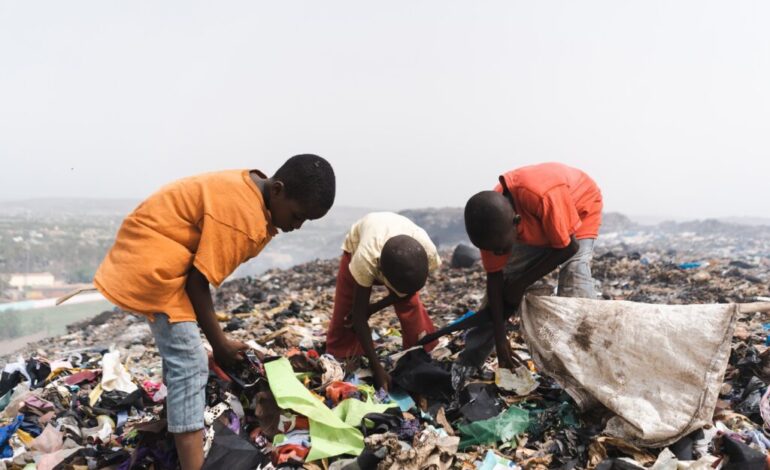
The People Who Clean Our Cities: Inside Africa’s Informal Waste Economy

Njoki Kangethe
Introduction: The Invisible System

Every day, before most cities fully wake up, work has already begun.

In the early hours of the morning, men and women move through streets, dumpsites, and alleyways, collecting what others have thrown away. Plastic bottles, scrap metal, cardboard, organic waste; materials that have been discarded, but not yet abandoned. But you know what’s terrible? Two main things: first, they are rarely seen in official plans or policy documents, and secondly, they are rarely acknowledged in conversations about infrastructure. And yet, without them, many African cities would struggle to function.

Across Nairobi, Lagos, and Accra, informal waste workers form the backbone of waste management systems, quietly filling the gaps where formal systems fall short (Wilson et al., 2006).
This is the informal waste economy.
And it is both essential, and overlooked.

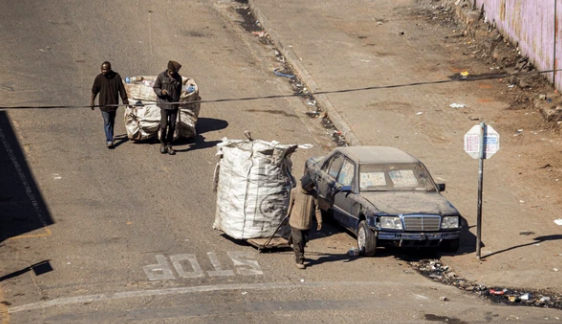
Who Are the Waste Workers?
The informal waste economy is made up of diverse actors:
•Waste pickers working in dumpsites
•Door-to-door collectors in informal settlements
•Sorters working in small recycling hubs
•Traders who buy and resell recyclable materials
Many come from low-income backgrounds.
Some are migrants. Others are young people navigating limited job opportunities. For many, this work is not a choice of passion; it is a matter of survival.
In places like Kenya’s Kibera and Githurai, informal waste workers often operate in loosely organized networks, collecting and sorting waste for small payments. Their earnings depend on the type and quantity of materials they can recover.
Plastic bottles might fetch a few shillings per kilogram, and scrap metal slightly more. Therefore, it goes without saying that on a good day, the income is enough to get by. On a bad day, it is not.
Yet despite the uncertainty, this work provides livelihoods for thousands, even millions, across the continent (Medina, 2007).
Working Conditions: Risk and Resilience
The conditions under which informal waste workers operate are often harsh.
At major dumpsites like Dandora in Nairobi, workers navigate mountains of waste with minimal protective equipment. Exposure to hazardous materials, sharp objects, and toxic fumes is common.
Health risks include:
•Respiratory illnesses from burning waste
•Injuries from sharp or contaminated materials
•Long-term exposure to harmful chemicals
Beyond physical risks, there is also social stigma. Waste work is often viewed as dirty and undesirable, so many workers face discrimination, despite providing a service that benefits entire cities. And yet, they continue, because within this work lies resilience, and a form of expertise that is rarely recognized.
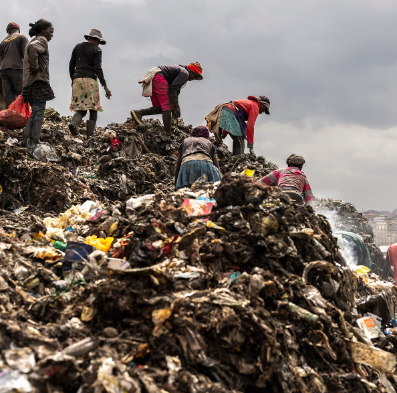
Filling the Gaps: An Unofficial Public Service
Informal waste workers step in where municipal collection is inconsistent or absent. They collect waste from households, reducing the volume reaching landfill, and recovering materials that would otherwise go to waste. Studies suggest that informal waste workers are responsible for a significant portion of recycling in developing countries (UN-Habitat, 2010). In this sense, they are providing a public service, without formal recognition, stable income, or institutional support.
Their work reduces environmental pressure, supports recycling industries, and keeps cities cleaner, and yet, despite their contributions, informal waste workers are often excluded from formal waste management systems.
When cities modernize their waste infrastructure, introducing private contracts, centralized systems, or new technologies, informal workers can be pushed out.
Without legal recognition or protection, they risk losing access to:
•Waste collection routes
•Dumpsites
•Recycling value chains
In some cases, policies intended to improve efficiency inadvertently remove the very people who have been sustaining the system.
This raises an important question: Can waste management systems be improved without excluding those who depend on them?
Towards Inclusion: Recognizing Value
There is growing recognition that informal waste workers should not be sidelined, but integrated.
Across parts of Africa, and in other regions globally, there are emerging efforts to:
•Organize waste workers into cooperatives
•Provide protective equipment and training
•Formalize roles within municipal systems
•Improve access to markets and fair pricing
And these approaches recognize a simple truth: waste workers are not a problem to be solved. They are part of the solution. When supported, their work can become safer, more stable, and more impactful, benefiting both livelihoods and the environment.
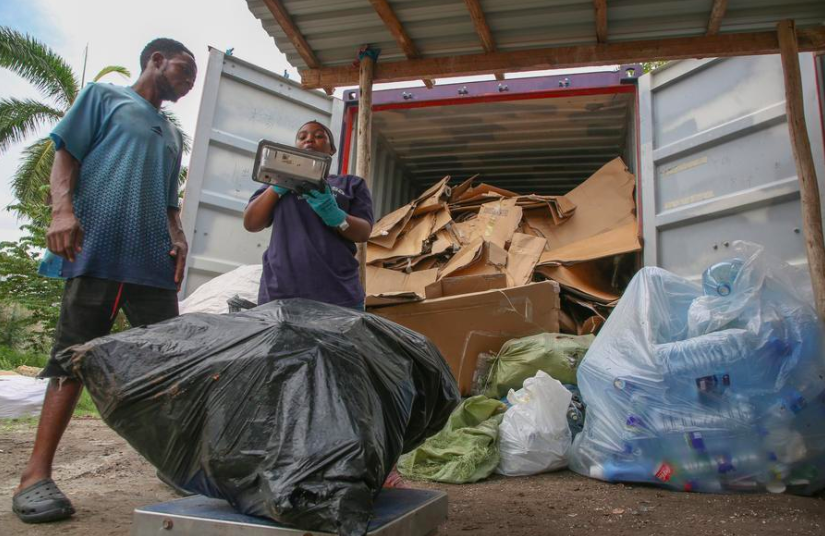
Conclusion: The People Behind the System
Africa’s waste challenge is often framed in terms of infrastructure, policy, and investment, but at its core, it is really about people; people who wake up early to collect what others discard. People who sort, carry, and process waste under difficult conditions.The people who have built an entire economy from what society throws away.They are not invisible. They have simply been overlooked.
In the next article, we step back to examine the systems around them, asking why waste management continues to struggle in many African cities, and what structural gaps keep this cycle in place.
Because to understand waste,we must understand both the people, and the systems they operate within.
RELATED: