
Njoki Kangethe

What came of the of the abductions, torture and subsequent deportations of human rights activists Agather Atuhaire and Boniface Mwangi from Tanzania to Uganda, and Kenya respectively?
Are their horrendous, and inhumane ordeals going to fizzle out with no accountability and justice metted to their perpetrators?

Across much of Africa, deportation sits at an uneasy intersection of security, politics, and human rights. While many governments maintain systems meant to regulate immigration fairly, recent reports, including the case of a Tanzanian woman allegedly abducted from a taxi in Kenya exposes a more unsettling reality. They suggest that state power, when unchecked, can slip from lawful enforcement into arbitrary removal, blurring the lines between legitimate regulation and political convenience.

This dynamic forms the lesser-discussed counterpart to the public outrage over abusive foreign employers on the continent. If one side of the narrative is about foreigners who misuse power within African borders, the other is about African states that occasionally misuse power against foreigners, especially those who are poor, politically exposed, or simply unprotected. Together, the two realities highlight a crucial question: who is safe, and who is vulnerable, in Africa’s immigration landscape?

When Deportation Stops Being About Law and Becomes About Power
In February, Maria Sarungi, a well-known Tanzanian activist living in Kenya, became the centre of a disturbing incident that revealed just how easily state power can operate beyond scrutiny. She reported that unknown men pulled her from a taxi in broad daylight, forced her into a vehicle, and spent hours racing through backroads, making abrupt stops, speeding off again, and repeatedly demanding her identity and the passcode to her phone. “I had a sinking feeling and fear they could just disappear me like they have done with other activists,” she recalled. Despite the intimidation, she refused to confirm her identity or unlock her phone.
At one point, when Sarungi recognized one of the men as Tanzanian, she asked whether they were taking her across the border. “Why is that an issue if we take you to Tanzania?” he asked. She responded simply: “Because the government doesn’t like me.” The man pressed her further, “Why, do you have an issue with the government?” to which she replied, “Because I’m a loud mouth.”

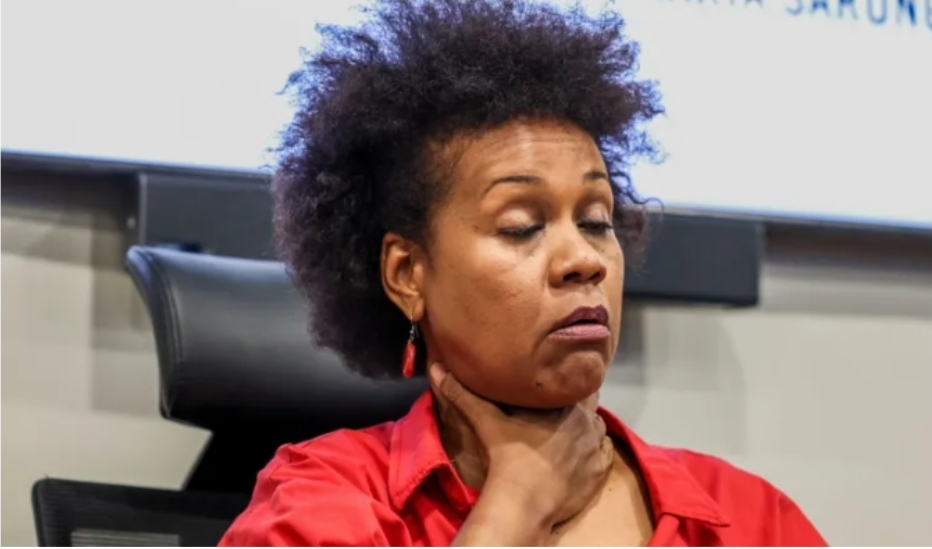
Eventually, she was dumped on a rough, dark roadside, without charges, without a warrant, without a hearing, and without a single official explanation. Her ordeal had nothing to do with crime or national security; her ‘offence’, it appears, was political: her outspoken support for opposition figures critical of the Tanzanian government. Sarungi believes both Kenyan and Tanzanian actors were involved in the operation, though neither government has publicly acknowledged the incident since, leaving her story as a chilling reminder of how deportation, meant to be a legal process, can be transformed into a tool of intimidation and political suppression.
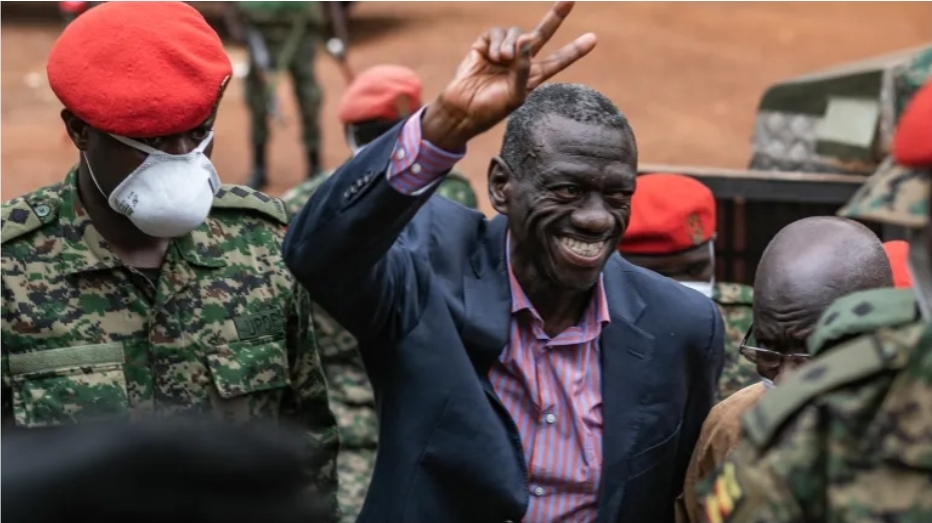
Furthermore, last year, Ugandan opposition leader Kizza Besigye was kidnapped in Nairobi, allegedly by Ugandan security forces, and transported across the border to face a court martial. The Ugandan government claimed Kenya assisted them throughout the operation, but the Kenyan government disputed this.
These experiences echo others across the continent. In several African countries, deportation frameworks, though lawful on paper, can be wielded at moments of political pressure or diplomatic tension. The process, when misused, takes on a punitive rather than regulatory function; a way to silence, intimidate, or expel individuals who find themselves inconvenient to those in power.
This use of deportation as a tool of political management raises disturbing implications. It means that migrants, refugees, and even long-term residents can be treated not as rights-bearing individuals, but as disposable subjects whose presence can be terminated at will. It also shows how quickly immigration systems, when opaque and unmonitored, can become instruments of coercion.
The Quiet Victims: Migrants Who Don’t Fit the Narrative
When Africans talk about migration and abuse, the focus often lands on the Africans abroad; domestic workers in the Gulf, migrants crossing Mediterranean routes, or African students facing racism in foreign countries. On the continent itself, attention has recently shifted to the mistreatment of African workers by foreign employers in Africa.
But the people at the ‘bottom’ of Africa’s migration hierarchy, migrants from neighbouring African countries rarely receive the same protection or visibility. Their abuse happens in quieter corridors:
- sudden arrests,
- unrecorded transfers,
- deportations without legal representation,
- expulsions carried out at night,
- and threats used as leverage in political disputes.
Their vulnerability is not accidental. Many African states have immigration systems that depend heavily on discretionary power: wide authority given to security agencies, unclear appeal mechanisms, and political influence that can override institutional procedure. In such an environment, migrants become easy targets for overreach.
A Dual Contradiction: Foreign Power vs. State Power
This fragility forms a striking contrast with the other half of the immigration story; the abuse of African workers by foreign expatriates.
On one hand, there are stories of foreign employers or investors who exploit workers, threaten them, or mistreat them, emboldened by racial hierarchies, economic inequality, and government inaction.
On the other hand, there are stories like Maria Sarungi’s, where the state itself becomes the source of danger for migrants.These two phenomena might seem unrelated, but they both expose the same underlying truth: power imbalances define the migrant experience in Africa, whether the power is held by an individual or the state.
A Continent Still Negotiating Its Relationship with Power
Judiciaries are often too weak or too compromised to challenge unlawful deportations. Police units operate with broad latitude. Migrants, especially from neighbouring states, lack money, allies, and political clout. And in a system where deportation can be used for political signaling, ‘foreignness’ can become a vulnerability in itself.
This is not a uniquely Kenyan problem, nor a uniquely East African one. Similar cases, quiet, undocumented, or uninvestigated, have emerged in Southern and West Africa. What they reveal is a continent still debating what kind of political identity it wants to uphold: one governed by rights, or one governed by discretion.
What Happens When Both Sides of the System Fail?
When foreign employers mistreat Africans, and African states mistreat African migrants, the entire moral architecture collapses. The continent cannot demand that foreigners respect African labour while simultaneously allowing its own institutions to violate the rights of foreign workers, activists, or residents. Consistency matters, not just for justice, but for credibility and moral coherence.
This duality also produces a subtle but destructive ripple effect:
- It undermines trust between citizens and the state.
- It endangers political refugees who flee to neighbouring countries expecting safety.
- It invites retaliation, creating cycles of diplomatic hostility.
- It exposes African migration governance as fragile, reactive, and politically malleable.
Ultimately, it reveals a deeper crisis: the continent’s struggle to build systems strong enough to protect the vulnerable, regardless of nationality, race, or political affiliation.
Toward a Rights-Centered Migration Future
For Africa to move forward, two shifts are necessary:
- Foreign nationals must not exploit African labour. Abuse by expatriates cannot be tolerated or rationalized. Protection of African workers must be immediate, uncompromising, and legally enforced.
- African governments must not exploit their own power over migrants. Deportation should be a legal process, not a political instrument. Migrants deserve due process, representation, and dignity.
If Africa insists on both, accountability from foreign actors and accountability from state institutions, it will set new ethical and political standards that reflect the continent’s aspirations, not its fears. Because the truth is simple: Africa cannot demand justice from the world while permitting injustice at home.
The future of migration on the continent, and the continent’s moral authority, depends on whether it can uphold a single, universal principle:
No one should be mistreated on African soil. Not by a foreign employer. Not by a government. Not by anyone.
RELATED
COTU CALLS FOR DEPORTATION OF CHINESE MANAGER AFTER VIRAL ASSAULT ON KENYAN WORKER
TRUMP PRESSES AFRICAN LEADERS TO ACCEPT DEPORTED MIGRANTS, SOURCES SAY
MILLIONS ON THE EDGE: SUDAN’S HUMANITARIAN CRISIS DEMANDS GLOBAL ACTION
⁷