Wayne Lumbasi

Nigeria’s President Bola Ahmed Tinubu has revealed that the country’s Presidential Villa in Abuja is also experiencing interruptions in electricity and water supply, highlighting the extent of infrastructure challenges affecting Africa’s most populous nation.
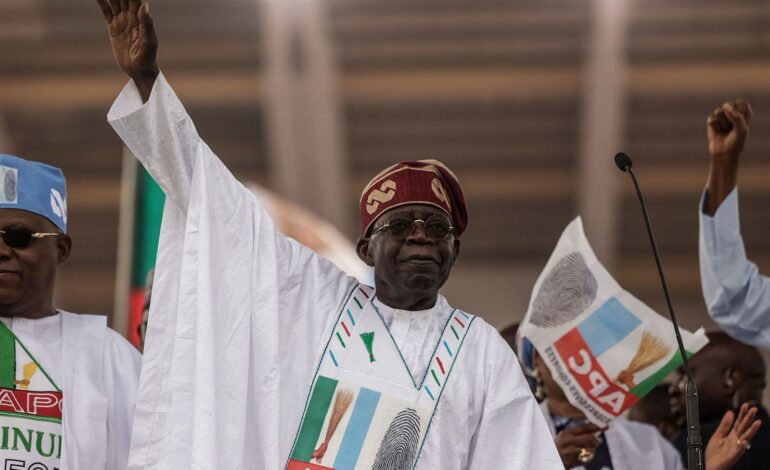
Speaking during a special prayer gathering organised by members of his family at the Yoruba Tennis Club in Lagos, Tinubu recounted an incident in which the water supply at the Presidential Villa suddenly stopped while he was shaving.

The president used the experience to illustrate that even the country’s most powerful institution was not entirely insulated from the infrastructure difficulties confronting ordinary Nigerians.

According to Tinubu, the interruption occurred while he was preparing for his daily activities. He described the situation as an indication that problems with basic services remained widespread, even within the presidential residence.

Tinubu also acknowledged electricity challenges at the villa, remarking that the absence of reliable power and water was closely connected to the country’s broader development difficulties.
He pledged that his administration would address the shortcomings, expressing confidence that improvements could still be achieved. He maintained that his government had only begun its efforts to transform the country and promised to work towards better infrastructure and essential services.

Nigeria has struggled with an unreliable electricity supply for decades despite possessing substantial natural gas resources and being one of Africa’s largest oil producers. Frequent power interruptions have forced households and businesses to depend on petrol and diesel generators, increasing operating expenses and the cost of living.
The country’s electricity challenges have also affected industrial production, small businesses, hospitals and other essential services. Poor transmission infrastructure, inadequate generation capacity, gas supply constraints and distribution difficulties have continued to undermine efforts to provide consistent electricity.
Water supply remains another major challenge, particularly in urban communities where residents frequently depend on boreholes, private water vendors and other alternative sources to meet their daily needs.
Tinubu’s remarks have consequently drawn attention to the contrast between Nigeria’s economic potential and the difficulties experienced by citizens in accessing basic services.
The Presidential Villa, commonly known as Aso Rock, has also been the subject of discussions surrounding energy independence. A 10 billion naira solar mini-grid project was included in Nigeria’s 2025 budget as part of efforts to reduce the complex’s dependence on the national electricity grid.
The president’s admission comes as his administration faces growing public expectations to deliver improvements in electricity, water infrastructure and the broader economy.
RELATED: