Faith Nyasuguta

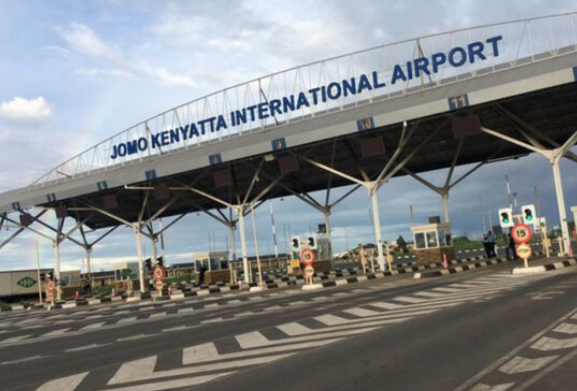
Kenya has officially turned to China for one of the biggest infrastructure projects in its aviation history, awarding a $2.9 billion contract to upgrade and expand Nairobi’s Jomo Kenyatta International Airport (JKIA) after shelving a controversial deal with India’s Adani Group.
The decision marks a major shift in the future of East Africa’s busiest airport and reignites debate over who should control critical national infrastructure.

According to reports, the Kenyan government has selected China Communications Construction Company (CCCC) to undertake the modernization and expansion of JKIA under an engineering, procurement, and construction arrangement.

The project comes less than two years after President William Ruto’s administration abandoned plans to hand over the airport to Gautam Adani’s airport company under a long-term concession agreement.

The proposed Adani arrangement became one of Kenya’s most fiercely contested infrastructure projects.

Under the plan, Adani Airport Holdings would have financed and managed a large-scale overhaul of JKIA, including the construction of a second runway and a new passenger terminal. In return, the company would have secured a long-term operational role at the airport. But critics saw the proposal differently.

Civil society organizations, labour unions, lawyers, and opposition figures argued that the agreement risked placing a strategic national asset under excessive foreign control. Questions were also raised about transparency, accountability, and whether the government had adequately consulted the public.
The backlash quickly spilled into the streets. Aviation workers staged strikes, activists organized demonstrations, and legal challenges were filed against the project.Facing mounting public pressure, the government eventually pulled the plug on the deal.
China Steps In
Now China has emerged as the new partner tasked with transforming JKIA. The selection of CCCC further deepens Beijing’s influence in Kenya, where Chinese firms have already played a central role in some of the country’s largest infrastructure developments.
From highways and major road networks to railway projects and large public facilities, Chinese companies have become deeply embedded in Kenya’s development landscape over the past decade. The airport project adds another strategic asset to that growing portfolio.
Sources indicate construction could begin within weeks, with financing expected to come from a combination of privatization proceeds, government-backed infrastructure funding mechanisms, and commercial loans supported by future airport revenues.
A Regional Aviation Battle
The JKIA upgrade is not happening in isolation. Across East Africa, countries are racing to dominate regional aviation and logistics.
Ethiopia is pursuing plans for a massive new airport near Addis Ababa that could become one of Africa’s largest aviation hubs, while Rwanda continues investing heavily in its own airport ambitions through partnerships with international aviation players.
For Kenya, the pressure is mounting. JKIA remains one of Africa’s most important gateways, connecting passengers, cargo, and businesses across the continent and beyond. However, growing passenger numbers and increasing regional competition have exposed the need for expanded capacity and modern facilities.

The stakes therefore extend far beyond airport terminals and runways. This is a contest over trade routes, tourism, investment flows, and regional influence.
With the Adani chapter closed and China now firmly in the cockpit, Kenya is betting that a modernized JKIA will help secure its position in an increasingly competitive East African aviation race.
The bigger question now is whether the project can deliver the expansion Kenya needs without reigniting the sovereignty and transparency concerns that helped sink the previous deal.
RELATED: