Faith Nyasuguta

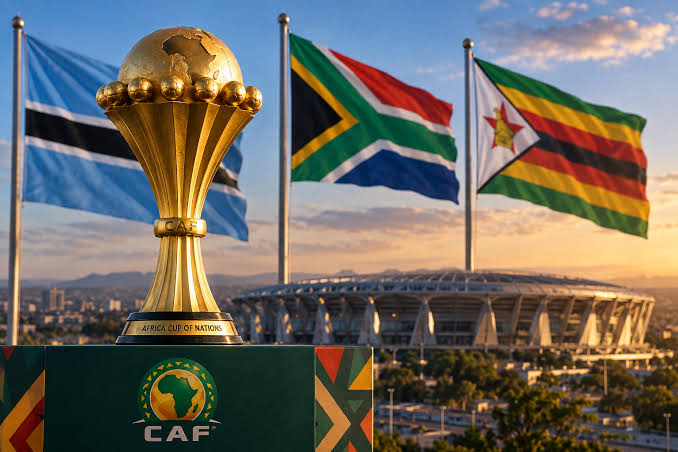
Botswana has withdrawn from the proposed joint bid with South Africa and Zimbabwe to host the 2028 Africa Cup of Nations (AFCON) after its government declined to provide the financial guarantee needed for the country’s participation.
The decision effectively ends Botswana’s involvement in the three-country proposal and leaves South Africa and Zimbabwe to continue the bidding process with the Confederation of African Football (CAF). Botswana’s football association did not submit the required documents by CAF’s 14 September, 2026 deadline, while its two partners proceeded with their submissions.

The development is a setback for Botswana’s ambition to bring Africa’s biggest football tournament to its home crowds, but it also highlights one of the less visible realities of hosting a major sporting event: the biggest challenge is often not winning the bid, but securing government financial backing to deliver it.

Why Botswana Left

The proposed Southern African bid had been built around sharing the enormous logistical and financial demands of an AFCON tournament.
Botswana’s government, however, decided that providing the required financial guarantee was not justified given the country’s budget constraints and other national priorities. The Botswana Football Association (BFA) had argued that a financial guarantee was not required at the preliminary stage of the bidding process, but the government’s position ultimately prevented the country from submitting its bid documents.

The deadline itself had already been extended by CAF from the end of August to 14 September, 2026, giving prospective hosts additional time to prepare their submissions. Botswana did not meet that final deadline.
Botswana has not simply abandoned football or rejected AFCON. Its government chose not to assume the financial commitment associated with hosting it. For a relatively small country, hosting a tournament involving 24 national teams means spending on stadiums, training grounds, accommodation, transport, security, medical services, technology, broadcasting and other infrastructure.
The Original Plan?
The three-country proposal would have distributed matches across South Africa, Zimbabwe and Botswana, allowing the neighbours to share the hosting burden. Botswana had identified Gaborone and Francistown as its proposed host cities.
Francistown’s existing stadium infrastructure was expected to be used, while renovation work was planned for the National Stadium in Gaborone. Having venues across neighbouring countries was also expected to help spread the tournament’s economic benefits while keeping travel between venues relatively manageable.
For Botswana, the opportunity went beyond football. An AFCON tournament can bring international visitors, hotel demand, transport spending, broadcasting exposure and business opportunities. It can also accelerate investment in sporting infrastructure that remains after the tournament.
But those potential benefits have to be weighed against the cost of preparing facilities and guaranteeing the delivery of a tournament to CAF standards. That is precisely where Botswana’s government drew the line.
South Africa & Zimbabwe Go Forward
Botswana’s withdrawal does not automatically end the Southern African bid. South Africa and Zimbabwe submitted their documents and are continuing as a two-country proposal. CAF will ultimately assess the competing submissions and decide which country or countries will host AFCON 2028.
The change could require adjustments to the original hosting plan, including the distribution of matches and the overall venue structure. South Africa brings extensive experience of hosting major international football tournaments. The country hosted the 2010 FIFA World Cup, as well as the 1996, 2000 and 2013 AFCON editions, giving it an established network of stadiums, hotels, transport infrastructure and event-management expertise.
Zimbabwe, meanwhile, would provide an additional host country and expand the tournament’s footprint in Southern Africa. The loss of Botswana therefore reduces the geographical spread of the original proposal, but it does not necessarily eliminate the advantages of a regional hosting model.
Botswana Has Been Here Before
This is also not Botswana’s first attempt to host AFCON. The country previously pursued the 2027 AFCON, but CAF eventually awarded the tournament to Kenya, Tanzania and Uganda in September 2023. That decision created another historic development: AFCON 2027 will be the first edition hosted by three countries.
The tournament will run from 19 June to 17 July 2027, with 24 teams competing. CAF expects the event to attract more than 1.5 million fans across the three East African countries. The 2027 tournament is particularly significant for East Africa because the region has not hosted AFCON since Ethiopia staged the competition in 1976.
Botswana’s unsuccessful 2027 attempt and its withdrawal from the 2028 bid therefore represent two separate moments in its efforts to stage the continent’s premier national-team competition.
AFCON Is Way Bigger

CAF describes AFCON as Africa’s biggest sporting event and says recent editions have generated enormous global audiences. The 2025 tournament in Morocco recorded more than 3.2 billion television audience views and six billion digital views, according to CAF.
That scale explains why governments want to host it — and why CAF places significant demands on potential hosts. The organisation’s 2028 bidding framework was developed with independent adviser PwC, alongside technical, financial and legal advisers. CAF says the framework is designed to provide a transparent and credible process for selecting host countries.
CAF opened bidding not only for 2028 but also for the 2032 and 2036 editions, meaning countries that miss out in one cycle have future opportunities to prepare more carefully.
Africa Mega-Events
Botswana’s withdrawal offers a useful lesson about African mega-events. Hosting AFCON can create tourism, infrastructure and commercial opportunities, but governments must decide whether those benefits justify the financial exposure.
A joint bid is one way of reducing that burden. Instead of one country carrying the entire tournament, neighbours can divide venues, logistics and investment requirements.
But even a shared bid requires every participating government to be willing to put its financial backing behind the proposal. Botswana’s decision shows what happens when that political and financial commitment disappears.
For now, the Southern African project survives — but in a smaller form. South Africa and Zimbabwe remain in the race. Botswana is out. And the final decision now rests with CAF.
RELATED: