Njoki Kangethe

The True Cost of Consumption- Part 4
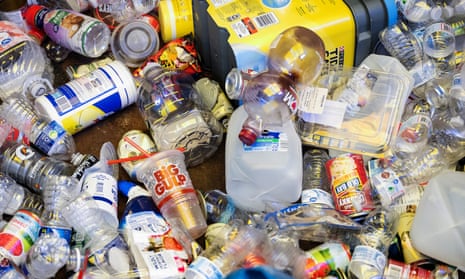
A packet of biscuits, a bottle of cooking oil, a takeaway meal and a delivery from an online shop have something in common: long after their contents have been consumed, their packaging remains. Some of it may be collected and recycled, some may be reused, and some will end up in dumpsites, drainage channels, rivers or open spaces. Yet the packaging has already served its commercial purpose. It has protected the product, carried a brand name, attracted a customer and helped complete a sale. The cost of dealing with it afterwards is often left to someone else.

This is one of the contradictions at the heart of modern consumption. Packaging is designed to make products safer, more convenient and more appealing to buy, but its environmental cost is rarely reflected in the price displayed on a shelf. A consumer pays for the product and its packaging at the checkout, while households, waste collectors, county governments and communities may bear much of the cost once the packaging is discarded.

The question is not whether packaging should exist. Food needs protection from contamination, medicines require secure containers, and goods travelling long distances need to arrive intact. In many cases, packaging plays a legitimate and important role. The problem is the growing dependence on packaging that is used once, difficult to recover and designed without sufficient consideration for what happens after use.


The Business of Wrapping Everything
Packaging is not merely a container. It is part of a product’s commercial strategy. It can extend shelf life, make transportation more efficient, communicate a brand’s identity and help retailers sell goods in different sizes and quantities. Lightweight plastic has become particularly attractive because it is relatively inexpensive, versatile and convenient to manufacture and transport.

For businesses operating in competitive markets, these advantages matter. A manufacturer may choose a particular material because it costs less than the alternatives. A retailer may use several layers of packaging to protect goods in transit. A restaurant may rely on disposable containers because they are convenient for takeaway orders and do not require a system for collecting and washing reusable ones.
These decisions are understandable when viewed individually. The difficulty emerges when millions of businesses make similar decisions while the infrastructure to collect, sort, reuse and recycle the resulting materials remains inadequate. What is efficient for one company can become expensive for society as a whole.
Plastic is especially challenging because the category covers a wide range of materials, with different properties and recovery possibilities. Some rigid bottles have established collection markets, while thin films, multilayer sachets and packaging contaminated with food can be much harder to recycle economically. A package may carry a recycling symbol without there being a practical, accessible system for recovering it where the consumer lives.
This distinction matters in African markets, where informal collection and recycling networks already recover valuable materials but cannot necessarily create demand for every type of packaging introduced into circulation. A material is not meaningfully recyclable simply because a technical process exists somewhere in the world. Collection, sorting, transport, processing capacity and a reliable market for the recovered material must also be in place.
The commercial system therefore has a fundamental imbalance: businesses benefit from packaging’s convenience at the point of sale, while the responsibility for managing its aftermath is distributed across a much wider network of people and institutions.
The Plastic Problem is Also a Design Problem
Kenya has taken significant steps to address plastic pollution. Its 2017 ban on plastic carrier bags became one of the country’s most visible environmental interventions. The restriction demonstrated that government policy can change everyday behaviour and force businesses to reconsider materials they had treated as indispensable. However, a ban on carrier bags does not eliminate the much wider range of plastic packaging used for food, drinks, personal care products, household goods and deliveries.
Nigeria illustrates how packaging design is shaped by affordability and access, not just consumer preference. Water sachets, commonly known as ‘pure water’, have become an important source of drinking water in a country where many people lack reliable access to piped water. UNEP estimates that more than 60 million sachets are consumed daily, yet these low-value plastics often fall outside existing recycling networks because there are few buyers for the recovered material.
The challenge, therefore, is not simply to discourage consumption, but to redesign packaging, develop viable alternatives and create collection and recovery systems that make economic sense without compromising access to affordable drinking water. Nigeria’s Plastic Reboot initiative, launched in 2026, is exploring precisely this intersection of alternative packaging, circular business models and water access.
The distinction is important. A country can restrict one category of plastic while continuing to introduce large volumes of other packaging into the market. Packaging may be necessary for hygiene or product protection, but the design choices surrounding it still deserve scrutiny. Could a product be sold in a refillable container? Could unnecessary layers be removed? Could several materials be replaced with one that is easier to recover? Could the package be designed to use less material without compromising safety? These are questions for manufacturers and retailers as much as they are for consumers.
Consider the small sachet. For households managing tight budgets, small quantities of cooking oil, shampoo, detergent and other everyday products can be more affordable than purchasing a large container at once. Sachets can also make products accessible to customers who might otherwise be excluded by upfront prices. Simply condemning their use overlooks the economic realities of the people who depend on them.
Yet the very features that make some sachets commercially attractive can make them difficult to recover. They may combine different materials in thin, flexible layers, leaving little economic incentive for collectors to gather them. The consumer receives an affordable quantity of a product, but the packaging may have almost no resale value after use.
A serious response must therefore address both sides of the problem: how to reduce packaging that is difficult to recover, and how to preserve access to affordable goods. Refill systems, alternative delivery models and better-designed packaging may help, but they need to be practical for consumers, retailers and manufacturers. Sustainable alternatives that cost considerably more or are unavailable in ordinary neighbourhood shops will struggle to compete.
Who Pays When the Product is Finished?
The costs of packaging do not disappear when it leaves the shop. Counties must organise waste collection and disposal. Communities live with the consequences when discarded materials block drainage or accumulate in public spaces. Waste pickers and recyclers recover materials that have sufficient value, often working in difficult conditions. Where packaging has little or no resale value, it may be ignored by collection networks because gathering and transporting it costs more than the material can earn.
This creates an uneven system in which the commercial value of packaging and its end-of-life costs are separated. A producer can benefit from selling thousands or millions of packaged products without directly managing the full cost of collecting and treating the resulting waste. Public authorities and local communities then face pressure to deal with the consequences.
Kenya’s policy framework increasingly recognises this imbalance. The Sustainable Waste Management (Extended Producer Responsibility) Regulations, 2024, were gazetted in November 2024. They establish obligations for producers of specified products and packaging to take responsibility for post-consumer management, including through individual or collective compliance schemes. The National Environment Management Authority (NEMA) identifies the regulations as a way of operationalising the polluter-pays principle.
In practical terms, extended producer responsibility (EPR) is intended to shift some of the financial and operational burden of managing packaging away from the public and towards the companies that introduce it into the market. Depending on the system and the material involved, producer contributions can help support collection, transport, sorting, recycling, public awareness and other forms of end-of-life management.
Kenya also gazetted the Environmental Management and Co-ordination (Management and Control of Plastic Packaging Materials) Regulations, 2024, establishing a framework for managing plastic packaging and promoting environmentally friendlier materials. Together, these measures signal that packaging is no longer simply a private business decision whose consequences end at the checkout.
However, regulations alone cannot guarantee that packaging will be recovered or that pollution will decline. The real test lies in implementation: whether producers register and comply, whether the rules are monitored consistently, whether the money collected supports effective recovery systems, and whether results can be measured and independently scrutinised.
There is also a question of fairness. Small businesses and local manufacturers need clear guidance on their obligations, while the cost of compliance must not simply become another charge passed to consumers without changing packaging practices. Producer responsibility should encourage better design and less waste, not merely create a new payment mechanism for continuing business as usual.
Recycling Cannot Carry The Entire Burden
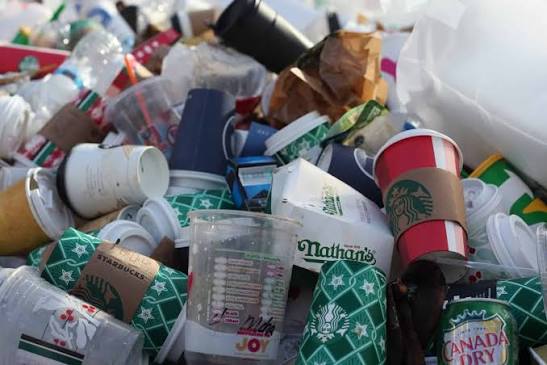
Recycling has an important role, but it is not a complete solution. Some packaging is technically difficult or commercially unattractive to recycle, and collection systems cannot recover material that is never gathered in the first place. Recycling also does not automatically prevent the production of unnecessary packaging or eliminate the environmental impacts associated with extracting raw materials and manufacturing new products.
The United Nations Environment Programme’s 2023 report, Turning off the Tap, argues for a broader transformation of the plastics economy. Its approach combines reducing unnecessary plastic use, redesigning products and packaging, expanding reuse, and improving recycling. The emphasis is on changing the system that produces plastic waste rather than relying on downstream clean-up alone. For businesses, this means moving beyond the question of how to dispose of packaging and asking whether the packaging is needed in its current form at all.
Reusable containers offer one possible route. In suitable settings, beverage bottles, takeaway containers and other durable packaging can be collected, cleaned and used repeatedly. Refill models can allow customers to replenish products without purchasing a new container each time. Retailers can experiment with return systems, while manufacturers can redesign packaging to use fewer materials and make recovery easier.
These models are not automatically sustainable in every circumstance. Reusable packaging requires collection, washing, transport and enough repeated use to justify its material and energy costs. Refill systems need convenient access, appropriate hygiene controls and reliable supply chains. A returnable container will not displace single-use packaging if customers find the return process inconvenient or if businesses cannot manage the logistics.
The opportunity lies in designing systems that work in practice. For a retailer, this may mean piloting refill stations in locations where customers regularly purchase the same products. For a restaurant, it may involve partnering with a service that collects and sanitises reusable takeaway containers. For a manufacturer, it could mean simplifying materials so that more packaging can enter existing recycling markets. Each model requires investment and collaboration, but it can also create business opportunities in collection, cleaning, logistics, repair, material recovery and packaging innovation.
A Different Relationship Between Business and Packaging
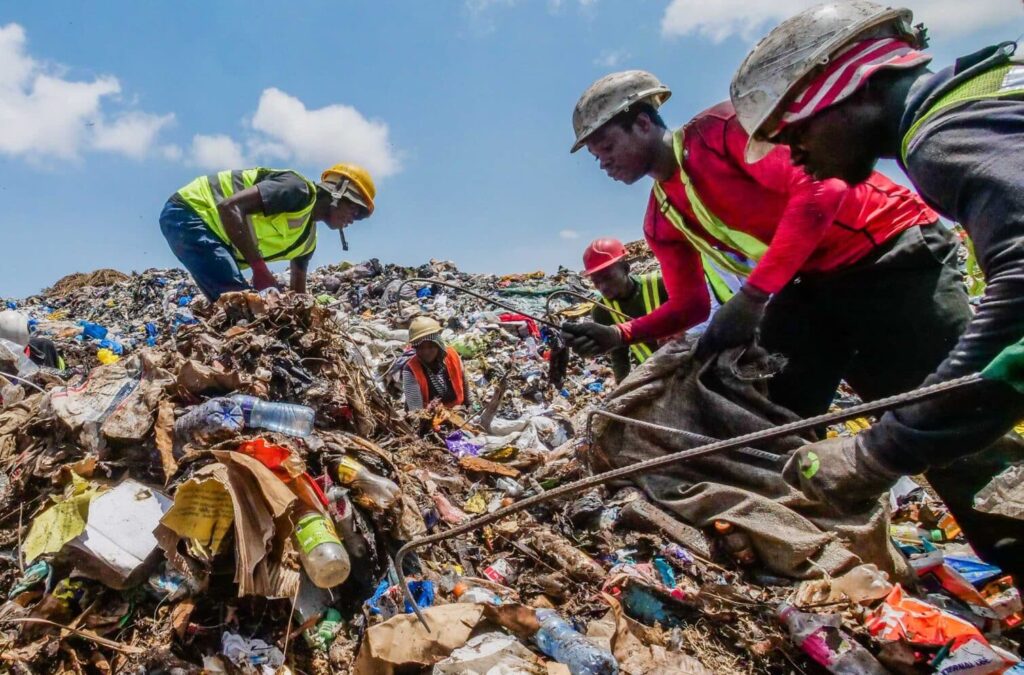
Responsibility cannot rest with one actor alone, although not every actor has the same power to change the system. Consumers can carry reusable bags, separate waste where collection systems allow it, and choose refillable products when they are available and affordable. Retailers can reduce unnecessary packaging and offer alternatives. Counties can improve collection infrastructure and coordinate with recovery networks. Waste pickers and recyclers need safer working conditions, fair compensation and meaningful participation in the systems that depend on their labour.
Manufacturers and brand owners, however, make many of the upstream decisions that determine what kind of packaging enters the market in the first place. They decide which materials to use, how much packaging is necessary, whether products can be refilled and whether the package is compatible with realistic recovery systems. That influence should come with corresponding responsibility.
EPR can help make this relationship more accountable, but its success should not be measured only by the number of registered producers or the amount of money collected. It should also be assessed by whether less unnecessary packaging is introduced, whether more materials are recovered, whether reuse becomes viable, and whether the costs borne by communities and public authorities begin to decline.
For consumers, the aim should not be to make everyday necessities harder to afford. For businesses, it should not be to replace one material with another and assume the problem is solved. Paper, glass, metal and alternative plastics all have environmental impacts that depend on how they are produced, transported, used and recovered. The better choice is the one that performs the necessary function while reducing the total impact across its life cycle.
Ultimately, packaging is a small part of the price of many products, but its consequences extend well beyond the transaction. A bottle, wrapper or sachet may be designed to last only long enough to get a product from the factory to the customer. The environmental system must deal with it for much longer.
The packaging crisis will not be solved by asking households to become perfect consumers while leaving the systems around them unchanged. It requires producers to take responsibility for what they put into the market, governments to enforce clear rules, and businesses to make reuse and recovery part of how products are delivered. The most important question is no longer simply whether a package can be thrown away responsibly. It is whether we can design an economy in which so much packaging does not need to be thrown away in the first place.
References
• National Environment Management Authority (NEMA). (2024). Sustainable Waste Management (Extended Producer Responsibility) Regulations, 2024 and Environmental Management and Co-ordination (Management and Control of Plastic Packaging Materials) Regulations, 2024. NEMA gazetted regulations.
• National Environment Management Authority (NEMA). Frequently Asked Questions on EPR Implementation. Read here.
• United Nations Environment Programme (UNEP). (2023). Turning off the Tap: How the World Can End Plastic Pollution and Create a Circular Economy. Read the report.
RELATED: