Faith Nyasuguta
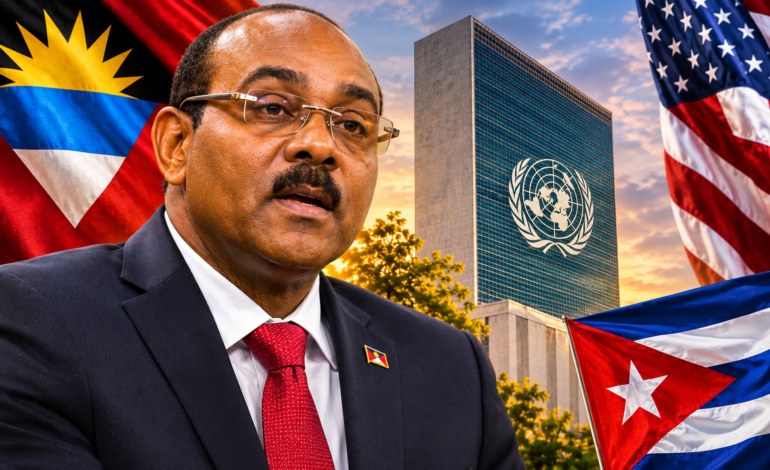
A Caribbean prime minister has revealed how pressure from the US influenced his country’s position on Cuba at the United Nations, exposing the difficult choices smaller nations face when their diplomatic independence collides with American power.
Antigua and Barbuda’s Prime Minister Gaston Browne has disclosed that his government abandoned plans to support a United Nations resolution condemning the United States’ longstanding economic embargo against Cuba after receiving a warning from the US State Department.

Speaking on his weekly radio programme, Browne said American officials informed his government that supporting Cuba could undermine ongoing negotiations over US visa restrictions affecting Antiguan citizens.

The revelation, reported on November 10, 2026, raises serious concerns about diplomatic pressure, Caribbean solidarity and the influence Washington exercises over smaller countries.

Washington’s Warning Changes Antigua’s Position
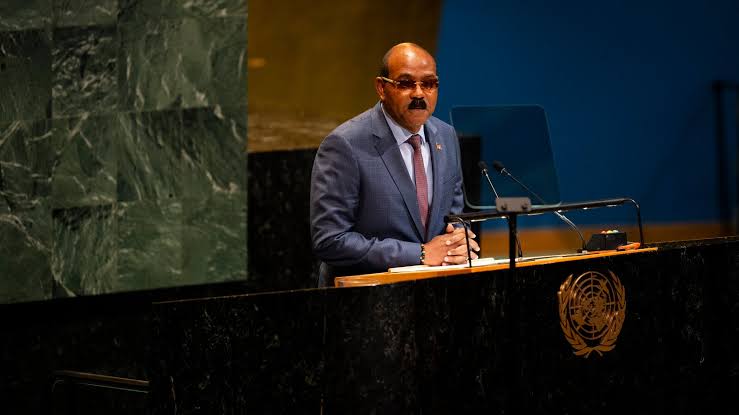
According to Browne, Antigua and Barbuda originally intended to support Cuba during the October 28 United Nations General Assembly vote. However, that position changed following communication from Washington.

The prime minister explained that US officials indicated progress was being made in negotiations concerning visa restrictions but warned that supporting Cuba’s resolution could jeopardise those discussions. Antigua subsequently instructed its ambassador to abstain. Yet something unexpected happened. When the vote took place, Antigua and Barbuda was recorded as absent.
Browne acknowledged that he did not know why the country’s representative failed to participate. The distinction matters. Antigua did not formally vote against Cuba, but it also withheld the support it had originally intended to provide.
For a country with longstanding diplomatic relations with Cuba, the episode represents a significant departure from its previous position.
What Was the United Nations Voting On?
The October 28 resolution called for an end to the United States’ economic, commercial and financial embargo against Cuba. The US imposed economic restrictions on the Caribbean island during the early 1960s, following the Cuban Revolution and the deterioration of relations between the two countries.
For decades, the United Nations General Assembly has overwhelmingly supported resolutions demanding an end to the embargo. The 2026 vote produced 130 countries in favour, 17 against and 25 abstentions.
Although the resolution passed, support declined considerably from 2025, when 165 countries voted in favour. The annual resolution is nonbinding, meaning its adoption does not automatically end American sanctions. Nevertheless, the vote remains an important diplomatic measure of international attitudes towards Washington’s Cuba policy.
Caribbean Unity Faces a Serious Test
The latest vote revealed unusually sharp divisions among Caribbean nations. The Bahamas, Barbados, Belize, Grenada, Saint Kitts and Nevis, Saint Vincent and the Grenadines, and Suriname supported the resolution. Jamaica, Haiti and Guyana abstained. Trinidad and Tobago voted against it. Meanwhile, Antigua and Barbuda, Dominica and Saint Lucia were absent.
The differences mark a significant departure from the regional solidarity that has historically characterised Caribbean opposition to the American embargo. For decades, Cuba has maintained diplomatic, educational and medical partnerships across the Caribbean.
Cuban doctors, teachers and technical professionals have contributed to development programmes throughout the region. The latest divisions therefore raise questions about how smaller Caribbean states balance longstanding relationships with Cuba against their economic and diplomatic dependence on the United States.
Why American Visas Matter So Much
Antigua’s decision was closely connected to ongoing difficulties affecting citizens seeking to travel to the United States. Washington has imposed visa-related measures affecting Antigua and Barbuda, including restrictions associated with its Citizenship by Investment Programme. That programme allows qualifying foreign investors to obtain citizenship through approved investments.
American authorities have raised concerns involving immigration compliance, identity verification and security screening. Antigua has sought a review of the restrictions, arguing that it has taken steps to address Washington’s concerns. For ordinary citizens, the consequences can be deeply personal.
Browne’s disclosure came during a discussion involving a woman who said visa difficulties were preventing her from visiting her seriously ill mother in the United States. The diplomatic dispute therefore extends beyond international politics, affecting families whose ability to travel depends on decisions made in Washington.
Cuba Accuses Washington of Intimidation
Before the October vote, Cuba accused the Trump administration of pressuring governments to withdraw support for the resolution. Cuban Foreign Minister Bruno Rodríguez alleged that American officials had threatened diplomatic and economic consequences, including visa restrictions, against countries unwilling to change their positions.
Washington has defended its campaign against the resolution, arguing that Cuba’s government is responsible for political repression, economic mismanagement and human rights violations. American officials have also challenged Havana’s claims about the embargo’s economic impact. The disagreement reflects decades of confrontation between Washington and Havana.
However, Browne’s disclosure provides a concrete example of how discussions over unrelated bilateral matters can influence a country’s position at the United Nations.
How Independent Is Caribbean Diplomacy?
For Antigua and Barbuda, the immediate priority remains securing relief from American visa restrictions. For the wider Caribbean, the episode raises a concern about sovereignty.
Small island nations depend heavily on international trade, tourism, financial services and access to major economies. Those relationships create opportunities but can also expose governments to considerable diplomatic pressure. Browne’s account demonstrates how negotiations over one issue can influence decisions on another.
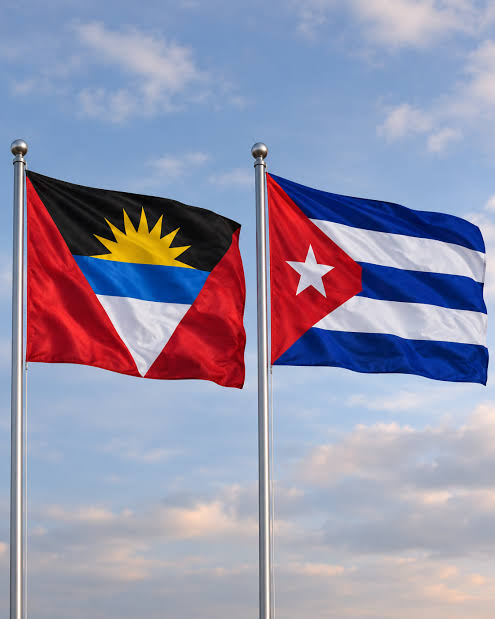
The United Nations gives sovereign countries a vote regardless of their economic size. Yet the ability to exercise that vote independently can become complicated when powerful trading partners connect diplomatic positions to bilateral negotiations.
Antigua wanted to support Cuba. Washington warned that doing so could undermine visa talks. Antigua changed its instructions and ultimately cast no vote. That sequence now stands at the centre of a wider Caribbean debate.
If small Caribbean nations must weigh their citizens’ access to American visas against their positions at the United Nations, how free are they to exercise their diplomatic independence?
RELATED: