Faith Nyasuguta
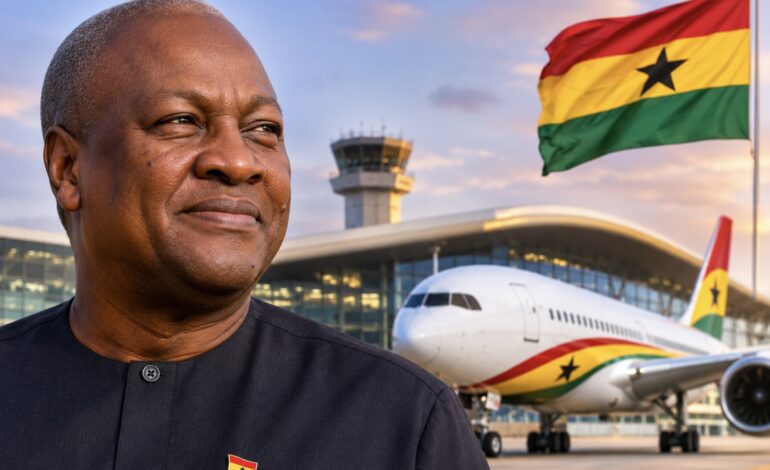
Ghana is taking another ambitious step towards reclaiming its place in African aviation, as President John Dramani Mahama secures Boeing’s support for a plan to restore the country’s national airline.
In an announcement, Ghana’s Presidency confirmed that Mahama had met representatives of American aerospace giant Boeing, with both sides agreeing on a roadmap to establish a new national carrier. The development marks an encouraging milestone in Ghana’s aviation ambitions and adds to a growing list of economic and institutional reforms pursued under Mahama’s administration.

According to the Presidency, preliminary studies have affirmed the project’s viability, while Boeing has pledged continued support throughout its establishment and operational phases.

Ghana’s National Airline Dream Takes Flight

For years, Ghana has sought to restore a national airline following the collapse of Ghana Airways in 2004 and the subsequent closure of Ghana International Airlines in 2010. Now, the ambition is gathering renewed momentum.
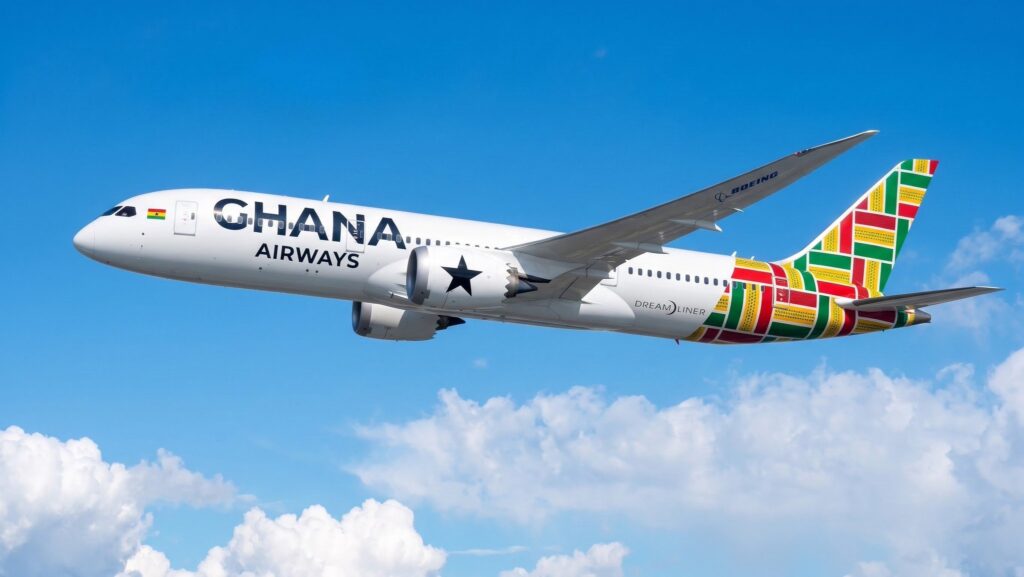
The roadmap agreed with Boeing outlines several essential steps, including identifying strategic airline and technical partners, obtaining an Air Operator Certificate, selecting aircraft and arranging financing. These preparations will determine how the airline is established, funded and operated.

Although commercial flights have not yet begun, the agreement represents meaningful progress towards restoring Ghana’s national aviation presence. Mahama has previously expressed confidence that the country could have a national airline operating before his presidential term ends in January 2029.
Accra Could Become West Africa’s Aviation Powerhouse
Ghana’s ambitions extend far beyond putting its national colours on aircraft. Mahama wants Accra to become a premier aviation hub in West Africa, connecting African cities with major international destinations. The proposed airline would make greater use of Ghana’s airport infrastructure while supporting tourism, business travel, trade and regional connectivity.
For a country strategically positioned along West Africa’s Atlantic coast, stronger aviation links could create significant economic opportunities.The government also expects the project to generate thousands of employment opportunities across aviation, including pilots, cabin crew, aeronautical engineers and aviation management professionals.
Beyond direct employment, a successful carrier could stimulate demand for hospitality, logistics, aircraft maintenance and airport services.
Mahama’s Wider Economic Transformation
The airline initiative comes as Mahama continues implementing his broader agenda to reshape Ghana’s economy. Since returning to office in January 2025, his administration has pursued tax reforms, institutional restructuring and measures aimed at strengthening economic management.
In April 2025, Mahama signed legislation abolishing Ghana’s controversial Electronic Transfer Levy, alongside the betting and emissions levies. The changes fulfilled prominent campaign commitments and were intended to ease financial pressure on households and businesses.
His administration has also advanced reforms affecting customs administration, public finances, agriculture and the justice system.
In August 2026, Mahama signed ten legislative bills covering several of these areas, including measures intended to strengthen revenue administration and support cocoa farmers.
Ghana’s Economic Recovery Adds Momentum
Ghana’s improving inflation figures have provided another encouraging development. According to the Ghana Statistical Service, annual inflation stood at 5.5% in October 2026, compared with 8% in October 2025.
Although inflation has risen slightly in recent months, the broader reduction reflects a significantly more stable price environment than Ghana experienced during its earlier economic difficulties. For Mahama’s administration, maintaining that stability while attracting investment and creating employment remains a major priority.
A New Chapter for Ghanaian Ambition
The proposed national airline represents more than an aviation project. It reflects Ghana’s determination to strengthen its economic independence, expand international connections and compete more effectively in regional markets.
The next challenge will be translating the roadmap into a commercially sustainable airline capable of serving passengers reliably. With Boeing offering technical support and the government advancing its preparations, Ghana has taken another step towards an ambition that has remained unfulfilled for more than a decade.
From economic reforms to renewed aviation ambitions, Mahama is pursuing a vision of a Ghana that competes, connects and creates opportunities.
RELATED: