Wayne Lumbasi

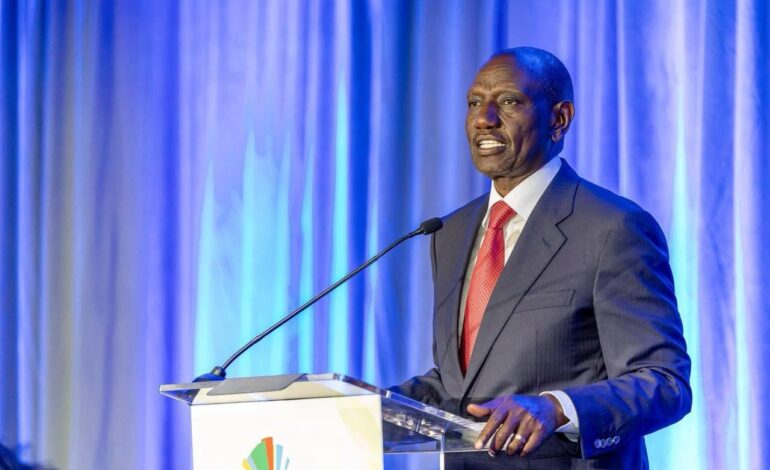
Kenya has signed a memorandum of understanding with Endelevu Enterprise Corporation for a proposed $3 billion investment aimed at establishing a large scale electric vehicle manufacturing and green mobility industry in the country. The agreement, witnessed by President William Ruto on October 6, is designed to shift Kenya from primarily importing finished vehicles towards local assembly, manufacturing and value addition.
The proposed project would establish two major production facilities. One would have the capacity to assemble 50,000 electric four wheel vehicles annually, while another would produce up to 100,000 electric two wheelers and light mobility vehicles each year. Together, the facilities could eventually provide annual production capacity of about 150,000 vehicles.

The investment plan also includes the construction of 1,000 solar powered charging hubs across Kenya. A digital platform capable of supporting up to 100,000 electric vehicles is also planned as part of the wider mobility ecosystem, linking vehicle use with charging and fleet management services.

The project is expected to create about 2,000 direct jobs, more than 20,000 indirect opportunities through suppliers, logistics companies and other service providers, as well as up to 80,000 additional opportunities in fleet management, operations and related services.

President Ruto said the investment is intended to address Kenya’s long standing dependence on imported vehicles and petroleum while increasing domestic manufacturing and employment. He said Kenya should add value to products locally rather than continue importing finished goods.
The proposed investment involves China’s Geely Auto Group through its partnership with Endelevu. The government says the ambition extends beyond supplying the Kenyan market, with vehicles assembled in Kenya potentially serving the wider East African and African markets if they meet the required regional rules of origin.

Kenya’s renewable energy resources are also central to the strategy. The country generates significant amounts of electricity from geothermal, hydro, wind and solar sources, providing a potential foundation for electric transport powered by locally generated energy. President Ruto said electricity consumption for electric vehicle charging increased from 2.92 million kilowatt hours in 2024 to 8.43 million kilowatt hours in 2025, an increase of 188%.
The agreement comes as Kenya expands policies designed to accelerate electric mobility. The government launched its National Electric Mobility Policy in February 2026, while also introducing measures intended to encourage electric vehicle adoption and local manufacturing.
However, the $3 billion should not be presented as money that has already been invested. The agreement is a memorandum of understanding that establishes a framework for the proposed project. Financing arrangements, construction timelines, plant locations and the date when full production will begin have not yet been announced.
If implemented at the proposed scale, the project would give Kenya a significantly larger role in electric vehicle manufacturing and could strengthen its position as a production base for the wider African market. It would also connect vehicle assembly with renewable energy, charging infrastructure, digital mobility services and local supply chains.
RELATED: