Faith Nyasuguta

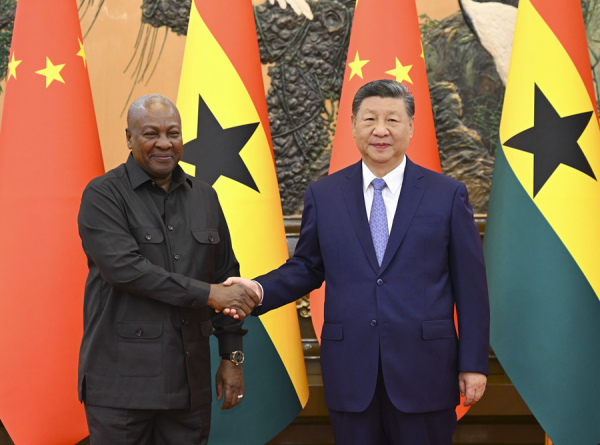
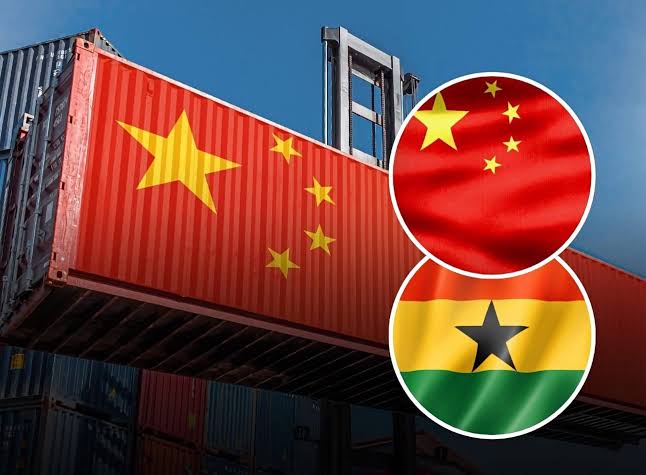
Ghana has opened a new route for paying Chinese suppliers that could reduce the amount of US dollars businesses need to source before settling imports from China. The Bank of Ghana says Stanbic Bank Ghana is already piloting a cedi-to-yuan payment arrangement, while Ghana Commercial Bank is preparing a similar service.
The development was disclosed by Bank of Ghana Governor Dr Johnson Pandit Asiama at the central bank’s 132nd Monetary Policy Committee press briefing on October 5, 2026. Asiama said Ghanaian importers can go to Stanbic with cedis, select Chinese yuan and complete an eligible transaction without first obtaining US dollars. The Chinese supplier still receives yuan. The change is therefore about the payment route and currency conversion, not about Ghana sending cedis to China.

How The New Payment Route Works

Under Stanbic’s service, a customer must hold an account with the bank, select Chinese yuan for the international payment and provide supporting documents. Stanbic converts the customer’s cedis into yuan and sends the payment through China’s Cross-Border Interbank Payment System, or CIPS.
Stanbic says eligible yuan payments submitted with complete documentation by 2pm GMT can be processed the same day and settled by the next business day, subject to regulatory and compliance requirements. Customers can initiate payments through branches and existing digital banking channels. They do not need a separate yuan account.
Stanbic received Bank of Ghana approval in August and became the first Ghanaian bank to offer direct access to CIPS. The bank launched the service publicly in early August.

What is CIPS?
CIPS is China’s Cross-Border Interbank Payment System, authorised by the People’s Bank of China to clear and settle cross-border transactions denominated in renminbi, also known as yuan. It was launched in 2015 as China developed infrastructure to support wider international use of its currency.
CIPS should not simply be described as “China’s SWIFT.” SWIFT is primarily a global financial messaging network, while CIPS provides clearing and settlement infrastructure for renminbi payments. In practice, direct CIPS access can allow eligible Ghana-China payments to avoid some correspondent-bank routes that may otherwise involve US financial institutions.
Ghana may not be fully abandoning the dollar, but the new system gives importers another option. CIPS is already a large network. That matters as African countries seek greater control over cross-border trade.
Why Ghana Needs The Channel
The scale of Ghana-China trade makes the new payment route significant. Bilateral trade reached a record US$14.1 billion in 2025, according to China’s ambassador to Ghana, an increase of 19.3% from 2024.
China is also Ghana’s largest individual source of imports. UN Comtrade-based 2025 data puts Ghana’s imports from China at about US$4.59 billion, or roughly 22.8% of total merchandise imports. Ghana Statistical Service data showed China supplied GH¢14.3 billion, or 23.3%, of all imports in the fourth quarter of 2025.
Major imports from China include machinery and mechanical equipment, iron and steel, vehicles, electrical and electronic equipment, plastics and chemical products. These inputs support construction, manufacturing, transport, agriculture and retail.
The trade relationship is also unbalanced. Provisional 2025 Ghana data cited by local reporting put imports from China at GH¢57.6 billion, compared with GH¢19.6 billion in exports to China.
The Dollar Problem
The US dollar has traditionally served as an intermediary currency even when neither buyer nor seller is American. A Ghanaian importer may need dollars, convert them into yuan and use correspondent banks to complete settlement. Each conversion or intermediary can introduce fees, spreads, processing time and liquidity requirements.

The new arrangement reduces that friction. An importer can start with cedis, let the bank convert the funds into yuan and send the yuan through a renminbi-focused settlement infrastructure. It does not eliminate exchange-rate risk. The importer remains exposed to the cedi-yuan exchange rate, just as a dollar transaction creates cedi-dollar and dollar-yuan exposure. The advantage is direct settlement in the currency the Chinese supplier wants.
A Broader Shift
Ghana’s move fits into a wider expansion of renminbi payment infrastructure across Africa. Standard Bank Group became the first African banking group authorised to participate directly in CIPS in November 2025. In June 2026, Standard Bank Group and China’s ICBC were jointly authorised to operate as the “Renminbi Clearing Bank of Africa,” enabling renminbi clearance across 19 African countries.
For Ghana, the immediate benefit is practical: fewer intermediaries, potentially lower transaction costs and faster settlement for eligible China-related payments. For China, wider yuan settlement creates more international use of its currency and strengthens financial connectivity with African trading partners.
But the bigger lesson is about trade infrastructure. Changing the payment currency does not automatically create industrialisation. Ghana will still need to produce more goods, process more raw materials and increase exports to China if it wants a more balanced relationship.
The cedi-to-yuan channel can reduce friction in trade. It cannot, by itself, fix Ghana’s trade structure. Its significance is that African businesses now have another financial route for international commerce.
RELATED: