Faith Nyasuguta

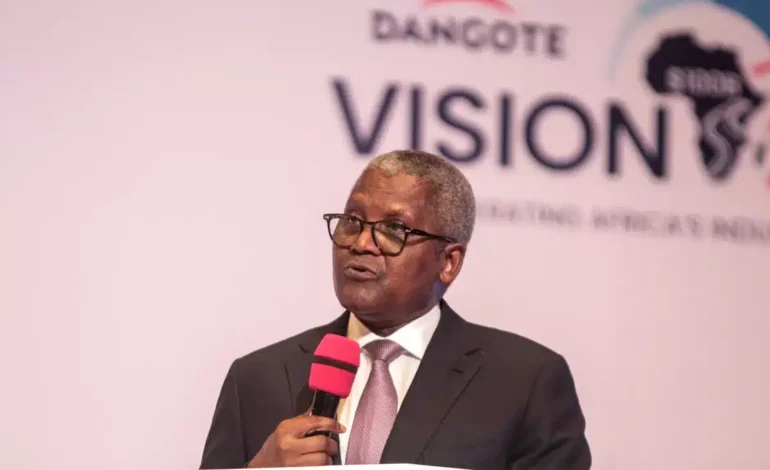
Nigerian industrialist Aliko Dangote is planning to invest more than $3.5 billion in a 2,650-kilometre petroleum-products pipeline linking Namibia, Botswana and South Africa, as part of a much larger ambition to move refined fuel across Africa by pipeline rather than relying heavily on road transport.
The proposed Southern African network would form part of an approximately 4,000-kilometre cross-border distribution system designed to connect Dangote’s refining and storage infrastructure with landlocked markets across sub-Saharan Africa. Dangote disclosed the plan in a Bloomberg TV interview following the launch of the public share offering for his energy business.

The immediate logic is moving fuel by road across several borders is expensive, slow and vulnerable to delays. For landlocked countries such as Zimbabwe, Zambia and Botswana, fuel must often travel long distances from coastal ports or neighbouring markets before reaching consumers. Dangote has pointed to Zimbabwe, where petrol prices have at times approached $6 per gallon, as an example of how transportation costs and border delays can add to the price paid by consumers.

The proposed corridor begins with infrastructure Dangote is developing around Namibia’s Walvis Bay. The group is finalising approvals for a 240-million-barrel tank farm there, according to Dangote Refinery CEO David Bird. From Namibia, the planned pipeline network would move petroleum products through Botswana and into Zimbabwe and Zambia, with the longer-term vision potentially extending south into South Africa and north towards the Democratic Republic of Congo.

This is key as Africa does not only have a refining problem. It also has a distribution problem.
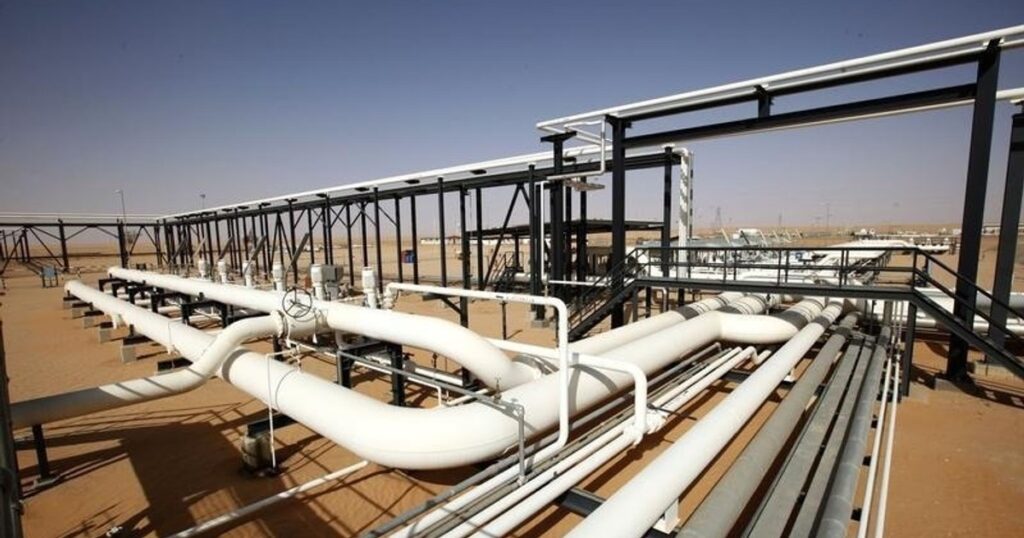
A refinery can produce millions of litres of fuel, but production capacity means little if the product cannot reach consumers cheaply and reliably. Africa’s fragmented transport networks, congested borders, limited storage and dependence on road tankers raise the cost of moving energy between countries. A large pipeline network could therefore turn refined petroleum into a genuinely regional commodity rather than something that remains trapped close to coastal markets.

The Refinery Behind The Pipeline
At the centre of Dangote’s strategy is the $20-billion-plus Dangote Petroleum Refinery in Lagos. The refinery currently has a crude-processing capacity of up to 700,000 barrels per day and is designed to produce petrol, diesel and jet fuel to Euro V standards. The company is pursuing an expansion to approximately 1.4 million barrels per day, potentially making it one of the world’s largest refining complexes.
The scale is already changing Nigeria’s position in the regional fuel market. It is reported that Nigeria’s petroleum-product imports had fallen from around 400,000 barrels per day in 2024 to about 83,000 barrels per day in 2026, while Dangote’s refinery produced roughly 270,000–300,000 barrels per day of gasoline during the year to date. The refinery has also become a major exporter of diesel and jet fuel.
In the second quarter of 2026, Dangote supplied about 80,000 barrels per day of jet fuel to Europe, according to Kpler data, making it one of the continent’s largest sources of imported jet fuel.
The proposed pipeline network takes that story a step further. Instead of simply wondering, “How much can Africa refine?”, Dangote is increasingly asking, “How do we move what Africa refines across Africa?”
Why Southern Africa?
Southern Africa presents a particularly interesting market because several countries depend heavily on imported petroleum products while sitting far from major refining centres.
South Africa itself has undergone major changes in its refining sector. Several local refineries have closed or reduced operations, contributing to the country becoming increasingly dependent on imported refined petroleum products. South Africa’s government continues to note that both crude oil and finished petroleum products are imported, exposing domestic prices to international prices, shipping costs and exchange-rate movements. At the same time, Transnet’s multi-product pipeline project has suffered years of delays, with its estimated cost rising to about R28 billion and completion pushed to the end of 2027.
That creates an infrastructure gap at precisely the time Dangote is trying to expand the movement of refined products around the continent. But the plan is not simply about competing with South Africa. It could create another supply route into the region while giving Dangote access to multiple markets beyond Nigeria.
For Zambia and Zimbabwe, the implications could be even greater because they are landlocked. A pipeline can move large volumes continuously, unlike road tankers, which require drivers, trucks, fuel, border processing and repeated journeys.
Bigger Dangote Expansion
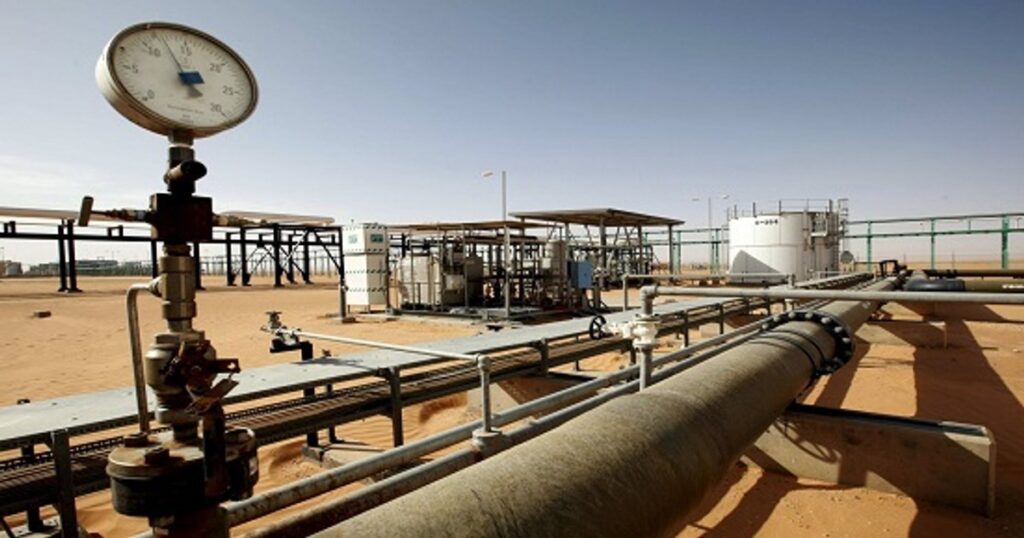
The Southern African pipeline is only one piece of Dangote’s next phase. The group is also considering pipeline infrastructure in East Africa, including a route connecting Djibouti with Ethiopia and another linking Kenya’s Lamu port with inland markets in the Horn of Africa.
Dangote’s refinery CEO has also indicated that the group is considering a second refinery in East Africa. If the Nigerian refinery reaches its planned 1.4-million-barrel-per-day capacity and the new refinery is developed, Dangote has said the group could eventually reach about 2.1 million barrels per day of refining capacity. That would move Dangote from being primarily a Nigerian industrial company into something closer to a continental energy-infrastructure player.
And the ambitions do not stop at oil. Dangote has announced plans to invest more than $10 billion in Africa’s power sector over the next three to four years, saying the investment could include funds originally earmarked for other projects. His argument is blunt: Africa cannot industrialise without electricity. “We will never, ever create growth without power,” Dangote said recently, pointing to the more than 600 million Africans who still lack access to electricity.
The group is also expanding its fertiliser business. Dangote Fertiliser operates a $2.5 billion plant in Lagos with annual urea production capacity of about three million tonnes. The company plans to raise total fertiliser production to around 12 million tonnes annually by 2028, including through a proposed major plant in Ethiopia.
Dangote has framed the Ethiopian investment around food security, arguing that Africa can feed itself and eventually become a net exporter of agricultural products. He has also confirmed plans to list the fertiliser business in 2028, describing it as potentially “the biggest fertiliser company on earth.”
From Cement To A Continental IndustrialNetwork
This expansion reflects how Dangote’s business model has evolved. The group began as a trading company before moving aggressively into manufacturing, particularly cement. Dangote Cement now has operations across several African countries, while the group has expanded into sugar, fertiliser, petrochemicals, oil refining and other industries.
The strategy is increasingly based on building the infrastructure surrounding production — factories, power, storage, ports, pipelines, transport and distribution. That philosophy was captured in a recent reflection by Emir of Kano Sanusi Lamido Sanusi on Dangote’s early transition from trading and importing to manufacturing.
“Somebody needs to produce the petrol for your cars, somebody needs to produce the cement for your houses, somebody needs to produce the food that you eat,” Sanusi recalled. “Our strategy is to produce those things here.”
Dangote himself has repeatedly connected his investments to the broader question of African industrialisation. The refinery’s own message is similarly direct: “We believe Africa can fuel itself.” That idea explains why the pipeline is important.
A refinery in Nigeria supplying fuel to Nigeria is industrialisation. A refinery in Nigeria supplying multiple African markets through dedicated infrastructure begins to look like something bigger: an integrated regional supply chain.
Value Creation
There is, however, another side to the story. Building a 2,650-kilometre pipeline across multiple sovereign states is enormously complicated. It requires regulatory approvals, land agreements, financing, security arrangements, environmental assessments, tariffs and long-term commercial commitments from the countries along the route.
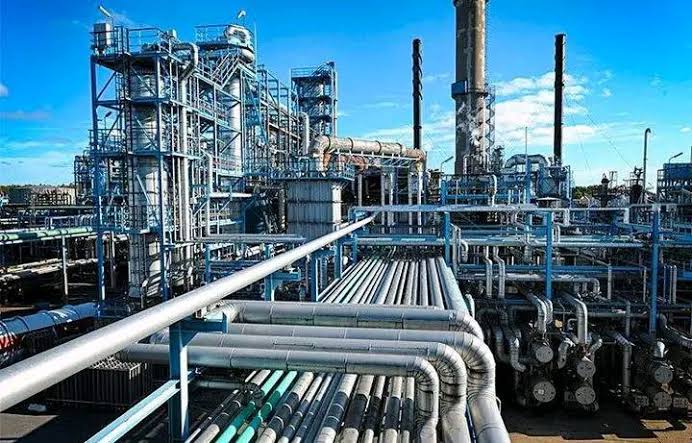
The pipeline must also compete with existing ports, railways, road networks, storage facilities and established fuel suppliers. And infrastructure alone does not guarantee cheaper fuel. The final price still depends on crude costs, refining margins, taxes, tariffs, financing, exchange rates and distribution costs.
For Africa, however, the strategic question is larger than the price of petrol. The continent has spent decades exporting crude oil and importing refined petroleum products. Dangote’s refinery challenges that model by moving more refining into Africa. His proposed pipeline network adds another layer by attempting to keep more of the distribution chain within Africa as well.
The same logic appears in his fertiliser, power and petrochemical ambitions: produce locally, build infrastructure around production, supply neighbouring markets and reduce dependence on distant suppliers. That is why Dangote’s latest project deserves attention beyond the billionaire himself.
If the Southern African pipeline is built, it would not simply be a pipeline carrying fuel. It would represent an attempt to connect African production to African consumers through African-controlled infrastructure.
The larger test will be whether these projects can deliver what Africa has struggled to achieve for decades: turning its enormous markets into integrated production networks, rather than simply large destinations for imported goods.
Key Figures To Note
- $3.5+ billion — planned investment in the Southern African petroleum pipeline.
- 2,650 km — reported length of the Southern African route.
- ~4,000 km — broader cross-border pipeline network envisioned across sub-Saharan Africa.
- 700,000 barrels/day — Dangote Refinery’s current design capacity.
- 1.4 million barrels/day — planned Nigerian refinery capacity after expansion.
- $14.3 billion — estimated refinery expansion investment.
- $10+ billion — Dangote’s newly announced potential investment in African power over 3–4 years.
- $2.5 billion — Dangote Fertiliser’s Lagos plant.
- ~3 million tonnes/year — current urea capacity at the Lagos fertiliser plant.
- ~12 million tonnes/year — targeted fertiliser capacity by 2028.
- $1.82 billion — Dangote Refinery net profit in H1 2026, versus a $476 million loss for all of 2025.
RELATED: