Faith Nyasuguta

Nairobi has been awarded the 2029 World Athletics Championships, making Kenya the first African country to host World Athletics’ flagship outdoor championship. The decision was announced on September 15, 2026, after the World Athletics Council met in Budapest, Hungary, where Nairobi emerged from a competitive field that included London, Rome and Munich. Munich was simultaneously awarded the 2031 championships.
The significance goes beyond Kenya. Since the World Athletics Championships began in 1983, the global event has been staged across Europe, Asia, North America and the Middle East, but never on African soil. Nairobi 2029 therefore closes a major geographical gap in one of the world’s most global sports. The next three editions will now span Asia in Beijing in 2027, Africa in Nairobi in 2029 and Europe in Munich in 2031, reflecting World Athletics’ stated objective of expanding the championship’s global reach.

For Kenya, the decision is also a recognition of a relationship with athletics that stretches back generations. Kenya is the second-most successful nation in World Athletics Championships history, and at the 2025 championships in Tokyo it finished second on the medal table with seven gold medals and 11 medals overall. Its global reputation has been built particularly through middle- and long-distance running, with athletes including Faith Kipyegon, Eliud Kipchoge, Hellen Obiri, David Rudisha, Vivian Cheruiyot, Paul Tergat, Tegla Loroupe and Olympic champion Kip Keino becoming part of the sport’s international history.

But the bid was not won simply because Kenya produces exceptional runners. World Athletics says Nairobi returned with a substantially stronger proposition after its unsuccessful bid for the 2025 championships, which were eventually awarded to Tokyo. The 2029 proposal combined operational planning, financial guarantees, public support and infrastructure plans, while building on Nairobi’s growing record of successfully hosting major international athletics competitions.

Kasarani At The Centre
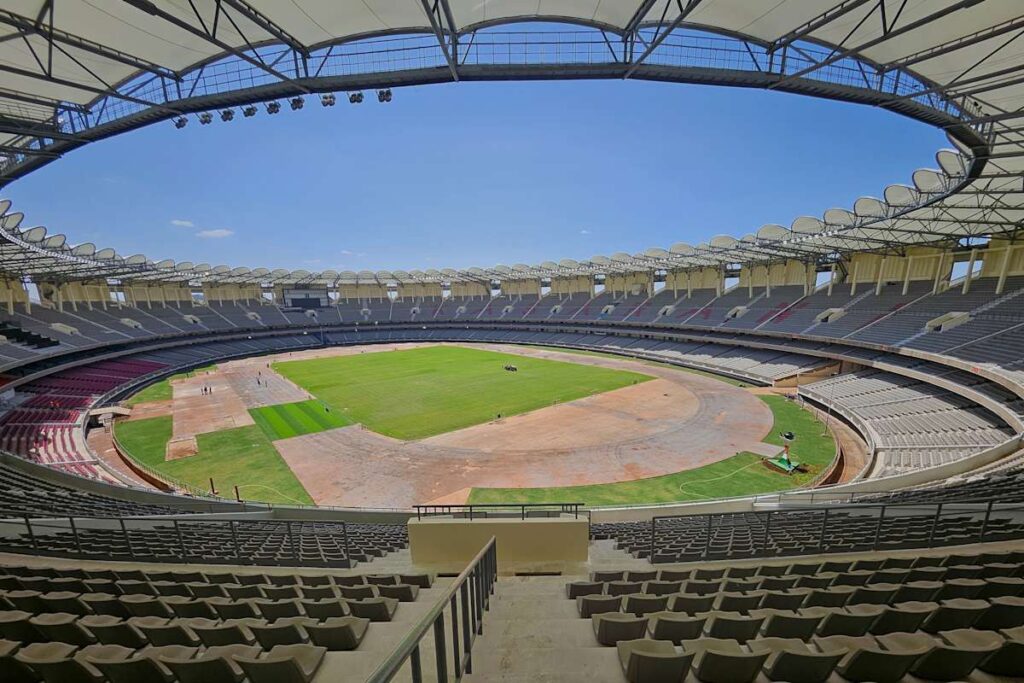
The main venue will be Moi International Sports Centre, Kasarani, which is currently undergoing a major renovation ahead of Kenya’s co-hosting of the 2027 Africa Cup of Nations. The timing is important because the same investment in sporting infrastructure is now expected to serve two major continental and global events only two years apart.

World Athletics says Kasarani is undergoing a complete structural overhaul of its facilities. That gives Kenya an opportunity to address one of the longstanding weaknesses of African bids for major sporting events: the gap between sporting talent and the infrastructure required to consistently host global competitions.
The championship will therefore test much more than the track itself. A World Athletics Championships involves athletes, coaches, officials, broadcasters, journalists, medical teams, technical staff and spectators from around the world. The city must provide accommodation, transport, security, telecommunications, medical services, training venues and reliable event logistics at international standards.
That creates an opportunity for Nairobi’s wider sports economy. Hotels, restaurants, airlines, transport companies, tour operators, event-management firms, broadcasters, security companies, technology providers and small businesses can all benefit from increased international activity. The value of such events is not limited to ticket sales; their wider economic effect comes from the ecosystem created around thousands of visitors and a globally televised competition.
There is, however, an important distinction between potential economic benefits and guaranteed economic gains. Kenya will need to ensure that public expenditure on infrastructure is transparent, projects are completed on time and facilities have a useful life beyond the championship itself. A stadium that becomes underused after a major tournament is not necessarily a successful development project simply because the event itself was popular.
Nairobi Has Been Building Experience
The 2029 championship is not Nairobi’s first major encounter with World Athletics.
The city hosted the World Athletics U18 Championships in 2017, when large crowds filled Kasarani and demonstrated the country’s appetite for international athletics. Nairobi then hosted the World U20 Championships in 2021, successfully staging the event during the difficult COVID-19 period. The city has also hosted the Kip Keino Classic, which became part of the World Athletics Continental Tour Gold series when the tour was launched in 2020.
Those events matter because hosting a global championship is an organisational skill that has to be developed. Officials must understand accreditation, anti-doping procedures, broadcasting requirements, athlete services, competition technology, security and crowd management. Nairobi’s experience gave World Athletics evidence that Kenya was not starting from zero.
The broader African experience is growing too. Kampala, Uganda, hosted the World Cross Country Championships in 2017, while Gaborone, Botswana, hosted the World Athletics Relays in 2026, becoming the first African host of that particular event. These competitions have gradually expanded the continent’s expertise in staging World Athletics events.

Nairobi 2029 takes that progression to another level because the World Championships are the sport’s biggest global event.
Kenya Has An Audience For Athletics
One of Nairobi’s strongest assets is not infrastructure but the audience.
World Athletics research cited in its announcement found that 68% of Kenyans surveyed rated their interest in athletics as high, compared with a global average of 39%. Kenya recorded the highest net promoter score among the markets surveyed, while athletics is the country’s second-most-followed sport after football. Kenya is also the fourth-highest country in terms of followers of World Athletics’ social-media channels.
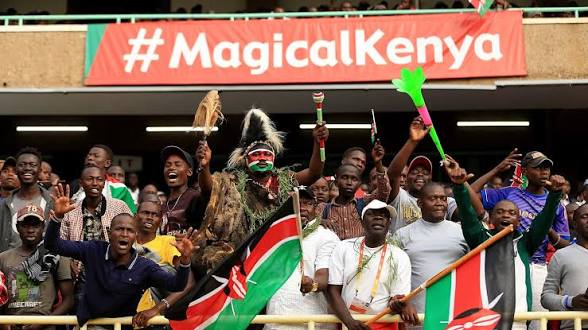
That matters commercially. A major championship needs spectators, television audiences, sponsors and a population willing to engage with the event beyond the stadium. Kenya’s athletics culture gives Nairobi a ready-made audience that many host cities would have to build through marketing.
The championship could also become a platform for exposing a wider range of African athletics talent. Kenya is internationally associated with distance running, but the continent has produced world-class athletes across sprinting, jumping, throwing and combined events. Hosting the championships in Nairobi could broaden the global image of African athletics beyond the traditional dominance of East African endurance running.
The Doping Issue Will Not Disappear
The biggest credibility challenge accompanying the announcement is Kenya’s long-running doping problem.
Kenya remains one of the world’s great athletics nations, but hundreds of Kenyan athletes have been sanctioned for anti-doping violations. Reports citing Athletics Integrity Unit data put the number of Kenyan athletes sanctioned since the AIU was established in 2017 at more than 300, with concerns continuing around the integrity of elite competition.
Kenya has responded with increased investment in anti-doping programmes. Recent reporting says the government has been spending approximately US$5 million annually on anti-doping efforts, while reforms have strengthened testing, education and cooperation with international athletics authorities.
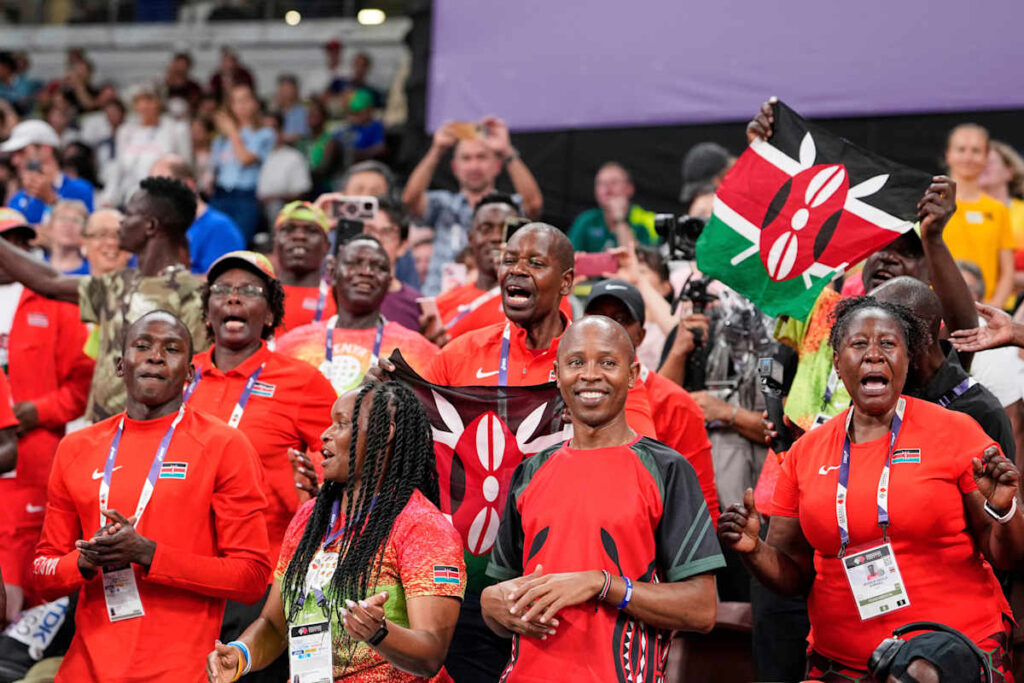
The Nairobi championship will consequently put Kenya’s anti-doping system under an enormous international spotlight. Every positive test, missed test, suspicious performance or procedural failure will attract global attention. The event gives Kenya an opportunity to demonstrate that sporting excellence and sporting integrity can advance together, but that credibility will have to be earned through consistent enforcement rather than declarations.
This Is Bigger Than Kenya
The most important dimension of Nairobi 2029 may ultimately be what it says about Africa’s ability to host the world’s biggest sporting events.
For decades, Africa has produced some of the world’s greatest athletes while remaining comparatively underrepresented as a host of global sporting competitions. The continent has hosted major football tournaments, the Olympic Games have never been held in Africa, and the World Athletics Championships had never been staged here.
Nairobi changes that equation for athletics. The symbolism is especially powerful because Kenya is not simply a country that happens to have athletes. Running is embedded in communities, schools, training camps and national identity. Athletes from Kenya have transformed the economics of professional running and made places such as Iten and Kaptagat internationally recognised training centres.
The challenge now is to convert that sporting reputation into institutional and economic capacity.
A successful 2029 championship should leave Kenya with more than medals and memories. It should leave behind improved stadiums, stronger event-management expertise, better sports science, expanded tourism networks, stronger local businesses, improved broadcasting and technology capabilities, and opportunities for young Africans to enter careers beyond competing on the track.
It can also strengthen Nairobi’s position as a continental events hub. The city already hosts major international conferences, diplomatic institutions, UN agencies and sporting competitions. A successful World Championships would reinforce the argument that African cities can host global events at the highest level when infrastructure, planning and financing are properly aligned.
The Real Test Starts Now
Winning the bid is the headline. Delivering the championship is the real assignment. Kenya now has roughly three years to transform the promise of the bid into a functioning global sporting operation. Kasarani must be ready. Transport and accommodation systems must work. Athletes must receive world-class facilities. Anti-doping systems must be trusted. Public finances must withstand scrutiny. Local businesses must be positioned to participate. And the infrastructure built for 2027 and 2029 must continue serving Kenyans long after the final race.
The choice of Nairobi also carries a wider message for the continent. Africa does not lack sporting talent, audiences or international relevance. What it has historically lacked is sufficient infrastructure and institutional capacity to consistently convert those strengths into global events hosted on African soil.
Nairobi 2029 is therefore more than the first World Athletics Championships in Africa. It is a test of whether a city that has spent decades producing world champions can now build the systems capable of bringing the world’s championships home.
For Kenya, the opportunity is enormous. For African sport, the significance is even bigger. The starting gun has effectively been fired—not for a race on the track, but for a new chapter in Africa’s role as a host, organiser and owner of global sporting events.
RELATED: