Faith Nyasuguta

The United States has formally expressed its readiness to help Kenya develop a domestic critical minerals processing industry, placing East Africa’s largest economy more firmly inside the global race to secure the materials powering electric vehicles, advanced electronics, renewable energy and military technology.
The announcement comes as Kenya evaluates investors seeking rights to develop Mrima Hill in Kwale County, a strategically important deposit containing niobium and rare earth elements. American companies are among those competing for the project, while Washington and Nairobi are discussing a broader model that could see minerals processed inside Kenya rather than exported as raw materials.

For Africa, the development carries significance beyond one mine.

It brings Kenya into an increasingly intense contest involving the United States, China andto a growing extent, the European Union and other industrial powers. The competition is no longer simply about owning mines. It is increasingly about controlling the entire supply chain—from exploration and extraction to processing, refining and manufacturing.
That distinction could determine whether Kenya becomes another supplier of raw materials or captures a larger share of the wealth generated from them.
The US Wants Kenya To Process, Not Just Mine

Speaking in Nairobi, U.S. Assistant Secretary of State for Africa Frank Garcia said critical minerals were a major priority for the administration of President Donald Trump and Secretary of State Marco Rubio.
Garcia said Washington was ready to work with Kenya as it develops its mining industry, emphasising transparency, community interests and stronger supply chains. The timing is key.
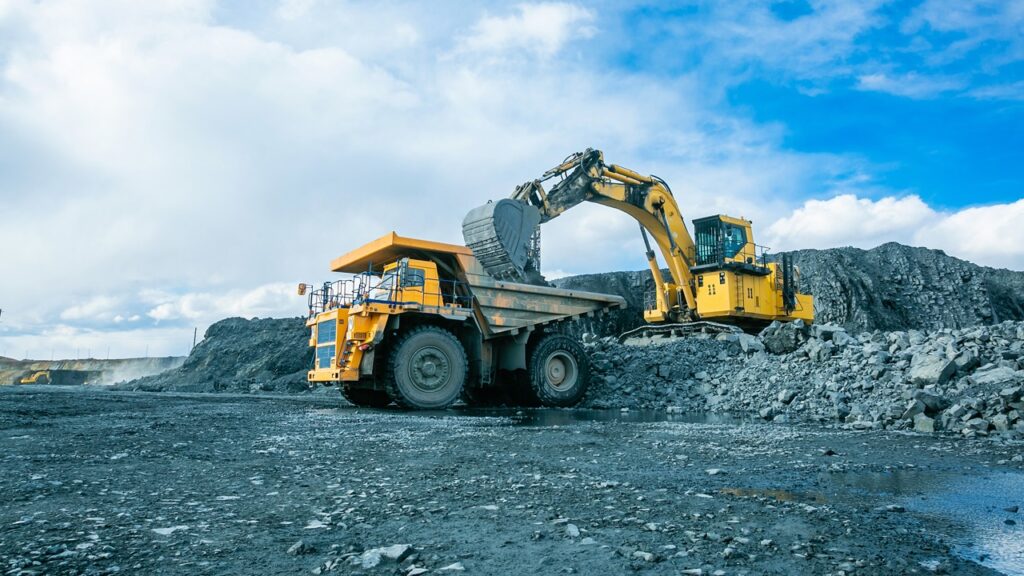
Kenya has identified several minerals considered strategically important in the modern global economy, including rare earth elements, niobium, lithium, graphite, copper and nickel. The country is now attempting to develop a mining industry capable of doing more than simply extracting and exporting these resources.
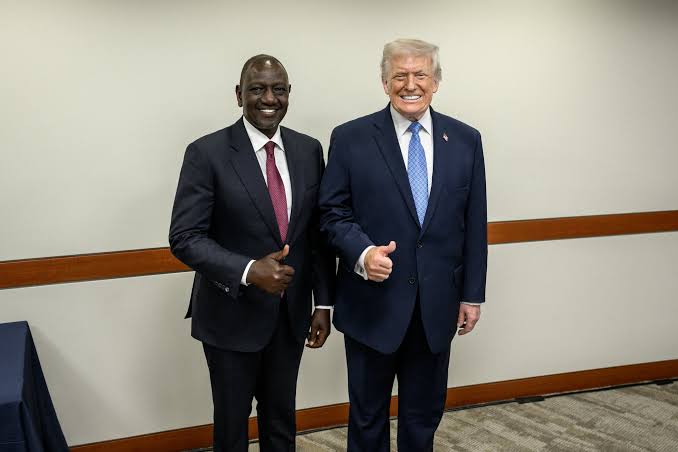
President William Ruto had already indicated that Kenya and the United States were moving towards a critical minerals agreement. Speaking in France in June 2026, Ruto said the two countries had agreed that minerals covered by the emerging partnership should be processed in Kenya. That commitment to local processing is central to the story. Mining creates value. But processing and refining can create substantially more.
A country that exports unprocessed ore often receives only a fraction of the economic value generated further down the supply chain. The minerals may then be refined elsewhere, turned into specialised materials in another country and eventually incorporated into batteries, electronics, aircraft, wind turbines or defence equipment somewhere else.
For decades, this has been one of Africa’s deepest economic contradictions: countries rich in resources have often remained dependent on other countries to transform those resources into higher-value products. Kenya is now trying to avoid repeating that model.
Mrima Hill
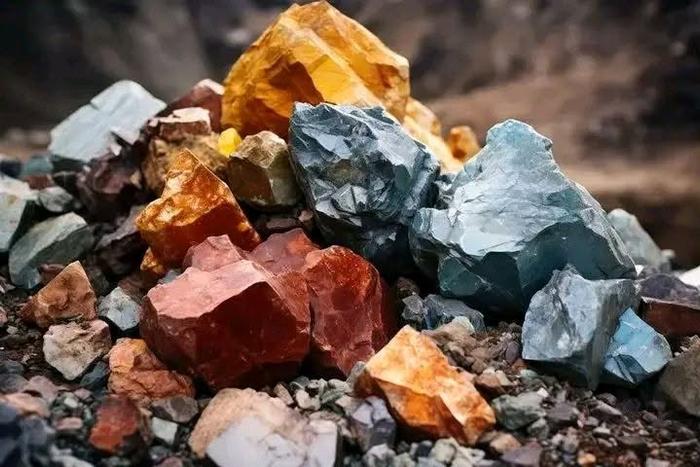
At the centre of Washington’s growing interest is Mrima Hill, located in Kwale County on Kenya’s southern coast, roughly 65 kilometres southwest of Mombasa. The area has been known to contain valuable minerals for decades.
Kenya’s Ministry of Mining says the prospect was first identified in the 1930s, with significant exploration carried out during the 1950s. More recent geological mapping has confirmed the presence of strategic minerals, including niobium and rare earth elements.
Government tender documents describe a substantial geological prospect. The ministry estimates indicated resources of 5.8 million tonnes grading 1.41% niobium oxide and 48.7 million tonnes grading 4.4% total rare earth oxides. It also estimates larger inferred resources of 17.5 million tonnes containing niobium and 110.7 million tonnes containing rare earth oxides.
These figures are significant—but they need to be understood correctly. A geological resource estimate is not the same thing as money sitting in a bank account.
It does not automatically mean Kenya possesses tens of billions of dollars in immediately recoverable wealth. Commercial value depends on further exploration, the ability to extract and process the minerals, global prices, infrastructure, environmental requirements and the cost of building a viable mine.
The Kenyan government itself notes that further work is required to establish the project’s full economic viability. That is why Mrima Hill should be viewed as a potentially major strategic asset rather than a guaranteed jackpot.
Rare Earths & Nobium
Despite the name, rare earth elements are not necessarily rare in the Earth’s crust. What makes them strategically important is that commercially viable deposits are difficult and expensive to develop, while processing them requires specialised technology.
The group consists of 17 elements used in products ranging from smartphones and electric motors to wind turbines, medical technology and advanced defence equipment. Some rare earth elements are essential for producing powerful permanent magnets used in electric vehicles and renewable energy systems.
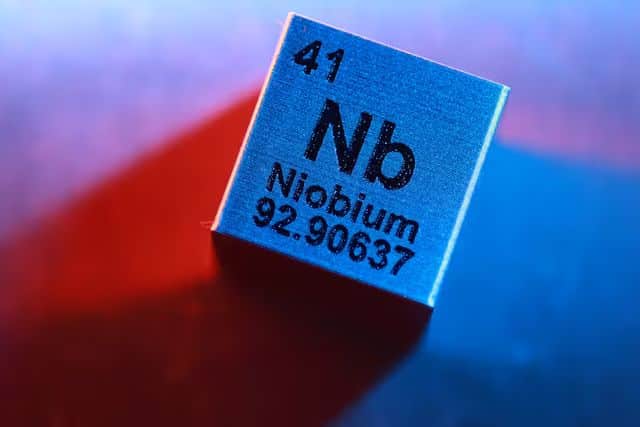
Niobium, meanwhile, is used to produce high-strength alloys and specialised steel. Its applications include infrastructure, pipelines and aerospace technologies. In other words, these minerals are increasingly important because the global economy is becoming more technologically dependent on them.
The country that controls access to the minerals has influence. The country that controls processing has even more.
The Mrima Hill Competition
Kenya opened a competitive process for the development of Mrima Hill earlier this year. The Ministry of Mining issued a request for expressions of interest in March, with submissions closing on April 21, 2026. The project covers approximately 31.9 square kilometres.
Several companies have entered the competition. U.S.-linked groups are among those seeking the right to develop the deposit. It was reported that six companies were on the shortlist under consideration, including two American consortia.
One publicly identified contender is the Mrima Earth Limited Consortium, led by U.S.-listed Critical Metals Corporation. The company announced in July that it had advanced in the tender process. However, Kenya’s government remains responsible for the final decision.
That matters because Mrima Hill is not simply a commercial mining project. The outcome will also signal how Kenya intends to manage strategic resources at a moment when major powers are competing aggressively for access to Africa’s mineral wealth.
Not Just a US- China Contest
China is the most obvious competitor in the critical minerals race, but the picture is broader. China has spent decades building a dominant position in mineral processing and global supply chains. Its influence is particularly visible in Africa, where Chinese companies have invested heavily in mining and infrastructure.
The Democratic Republic of Congo is one of the clearest examples. The DRC is a global mining giant, producing large quantities of copper and cobalt—two minerals central to the energy transition. China has built extensive commercial links with Congolese mining, processing and export networks.
But the United States is increasingly attempting to build alternatives. In 2026, for example, Congolese state mining company Gécamines announced plans involving 100,000 tonnes of copper intended for the American market, supported through Mercuria. The volume represented part of the effort to diversify mineral supply chains.
Recent reports indicate that U.S. copper imports from the DRC reached 53,290 metric tonnes in July 2026 alone, compared with less than 32,000 tonnes imported during the whole of 2024.
Washington is therefore not starting from zero. It is attempting to build a larger network of African mineral partnerships.
The United States has strategic interests in the DRC, Zambia and other mineral-producing countries, while the Lobito Corridor—linking mineral-producing areas of Central Africa to Angola’s Atlantic coast—has become one of the most important Western-backed infrastructure projects on the continent.
Meanwhile, the European Union is also trying to reduce its dependence on Chinese-controlled supply chains. Under its Critical Raw Materials Act, the EU has set targets for increasing domestic extraction, processing and recycling by 2030.
Japan, South Korea, India and other industrial economies are also seeking more secure access to strategic minerals. So Africa is not watching a simple two-man race. It is becoming the arena for a wider global competition over the materials required to power the next industrial era.
Has The US Done This Before?
For decades, the United States has relied heavily on global markets and overseas suppliers for many minerals. The problem became increasingly visible as China developed extraordinary strength in refining and processing critical materials.
The COVID-19 pandemic, geopolitical tensions and export restrictions exposed the vulnerability of long supply chains.
Critical minerals are now increasingly treated in Washington as a national security issue, not simply a commercial one. The logic is straightforward. A country cannot confidently build electric vehicles, renewable energy systems, advanced electronics and military technologies if another geopolitical rival controls major parts of the supply chain.
This explains why the United States has increasingly turned to state-backed financing, partnerships, strategic investments and long-term offtake agreements.
An offtake agreement allows a company or buyer to secure the right to purchase future production from a mining project. Such agreements can help miners raise financing because they know a buyer already exists.
China has used similar long-term commercial strategies across Africa. The United States is now trying to become more competitive.
Why Kenya?
Kenya does not currently occupy the same position as the DRC in cobalt or Zambia in copper. But it offers something Washington increasingly values: geological potential, regional influence, infrastructure and access to the Indian Ocean.
Mrima Hill is located near the Kenyan coast and has access to the country’s transport network and the Port of Mombasa.
Kenya also has ambitions beyond its own mineral deposits. The government wants the country to become a regional industrial and processing centre. If mineral concentrates from Kenya—and potentially neighbouring countries—can be processed domestically, the country could develop a new industrial sector around critical minerals. That would be a much bigger opportunity than a single mine. But it will require enormous investment.
Mining and processing facilities are expensive. Rare earth processing is technologically complex. Kenya will need skilled workers, reliable energy, environmental safeguards, water infrastructure and long-term financing.
A promise to process minerals locally is therefore only the beginning. The real test will be whether factories are actually built.
Who Captures The Value?
The critical minerals race could bring Africa more investment. It could create jobs. It could build roads, ports, processing plants and industrial capacity. But it could also repeat an old pattern. Foreign companies arrive. African countries provide the land and minerals. Raw materials leave.
The highest-value processing takes place elsewhere. Africa remains rich underground but comparatively poor above it. That is the model Kenya says it wants to change.
U.S. officials have emphasised transparency and local value addition while criticising competitors for extracting minerals and capturing value elsewhere. Those promises should be judged by results. The nationality of an investor does not automatically determine whether a mining project benefits Africans.
A Chinese company can create local jobs and infrastructure. An American company can export raw materials. An African company can also operate irresponsibly.
The real concern is the structure of the agreement. Who owns the mine? How much revenue remains in Kenya? How many jobs are created? Will Kenyan workers receive technical training? Will processing happen locally? How will communities be compensated? What environmental protections will exist? Will the government publish the major terms of strategic mining agreements?
Mrima Hill Required Caution
Mrima Hill’s development cannot be discussed only in terms of wealth and geopolitics. Mining projects have environmental and community consequences. Kenya’s government classifies rare earths and niobium as strategic minerals, but the eventual developer will still have to comply with Kenyan mining and environmental laws.
The area has also attracted scientific attention because of naturally occurring radioactive elements associated with the geological formation. A University of Nairobi study examining soils around the area reported elevated concentrations of certain radionuclides and recommended careful attention to environmental and radiological risks.
That does not mean the project cannot be developed. It means development must be done properly. Communities should not be asked to choose between economic opportunity and their health.
The Moment Kenya Must Get Right
Washington’s interest gives Kenya leverage. China’s established presence across African mining gives African governments alternatives. European demand creates another market. The global scramble for critical minerals means African countries are no longer negotiating from the same position they occupied decades ago. But leverage only matters if it is used.
Kenya’s greatest opportunity is not to choose between America and China. It is to negotiate in Kenya’s interest. That means competition among investors should produce better terms—not merely different foreign flags above the same extractive model.
Kenya should demand transparency. It should insist on environmental protections. It should prioritise local employment and skills transfer. And where economically viable, it should insist on processing and value addition inside the country.
RELATED: