Faith Nyasuguta

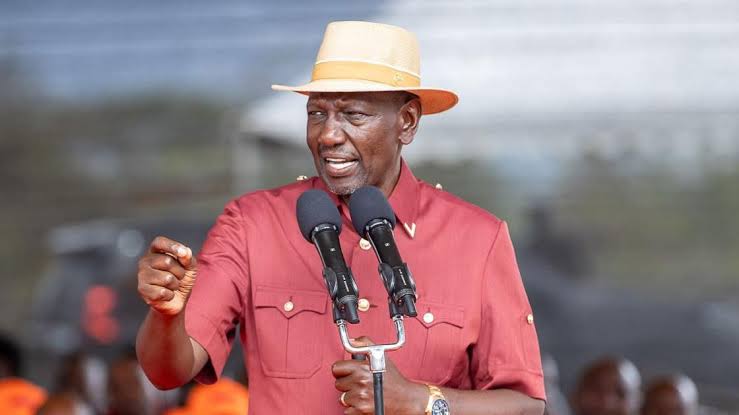
Burundi has raised serious concerns over the treatment of its citizens in Kenya following controversy surrounding President William Ruto’s remarks on foreigners operating small-scale businesses.
Burundian authorities have cited reports of harassment, mistreatment and the forced removal of Burundian nationals, particularly traders whose livelihoods depend on small businesses. The concerns have prompted calls for regional intervention, with Burundi seeking the involvement of the East African Community at the highest level.

The matter has now moved beyond a domestic debate over small-scale trade. It has become an early test of the East African Community’s commitment to free movement, the right of establishment and the broader ambition of building a more integrated—and eventually less economically fragmented—Africa.

The controversy began after President Ruto addressed micro, small and medium-sized traders at State House in Nairobi on September 2. His remarks were widely interpreted as a directive to prevent foreigners from operating businesses such as hawking and small-scale retail. Reports quoting the President indicated that enforcement would begin the following week.

The comments immediately caused anxiety among foreign traders, particularly citizens from neighbouring East African countries. Burundian traders were among those who feared losing businesses that provide their primary source of income. Some reports indicated that traders were already concerned about harassment and uncertainty over whether they would be allowed to continue operating.
However, Kenya’s government has since issued an important clarification. On September 6, Principal Secretary for Foreign Affairs Korir Sing’Oei said President Ruto had not imposed a blanket ban on foreigners doing business in Kenya. According to Sing’Oei, the President’s remarks had been taken out of context and were linked to the ongoing debate surrounding the Local Content Bill, 2025.


Sing’Oei stated that foreigners—including Burundians, East Africans and other Africans—remain legally protected to live, work and conduct business in Kenya as long as they comply with Kenyan law and possess the necessary documentation, including work permits and business licences.
That clarification significantly changes the legal picture.
Kenya has not formally announced a blanket prohibition preventing all foreign nationals from operating small businesses. Instead, the government’s position is that foreign traders can continue operating legally if they meet the country’s immigration, licensing and regulatory requirements.
Yet the clarification has not entirely ended the controversy.
For Burundians who reportedly experienced harassment or feared removal from their businesses, the distinction between a formal ban and political rhetoric may matter less than what happens on the ground.
Burundi’s Concerns
Relations between ordinary Kenyan citizens and foreign traders have occasionally been strained by economic competition, particularly in the informal sector.
Small businesses occupy an unusually sensitive space in Kenya’s economy. Hawking, food vending, kiosks, salons, retail stalls and other forms of informal commerce provide livelihoods to millions of people. These businesses often require relatively little capital compared with large companies and therefore become highly competitive during periods of unemployment and economic hardship.
Foreign traders can easily become visible targets when citizens feel that economic opportunities are shrinking.
For Burundian nationals, the latest controversy comes after earlier concerns about hostility towards some traders in Kenya. Videos and reports involving confrontations with Burundian vendors have circulated publicly, raising concerns about discrimination and xenophobia.
A country can regulate business. It can enforce immigration laws. It can require licences and work permits. But enforcement must not turn into harassment based on nationality.
The protection of foreign nationals is especially important within the East African Community, where Kenya and Burundi are not simply neighbouring countries. They are members of the same regional bloc.
The EAC currently consists of eight Partner States: Burundi, the Democratic Republic of Congo, Kenya, Rwanda, Somalia, South Sudan, Uganda and Tanzania.
For decades, the organisation has promoted deeper economic and political integration among East African countries.
What EAC Promises
The East African Community Common Market Protocol was designed to make the region more economically integrated. Its central objectives include the free movement of goods, people, labour, services and capital. It also recognises the right of establishment and residence for citizens of EAC Partner States.
The right of establishment is particularly relevant to the current dispute.

In principle, it allows citizens of one EAC country to establish and pursue legitimate economic activities in another Partner State, subject to national laws and regulations. That does not mean an East African citizen can ignore Kenyan law. A Burundian operating a business in Kenya must still comply with immigration requirements, licensing regulations, tax obligations and other applicable laws.
However, the regional framework was created precisely to prevent East Africans from being treated simply as ordinary foreigners when engaging in legitimate economic activity across the region. This creates a delicate balance.
Kenya retains the sovereign authority to regulate its economy. But those regulations must exist alongside commitments Kenya has already made through the EAC. That tension is not unique to Kenya.
In fact, Tanzania faced a remarkably similar controversy only a year earlier.
Tanzania’s Foreign Trader Restrictions
In July 2025, Tanzania introduced restrictions preventing non-citizens from participating in several categories of small-scale businesses.
The Business Licensing regulations restricted foreigners from activities including certain retail and wholesale businesses, mobile money services, salons, electronic repair, tour guiding, real estate brokerage and other small-scale economic activities.
The policy immediately raised concerns because its impact extended beyond non-African investors. It also affected citizens from neighbouring EAC countries.
The restrictions became controversial precisely because Tanzania is a member of a regional bloc that promotes the free movement of people and the right of establishment. The issue eventually reached the East African Court of Justice through a legal challenge questioning whether the restrictions were compatible with EAC obligations.
Tanzania’s decision demonstrated one of the central weaknesses of African integration. Regional governments can sign ambitious agreements promising freer movement and larger markets while domestic political pressures continue pushing governments towards economic nationalism. The same tension is now visible in Kenya.
Governments want to protect local entrepreneurs. Citizens want employment opportunities. Political leaders are under pressure to demonstrate that national economies are working for their own people. These are legitimate concerns. But regional integration becomes difficult when protecting citizens is interpreted as excluding citizens of neighbouring African countries.
Ghana-Another African Precedent
Similar tensions have emerged elsewhere on the continent. Ghana has long maintained restrictions on foreign participation in sections of its informal retail economy. The country’s investment framework has historically reserved certain small-scale trading activities for Ghanaian citizens.
These policies have periodically caused tensions with foreign traders, including West Africans who are themselves covered by regional integration arrangements under the Economic Community of West African States, or ECOWAS.
The Ghanaian experience demonstrates that the conflict between national protectionism and regional free movement is not uniquely East African.
Across Africa, governments are trying to solve the same problem. Millions of citizens depend on informal trade. Youth unemployment remains high. Access to capital is limited. Formal jobs are insufficient.
When foreign traders enter the same small economic spaces, competition becomes politically explosive. But removing foreign traders does not automatically solve the underlying economic problem. The deeper challenge remains the creation of enough productive businesses and jobs for Africa’s rapidly growing population.
Borderless African Dream & The Marketplace

The controversy in Kenya exposes a contradiction at the heart of African integration. African governments regularly speak about a borderless Africa.
The African Continental Free Trade Area promotes the creation of a larger continental market. The EAC has gone even further by establishing a Common Market and pursuing deeper political and economic integration. The logic is powerful.
Africa’s individual national economies are often too fragmented to achieve their full potential. Borders divide markets, disrupt supply chains and restrict the movement of entrepreneurs, professionals and capital. A more integrated Africa could allow businesses to expand beyond national populations.
A Kenyan entrepreneur could establish a company in Uganda. A Burundian businessperson could legally trade in Nairobi. A Congolese manufacturer could access markets across East Africa. A Tanzanian investor could expand into Rwanda.
This is the practical meaning behind the idea of a borderless Africa.It does not mean eliminating governments or ignoring national laws. It means ensuring that colonial-era borders do not permanently restrict African economic opportunity.
Yet that vision becomes difficult to achieve when economic rights stop at the marketplace. An African may be allowed to cross a border, obtain a visa or reside in another country—but still face barriers when attempting to earn a livelihood. That is where the promise of free movement becomes incomplete.
Freedom of movement without meaningful economic opportunity can become little more than freedom to travel.
Kenya’s Right To Regulate Business
None of this means Kenya should abandon its right to regulate economic activity. The government has a responsibility to protect consumers, collect taxes and enforce licensing requirements.
Foreign nationals operating illegally should not be exempt from the law. Businesses without licences can be regulated. Workers without appropriate documentation can face immigration procedures. Tax laws can be enforced.
Kenya can also develop policies that promote greater participation by local entrepreneurs. The Local Content Bill, which has become part of the current debate, reflects a broader concern across Africa: ensuring that national economies create opportunities for local citizens rather than becoming markets dominated by foreign companies. That objective is legitimate.
The danger emerges when enforcement becomes based primarily on nationality rather than legality. There is a major difference between removing an unlicensed business and removing a business simply because its owner comes from Burundi.
The first is law enforcement.The second risks discrimination.
Why Burundi Is Turning To The EAC
Burundi’s reported appeal for regional intervention reflects the seriousness of the diplomatic concerns. President Yoweri Museveni of Uganda currently chairs the EAC Summit after taking over the bloc’s leadership in March 2026.
A regional response would provide an opportunity to establish the facts surrounding the allegations and prevent the situation from escalating into a wider diplomatic dispute. The priority should be the protection of citizens.
Any allegations of harassment, forced removal or mistreatment should be independently examined. Kenyan authorities should also provide clarity on how the country’s immigration and business regulations will be enforced.
At the same time, Burundi should ensure that its concerns are addressed through established diplomatic and regional mechanisms. This is precisely why institutions such as the EAC exist.
Regional integration cannot survive on ceremonial summits alone. It must function when citizens encounter problems across borders.
The Bigger Lesson
The Kenya-Burundi dispute arrives at a crucial moment for Africa. Across the continent, governments are increasingly demanding local ownership, local jobs and greater economic participation for citizens. These demands are understandable.
For too long, African economies have experienced a different form of exclusion—foreign companies extracting resources, dominating industries and repatriating profits while local populations remain economically marginalised.
The solution, however, cannot be to treat African citizens from neighbouring countries in the same way Africa often criticises the outside world for treating Africans.
A Kenyan seeking opportunities in Uganda, a Burundian trader in Kenya and a Ghanaian entrepreneur in another West African country are not identical to multinational corporations moving capital across borders. African integration must recognise this difference.
The continent needs stronger local economies. It needs policies that support domestic businesses. It needs industrialisation, access to capital and jobs. But it also needs to avoid replacing one form of economic fragmentation with another.
Africa’s borders were largely drawn during colonial rule. African integration was supposed to reduce the economic consequences of those divisions—not reinforce them.
The Real Test Now
Kenya’s clarification has provided an important reassurance. The government says legally documented foreign nationals remain free to live and conduct business in the country. That includes Burundians, other East Africans and Africans from outside the region.
The next test is implementation. The safety and dignity of Burundian nationals must be protected. Kenyan law must be enforced consistently. Any unlawful harassment or discrimination should be addressed.
The EAC must also use this moment to clarify how national economic protection policies coexist with regional commitments on the right of establishment. Tanzania’s 2025 restrictions showed that this problem was already emerging. Kenya’s current controversy proves it has not disappeared.
Africa’s integration project will eventually be judged not only by treaties and speeches but by the daily experiences of its people. A truly integrated Africa cannot simply make borders easier to cross. It must also make it possible for Africans to build legitimate lives beyond them.
For Kenya and Burundi, that principle is now being tested—in the marketplace.
RELATED: