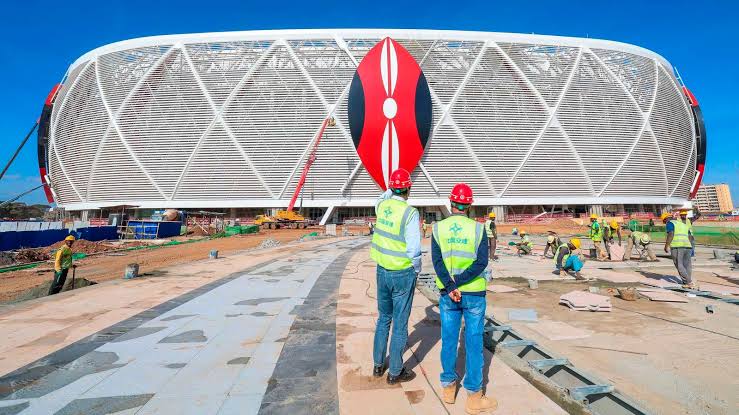
Kenya’s flagship football project is finally entering the home stretch.

The 60,000-seat Talanta Stadium, officially designated the Raila Odinga International Stadium, is now 94% complete, according to Sports Cabinet Secretary Salim Mvurya following an August inspection. The main pitch has been laid, most of the stadium’s major works are substantially finished, and the government expects the venue to be ready for use by November 2026.
That timeline matters because Kenya has less than a year to get its house fully in order before AFCON 2027 arrives in East Africa.

The tournament will be historic. Kenya, Uganda and Tanzania will become the first three countries to jointly host an Africa Cup of Nations, with the competition scheduled for 19 June to 17 July 2027. CAF expects 24 national teams to participate.

But there is an important detail: CAF has not yet officially assigned the opening match or final to Talanta—or even confirmed the final host country for those fixtures. CAF says those decisions will be announced later.

That has not stopped the stadium from being designed with ambitions worthy of the biggest matches.
Talanta is being built to meet CAF Category 4 standards, with modern spectator facilities, media infrastructure, 52 luxury skyboxes and a hybrid playing surface combining Bermuda grass with stitched synthetic fibres. The venue is also being equipped with extensive security, spectator-management and broadcast infrastructure.

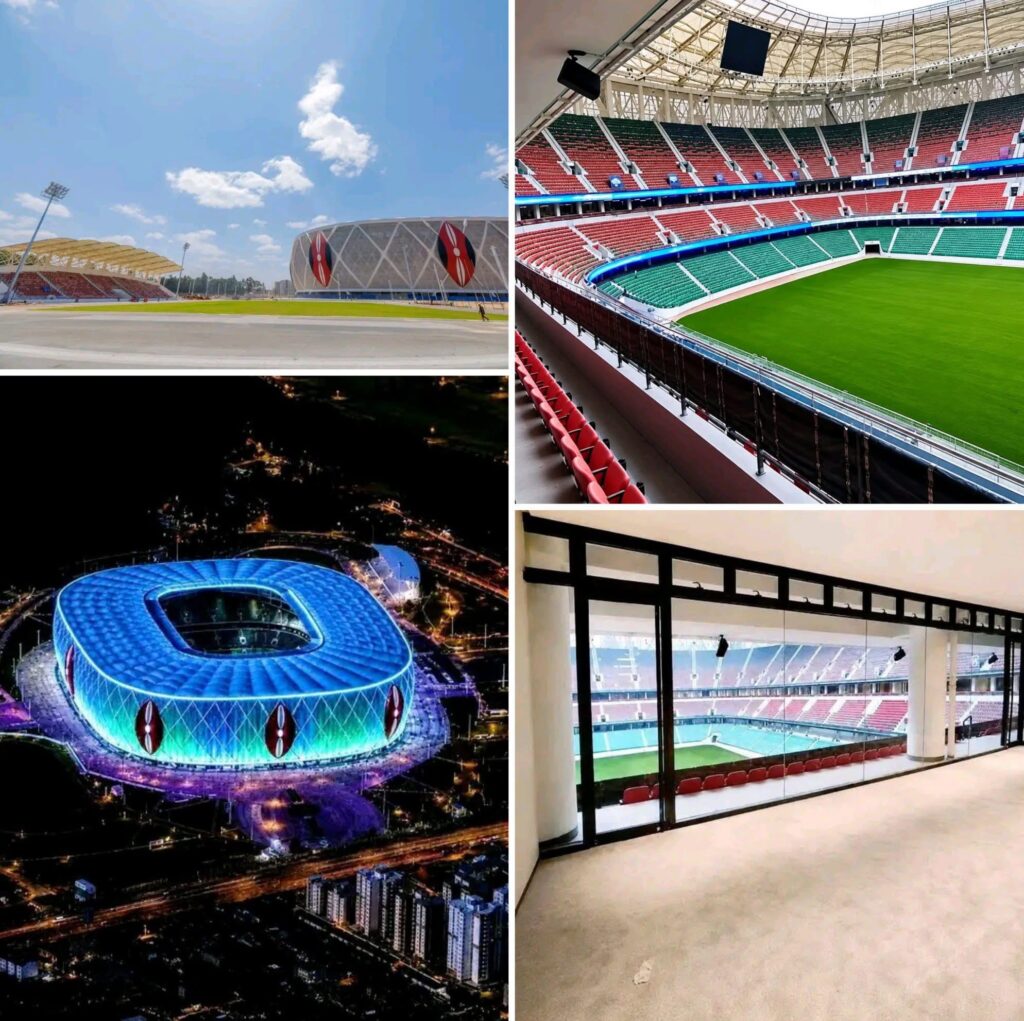
The main stadium, however, is only part of the story. The wider Talanta Sports City occupies about 45.6 hectares and is planned to include outdoor training grounds, a swimming pool, conference facilities, fan zones, food courts, parking and other supporting infrastructure. Two remaining training facilities are currently around 50% and 40% complete, meaning the 94% headline applies primarily to the main stadium—not the entire sports complex.
That distinction is important because hosting AFCON is not simply about having one spectacular stadium.
Teams need quality training grounds. Supporters need transport and security. Broadcasters need reliable connectivity. CAF needs medical, accreditation, hospitality and operational systems that work across multiple venues and cities. And Kenya’s preparation has not been entirely smooth.
Talanta has already missed several earlier completion targets, including dates in late 2025 and 2026. Government monitoring documents have cited technical complexity, delayed payments and funding constraints among the challenges facing stadium-related projects. The project has also become a major taxpayer debate.
The stadium’s contract value stands at approximately KSh45.85 billion, awarded to China Road and Bridge Corporation. That figure is substantially higher than the initial concept estimate of about KSh35 billion. The government has attributed the difference to taxes, import-related charges and other costs that were not included in the original estimate.
There is therefore a bigger question beyond whether the stadium will be ready:
What happens after AFCON?
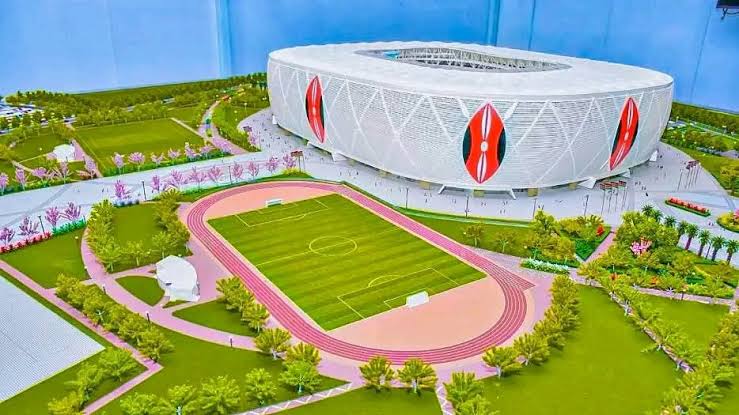
Kenya is betting that Talanta will become more than a tournament venue. The government sees the complex as part of a broader effort to position Nairobi as a major sporting destination, attract international events and create opportunities around sport, entertainment, hospitality and tourism.
There is also a football-development angle. Mvurya has said Kenya’s football technical team is developing a roadmap aimed at improving the performance of the Harambee Stars, suggesting the stadium project is being paired with a broader attempt to improve the country’s sporting competitiveness.
The timing is becoming critical. CAF and the three host countries agreed on a preparation roadmap that included accelerating stadium construction, confirming venues, strengthening security and medical preparedness, and improving cross-border movement before the end of August 2026.
Kenya now appears to have cleared one of its biggest infrastructure hurdles—but 94% is not 100%.
The pitch still needs final preparation. Training facilities remain unfinished. Technology, security, media systems and other operational requirements still have to be tested and certified.
And with AFCON only months away, Kenya’s challenge has shifted from building the stadium to proving that the entire football ecosystem around it is ready.
If the November opening target holds, Talanta could soon move from a controversial construction project to the centrepiece of Kenya’s biggest football moment in decades.
But the real victory will not be the ribbon-cutting. It will be whether Kenya can turn a KSh45.8-billion stadium into a lasting sporting asset long after the AFCON crowds have gone home.
RELATED: