Faith Nyasuguta

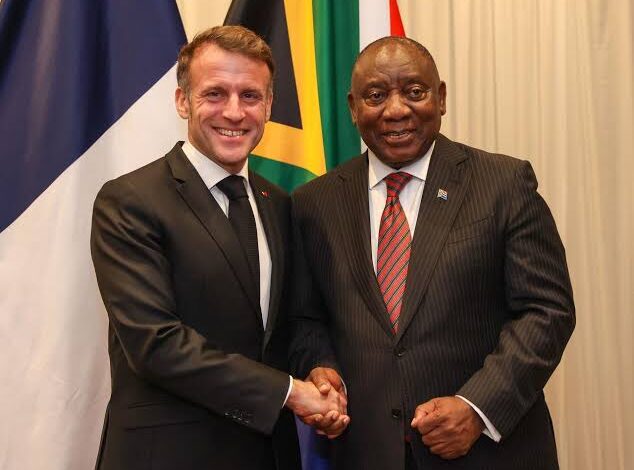
President Cyril Ramaphosa has touched down in Paris, but this isn’t just a standard diplomatic victory lap. It is a high-stakes damage control mission. Just days after being ghosted by one of South Africa’s most critical African allies due to explosive anti-migrant violence at home, Ramaphosa is forced to look North—courting French President Emmanuel Macron and Western billionaires to protect his country’s crumbling international image.
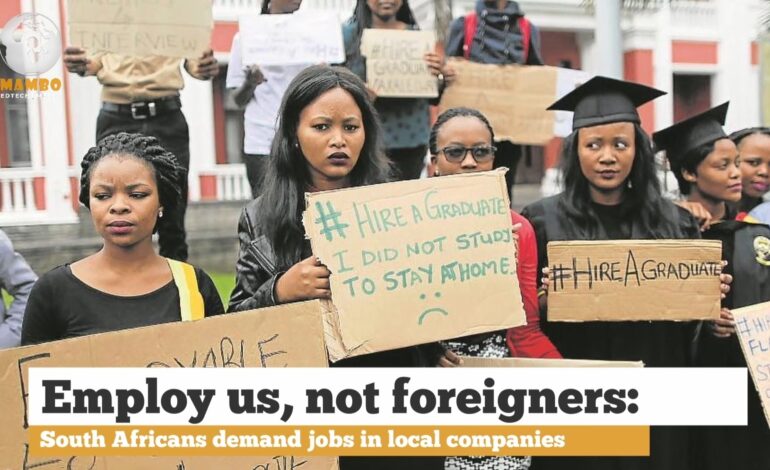
The timing is incredibly awkward for Pretoria. Ramaphosa was supposed to be co-chairing the high-level South Africa-Ghana Bi-National Commission alongside Ghanaian President John Mahama. Instead, Ghana abruptly pulled the plug and deferred the summit. The reason? Ghanaian officials bluntly stated that the raging anti-migrant unrest paralyzing South African cities would completely overshadow the talks. Ghana had already been forced to airlift hundreds of its own citizens out of South Africa after a radical anti-migrant movement issued a hard deadline for undocumented foreigners to pack up and leave.

Ghana isn’t the only African nation furious with Pretoria. Nigeria, Malawi, and Mozambique have all openly sounded the alarm over the safety of their citizens as violent xenophobic protests sweep South Africa. Ramaphosa’s administration has tried to put out the fire by deploying 3,405 soldiers to support the police – at a staggering cost of over $3.3 million – but the damage to South Africa’s claim as the leader of the continent is already done.

With his back against the wall in Africa, Ramaphosa is turning to France to change the narrative. He arrives for a grueling three-day blitz designed to convince the world that South Africa is still a stable, safe haven for foreign cash.
The strategy is simple: follow the money. France is already a massive economic lifeline for South Africa, with nearly 370 French corporations—including heavyweights like TotalEnergies, Alstom, and Sanofi—operating in the country. These companies employ over 65,000 South Africans across vital sectors like manufacturing, energy, and finance. While bilateral trade between the two nations sits at a massive €3.2 billion, it actually dipped slightly by 1.1%. Ramaphosa desperately needs to reverse that trend, especially as South Africa’s domestic infrastructure, railway networks, and electricity grids suffer from years of starvation-level investment.
But this relationship isn’t a one-way street; it’s a calculated geopolitical dance. Emmanuel Macron is frantically trying to rebuild France’s shattered reputation across Africa after facing humiliating political and military evictions from several former French colonies in the Sahel. For Paris, South Africa represents the ultimate rebound—an industrial titan, a member of the G20, a heavyweight in the BRICS bloc, and a sophisticated diplomatic player. For Pretoria, keeping Paris close allows South Africa to maintain its golden ticket to European capital and cutting-edge technology, all while carefully balancing its controversial, tight-rope alliances with China and Russia.
To smooth over the rough edges of this desperate cash-grab, Ramaphosa is leaning heavily into “education diplomacy.” He kicked off his tour at the UNESCO headquarters in Paris, co-chairing a high-level committee to set global education goals. It’s an ironic public relations move, considering South Africa’s own domestic school system is currently plagued by crumbling infrastructure, deep inequality, and abysmal learning outcomes. He will wrap up the trip with a somber visit to the South African National Memorial in Longueval to honor WWI soldiers who fell at the Battle of Delville Wood.
But make no mistake: the wreaths and the UNESCO photo-ops are just a smoke screen. The real battle is happening behind closed doors with French corporate executives. Ramaphosa’s ultimate challenge over these three days is to secure massive investment commitments and keep European money flowing, all while praying the world looks past the smoke rising from the streets back home. South Africa is trying to project power on the global stage, but the structural rot and xenophobic chaos at home are making it harder than ever to hide.
RELATED: