Wayne Lumbasi

South Sudan’s Ministry of Petroleum has announced a major breakthrough in its upstream oil sector, confirming that a targeted drilling campaign in the Upper Nile region has successfully unlocked substantial new production potential. The announcement comes at a critical geopolitical moment, as the landlocked East African nation moves aggressively to capitalize on global crude prices surging past $100 per barrel.
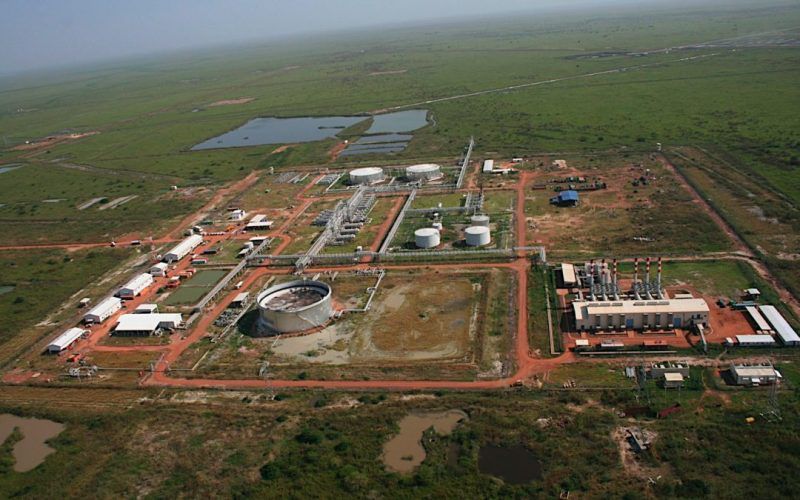
The cornerstone of this production surge is centered on the resource-rich Blocks 3 and 7 in the Melut Basin, managed by the Dar Petroleum Operating Company (DPOC) a powerful international consortium comprising China National Petroleum Corporation (CNPC), Malaysia’s Petronas, India’s ONGC Videsh, and South Sudan’s state-owned Nile Petroleum Corporation (Nilepet).

According to Ministry of Petroleum officials, recent drilling operations at the Al Nahal field have yielded extraordinary results. A standout high-performing well, Al Nahal W8, has been commissioned and is currently flowing at an impressive 5,440 barrels per day (bpd) with remarkably low water content, vastly outperforming the regional average for single wells.

Backed by this success and a rapid 16-well drilling campaign, South Sudan’s national output has successfully rebounded from a slump of 95,000 bpd back up to the crucial 100,000 bpd milestone, with DPOC executives actively targeting a further ramp-up to 120,000 bpd.
The timing of the discovery is pivotal. According to recent International Monetary Fund (IMF) projections, South Sudan is on track to record Africa’s highest economic growth rate this year at a staggering 22.4%. This explosive growth is tightly bound to the stabilization and expansion of its oil sector following severe export disruptions caused by the civil conflict in neighboring Sudan, which damaged critical infrastructure like the Petrodar pipeline last year.
South Sudan currently commands the fifth-largest proven oil reserves on the African continent estimated at 3.75 billion barrels with crude oil sales accounting for over 90% of the government’s budget.
“We are cognizant of the logistical challenges facing global maritime routes caused by ongoing conflicts in the Middle East, but we are pushing forward with increasing production,” stated Chol Deng Thon, Undersecretary of the Ministry of Petroleum, during a press briefing in Juba. Being landlocked means Juba remains entirely dependent on pipelines running through Khartoum to Port Sudan to reach international buyers, leaving its economic lifeblood exposed to regional security dynamics.
As production scales up, the state oil apparatus is facing concurrent pressure to reform its operations. DPOC’s leadership has recently pledged to tie upstream success directly to local development, committing to scale up the local Melut Water Treatment Plant to full capacity and increase medical supplies to host communities.
Simultaneously, the Ministry of Petroleum is working to coordinate efforts across its other primary operations, including the Greater Pioneer and Sudd oil projects. The state’s mid-term strategy relies heavily on deploying advanced reservoir management and enhanced oil recovery (EOR) technologies to maximize mature wells while systematically auditing environmental impacts in the fragile Upper Nile ecosystem.
For a young nation seeking structural economic recovery, the Al Nahal discovery offers a potent reminder: despite years of conflict and infrastructure bottlenecks, South Sudan’s subsurface wealth remains its most powerful asset on the global stage.
RELATED: