
Faith Nyasuguta

Zimbabwe has launched one of its most politically sensitive economic shifts in years, announcing the return of 67 farms previously owned by European nationals alongside a compensation package worth roughly $146 million. The move is already sparking intense debate across Africa, with supporters calling it a pragmatic step toward economic recovery while critics question whether it weakens the legacy of Zimbabwe’s land reform struggle.
The farms reportedly belonged to citizens from countries including Denmark, Germany, Netherlands, Switzerland, and states from the former Yugoslavia. Zimbabwean authorities say the decision forms part of broader efforts to resolve long-running land disputes that have strained relations with Western governments and international financial institutions for more than two decades.

To understand the significance of the move, many Zimbabweans are looking back to the dramatic land seizures that reshaped the country in the early 2000s.

Under former President Robert Mugabe, Zimbabwe launched the controversial Fast Track Land Reform Programme in 2000. The policy led to the seizure of thousands of white-owned commercial farms, with the government arguing that land ownership remained deeply unequal decades after independence from British colonial rule.


At the time, many black Zimbabweans supported the reform as a necessary correction to historical injustice. Large areas of fertile land had remained concentrated in the hands of a small white minority while millions of black citizens remained landless or confined to overcrowded communal areas.
But while the programme addressed historical grievances, it also triggered severe economic fallout.

Western governments imposed sanctions on Zimbabwe, international investors fled, and agricultural production collapsed in several sectors. The country spiraled into an economic crisis marked by hyperinflation, food shortages, unemployment, and isolation from major global lenders such as the IMF and World Bank.
More than two decades later, President Emmerson Mnangagwa is now attempting to rebuild ties with the international community and stabilize the economy.
Zimbabwe is currently burdened by an estimated $19 billion debt and continues to face major challenges accessing international credit and investment. Officials believe resolving compensation disputes linked to land reform could help unlock financial support, attract foreign capital, and ease tensions with Western powers.
The latest compensation package is therefore being viewed as both an economic and diplomatic signal.
Authorities argue that compensating former farm owners does not reverse land reform itself, since the land largely remains under state ownership or redistributed to black Zimbabweans. Instead, the government says the payments are intended to compensate for infrastructure and improvements made on the farms rather than the land itself.
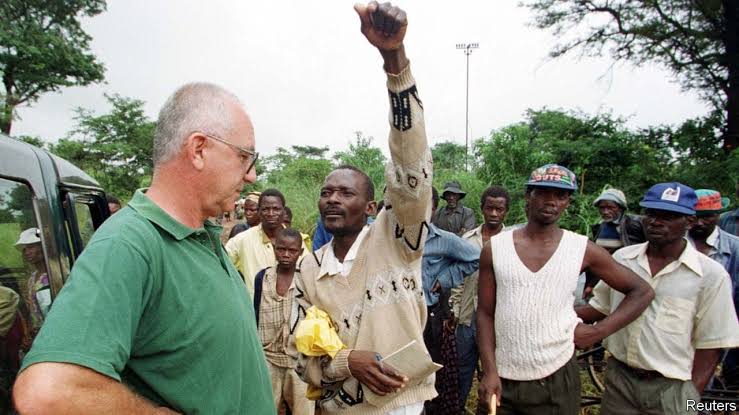
Still, the announcement has reopened old political wounds.
Some liberation war veterans and nationalist voices argue that Zimbabwe risks conceding too much to Western pressure after decades of defending the land reform programme as a symbol of sovereignty and decolonization. Others counter that economic survival now requires compromise and re-engagement with global financial systems.
Across Africa, the development is being closely watched because it touches on one of the continent’s most emotional and unresolved issues: land.
For many observers, Zimbabwe’s latest move reflects the difficult balancing act facing post-colonial African states — how to address historical injustice while also maintaining economic stability in a globalized world.
RELATED: