Faith Nyasuguta

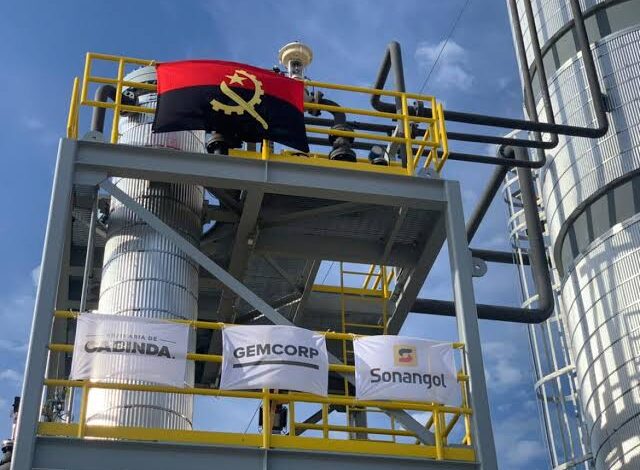
Angola has officially launched operations at the Cabinda refinery, marking a major turning point in the country’s energy sector and a broader African push to stop exporting crude oil only to buy back expensive refined fuel.
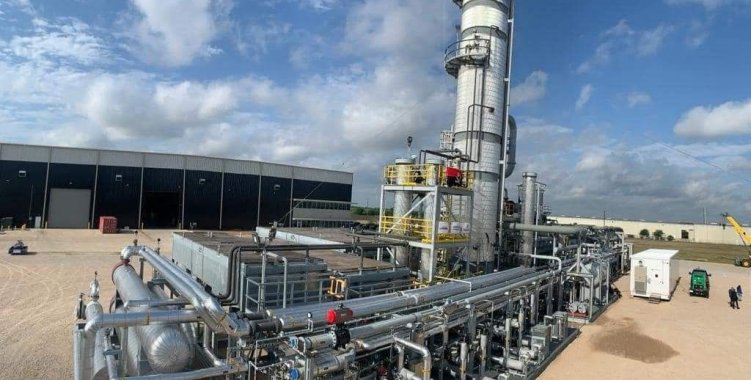
The refinery, located in the oil-rich Cabinda province, is the first built in Angola since independence in 1975 and one of the few major refining projects completed on the continent in recent decades. After years of delays, financing hurdles, and shifting ownership, the facility is now producing fuel for the domestic market while also exporting petroleum products abroad.

Developed at a cost of more than $470 million, the refinery is currently processing around 30,000 barrels of crude oil per day. That output is expected to cover roughly 10% of Angola’s fuel demand, easing pressure on a country that still imports most of its refined petroleum despite being one of Africa’s largest crude producers.

The plant is already supplying diesel locally while exporting heavy fuel oil and naphtha to international buyers. The project is majority-owned by Gemcorp Capital, which says the refinery was designed to strengthen Angola’s energy security and reduce dependence on volatile global fuel markets.

But the real ambition lies ahead.
Plans are already underway for a second expansion phase expected to double production capacity to 60,000 barrels per day. The next phase, projected to cost around $700 million, would also add hydrocracking technology capable of producing higher-value fuels such as jet fuel and cleaner diesel.

The launch comes at a critical moment for Africa’s energy economy.
Despite producing vast amounts of crude oil, Africa still exports nearly three-quarters of it while importing close to 70% of its refined fuel products. According to the African Petroleum Producers’ Organisation, that imbalance drains an estimated $50 billion from the continent every year.
For Angola, the contradiction has been especially striking. The country pumps hundreds of thousands of barrels of oil daily, yet imports around 72% of its fuel needs. Rising global fuel prices in recent years exposed just how vulnerable many African economies remain when refining capacity is concentrated outside the continent.
Now governments are racing to change that equation.
Angola’s state oil giant Sonangol is also expanding its downstream ambitions through additional refinery projects in Lobito and Soyo. The planned Lobito refinery alone is expected to process up to 200,000 barrels per day once completed.
The momentum mirrors developments elsewhere across Africa, particularly in Nigeria, where the massive Dangote Refinery is reshaping regional fuel markets with its 650,000-barrel-per-day capacity.
For decades, Africa’s role in global oil markets has largely been that of a raw supplier. Crude left the continent cheaply, only to return as expensive gasoline, diesel, and jet fuel. The Cabinda refinery represents part of a growing effort to break that cycle.
And beyond economics, there is a deeper geopolitical edge to the shift. Countries that refine their own fuel gain more control over pricing, supply chains, industrial development, and strategic energy security.
For Angola, Cabinda is not just another refinery. It is a statement that Africa increasingly wants to process, profit from, and control more of its own resources.
RELATED: