Wayne Lumbasi

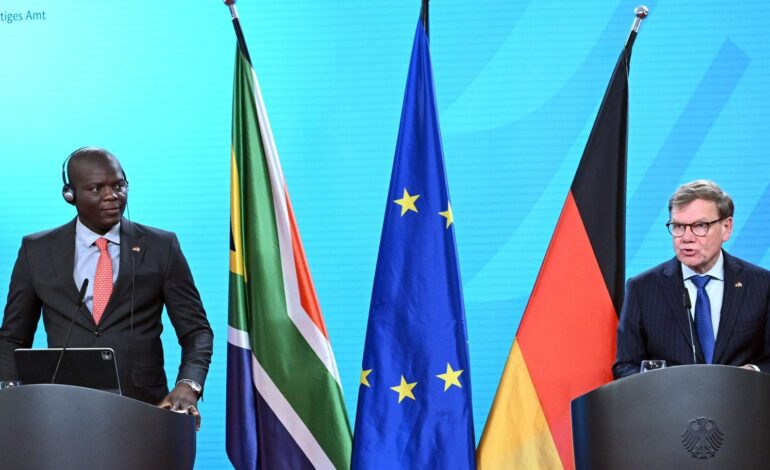
In a significant recalibration of global energy and economic ties, Germany and South Africa have officially elevated their relationship to a Strategic Partnership . This announcement, made during the 12th meeting of the German-South African Bi-National Commission in Berlin on April 13, 2026, marks a shift toward a more permanent and integrated diplomatic alliance. The cornerstone of this new era is a $234 million concessional climate loan, a low-interest financial package specifically designed to modernize South Africa’s struggling power grid. By securing this deal, Germany has positioned itself as a primary architect in South Africa’s transition toward a sustainable industrial economy, filling a critical investment gap at a time of global energy volatility.
This capital injection serves as a vital stabilizer for the Just Energy Transition Partnership (JETP) , focusing specifically on the rapid integration of renewable energy projects into the national infrastructure. For South Africa, the loan provides essential fiscal breathing room, ensuring that the move away from coal remains a viable economic pathway despite the recent withdrawal of other international funding commitments, such as the $1 billion pledge previously retracted by the United States. By targeting the core of the country’s energy crisis, the agreement aims to create a more reliable and greener foundation for future industrial growth.

Beyond immediate financial assistance, the partnership introduces a robust framework for the extraction and processing of critical raw materials. Through the launch of a Critical Raw Materials Inducement Prize, both governments aim to incentivize South African entrepreneurs to develop local “beneficiation” capabilities, the process of refining raw ore into high-value components. This strategy allows South Africa to retain a larger share of the mineral value chain while providing Germany with a secure, diversified supply of lithium, cobalt, and manganese essential for the electric vehicle industry.

The agreement also extends into the burgeoning green hydrogen sector, with Germany and the European Union committing an additional $315 million to bolster local production and battery value chains. This investment is designed to transform South Africa into a regional energy hub, leveraging its vast wind and solar resources to produce carbon-neutral fuels for both domestic use and export.
These initiatives are further bolstered by new technical agreements in vaccine manufacturing, artificial intelligence, and cybersecurity, signaling a comprehensive modernization of the bilateral relationship between Germany and South Africa.
RELATED: