Wayne Lumbasi

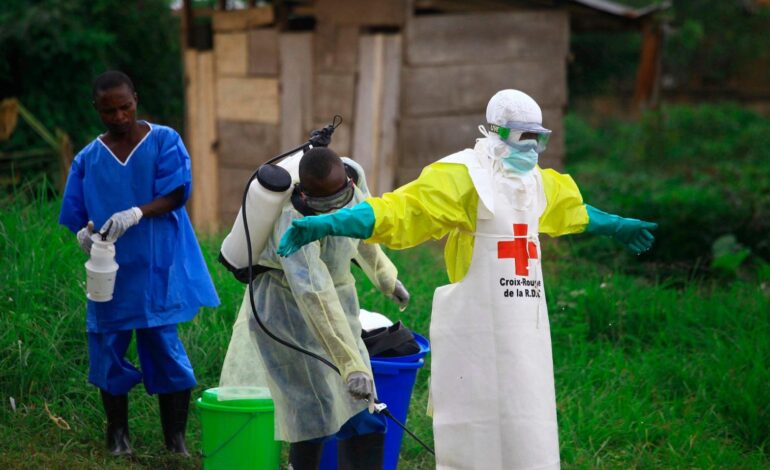
The World Health Organization (WHO) has declared the ongoing Ebola outbreak in the Democratic Republic of the Congo and neighboring Uganda a Public Health Emergency of International Concern, the organization’s highest level of global health alert. The declaration signals the seriousness of the outbreak and calls for urgent international coordination to contain the virus.
The outbreak is linked to the Bundibugyo strain of the Ebola virus, a rare variant that currently has no approved vaccines or specific treatments, raising concern among global health experts.

Health authorities say the majority of infections have been reported in eastern areas of the Democratic Republic of the Congo, particularly in the Ituri region. More than 300 suspected cases and about 80–88 deaths have been recorded so far, with a small number of cases detected across the border in Uganda.

Uganda confirmed that one of the cases involved a patient who had traveled from the Democratic Republic of the Congo and later died after developing severe Ebola symptoms. Health officials have since intensified contact tracing and monitoring efforts to prevent further spread.

The WHO warned that the outbreak poses a high regional risk, especially due to cross-border movement, limited health resources, and instability in parts of eastern Congo. The agency emphasized that stronger surveillance, rapid testing, and international support will be critical in containing the disease.
Despite the emergency declaration, the WHO said the outbreak does not meet the criteria of a pandemic like COVID-19. Instead, the designation is meant to mobilize global funding, medical supplies, and health experts to support response efforts in the affected countries.

Ebola is a highly infectious disease that spreads through direct contact with bodily fluids of infected individuals and can cause severe symptoms including fever, vomiting, and internal bleeding. Past outbreaks in Central Africa have often been difficult to control due to weak health systems and conflict in affected regions.
Health agencies across Africa and beyond are now increasing surveillance and preparing emergency response teams as authorities race to contain the virus before it spreads further.
RELATED: