

Wayne Lumbasi

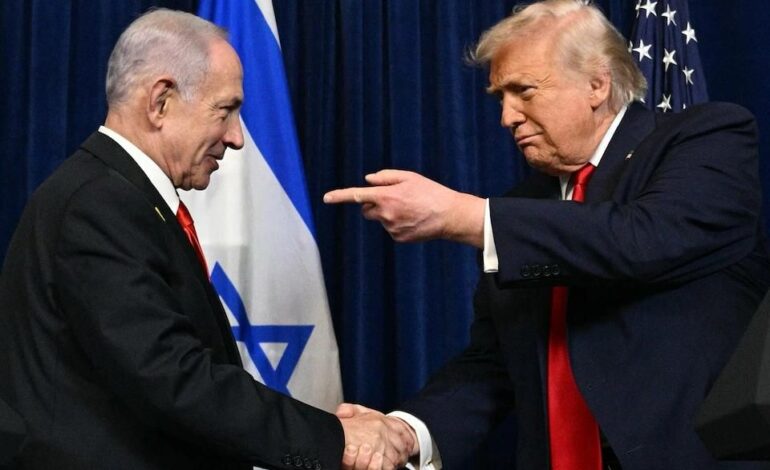
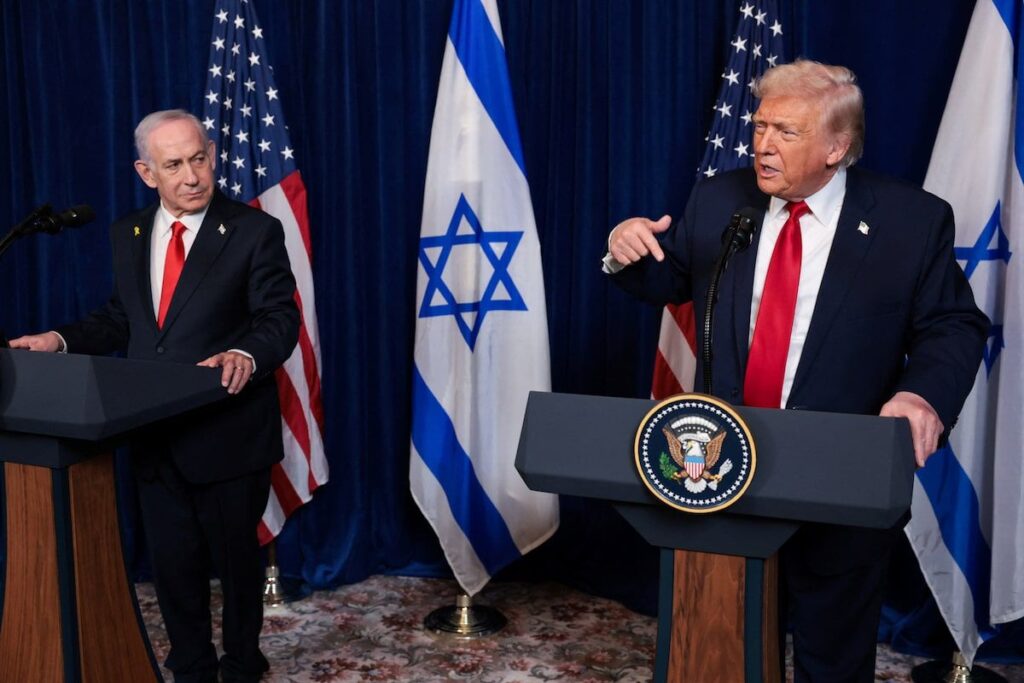
U.S. President Donald Trump has said that any decision to end the ongoing conflict with Iran will be made jointly with Israeli Prime Minister Benjamin Netanyahu, underscoring the close military and strategic coordination between the United States and Israel as tensions continue to escalate across the Middle East. Trump indicated that while the United States retains the authority to determine its military strategy, discussions with Israel will play a central role in deciding when and how the war should come to an end.
The remarks come amid one of the most serious confrontations between Iran and the U.S. -Israel alliance in recent decades. The conflict intensified following large-scale strikes targeting Iranian military infrastructure, including missile systems, air defense networks and key command facilities. The attacks were part of a coordinated campaign aimed at weakening Iran’s military capabilities and limiting its regional influence, particularly its ability to support armed groups across the Middle East.

The escalation reached a dramatic turning point with the killing of Iran’s Supreme Leader Ali Khamenei during the early phase of the strikes. His death triggered widespread retaliation from Tehran and raised fears of a prolonged war that could reshape the political and security landscape of the region. In the aftermath, Iran’s political establishment moved quickly to stabilize the leadership structure by elevating MojtabaKhamenei to the position of supreme leader, marking a controversial and highly unusual transition within the country’s governing system.

Iran responded to the attacks with waves of missile and drone strikes aimed at Israeli territory and facilities associated with the United States and its allies in the region. Several Gulf states activated their air defense systems as projectiles and drones were detected over regional airspace, highlighting fears that the conflict could widen beyond the immediate battlefield and draw additional countries into the confrontation.

The fighting has also extended beyond Iran itself, as armed groups aligned with Tehran have launched attacks against Israeli positions from neighboring territories. The Lebanese-based group Hezbollah has been among the most active, opening a northern front against Israel and raising concerns about a broader multi-front conflict that could destabilize much of the Middle East.
The war is already sending shockwaves through global markets and international security networks. Energy traders have been closely watching the stability of shipping routes through the Persian Gulf and the strategic Strait of Hormuz, where a significant share of the world’s oil exports pass each day. Any disruption to these routes could trigger sharp increases in global energy prices and place additional pressure on an already fragile global economy.

RELATED:


