Wayne Lumbasi
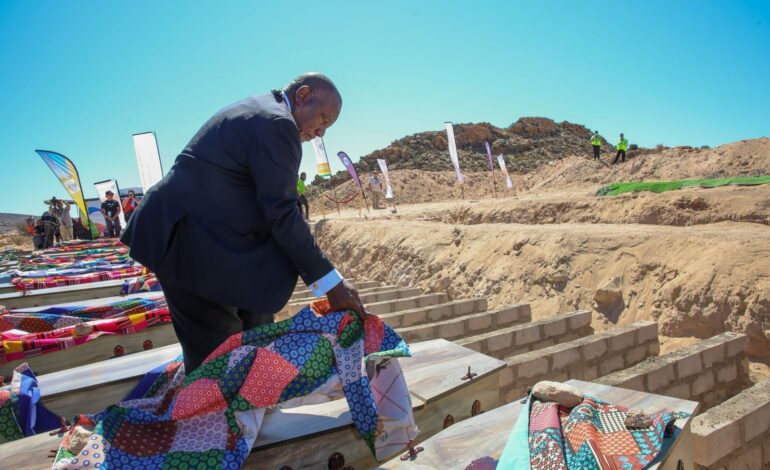
South Africa has reburied the remains of dozens of Indigenous people that were taken during the colonial era and held in European museums, in a deeply symbolic act of restoration and historical reckoning. The ceremony, held in the Northern Cape, marked the return of ancestral remains belonging to the Khoi and San communities among the oldest known inhabitants of southern Africa after more than a century in foreign institutions.
The remains, numbering at least 60 individuals, were originally exhumed between the late 19th and early 20th centuries, during a period when European scientists collected human bodies to advance racial theories rooted in white supremacy. These individuals were removed from their graves without consent, shipped abroad, and displayed or studied as scientific specimens, stripped of identity, dignity, and cultural meaning.

Their return follows years of negotiations between the South African government and European institutions, including museums and universities that had held the remains for decades. The process, which gained momentum in recent years, reflects a broader global push for the repatriation of cultural artifacts and human remains taken during colonial rule.

President Cyril Ramaphosa, who attended the reburial ceremony, described the original removal of the remains as a grave injustice rooted in racism and exploitation. He noted that the individuals had been reduced to objects of study under discredited scientific practices and emphasized the importance of restoring their dignity through reburial. The ceremony brought together government officials, traditional leaders, and descendants, many of whom view the return as both a spiritual and cultural homecoming.
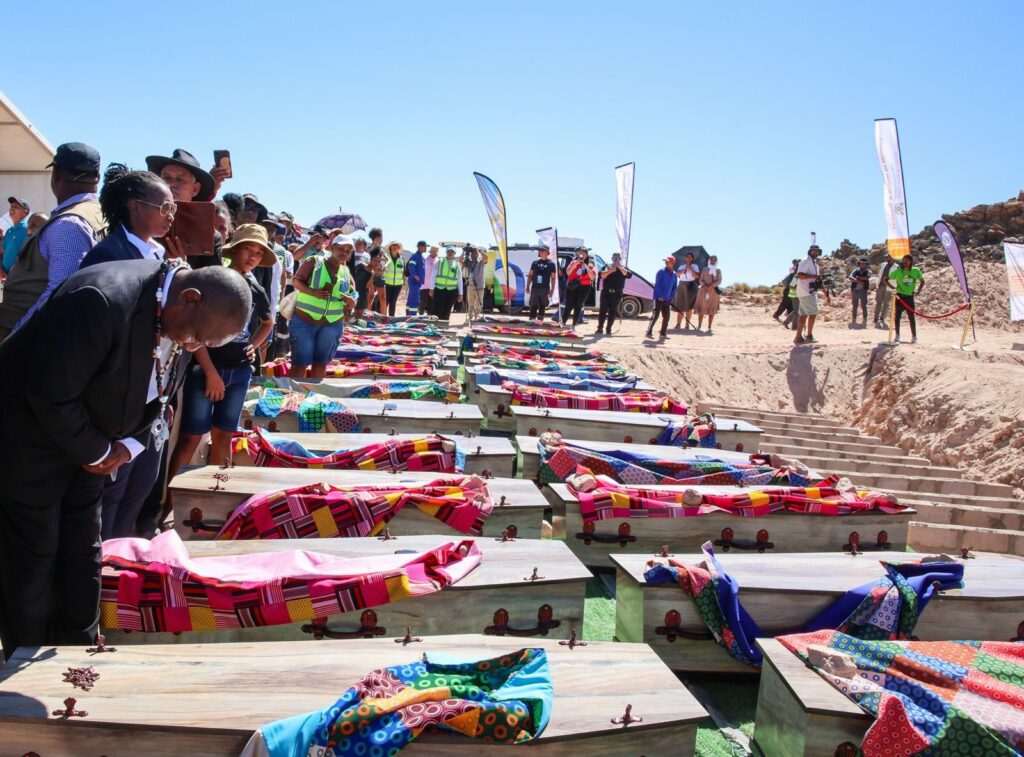
For the Khoi and San communities, the reburial carries profound meaning. It not only honors their ancestors but also helps to heal generational wounds caused by displacement and historical erasure. Rituals performed during the ceremony reflected long-held traditions, underscoring the connection between the living and the dead, and reaffirming cultural identity that colonial practices once sought to undermine.
The repatriation is part of a growing movement across Africa and beyond, where countries are increasingly demanding the return of looted heritage from European institutions. While some progress has been made, many artifacts and remains are still held abroad, and calls for accountability including formal apologies and reparations continue to intensify.
Ultimately, the reburial in South Africa represents more than the return of human remains. It is a powerful acknowledgment of past injustices and a step toward restoring dignity to those who were denied it in death, while reinforcing a broader global conversation about memory, justice, and the enduring legacy of colonialism.
RELATED: