Faith Nyasuguta

More than a hundred years after it was seized by colonial authorities, a sacred talking drum taken from Cote d’Ivoire has finally returned home.
The historic instrument, known as Djidji Ayokwe, arrived Friday morning at the airport in Port Bouet near the country’s economic hub, Abidjan. French officials had formally handed it back to Ivorian representatives earlier in the month after removing it from the collections of the Quai Branly – Jacques Chirac Museum in Paris.

For many Ivorians, the drum’s return marks more than the repatriation of an artefact – it represents the recovery of a piece of stolen history.

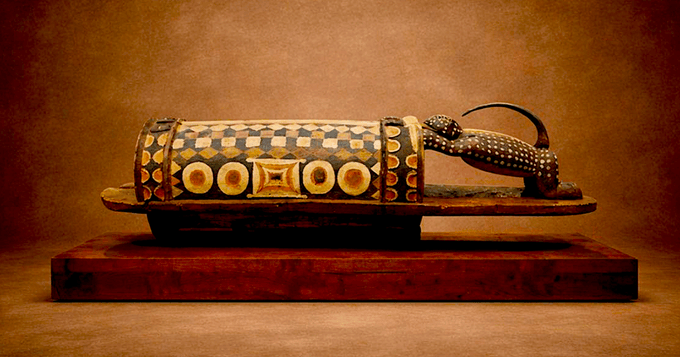
The Djidji Ayokwe is no ordinary drum. Stretching about four metres long and weighing roughly 430 kilograms, it is a powerful example of Africa’s famous talking drums – hourglass-shaped instruments capable of mimicking human speech through changes in pitch and rhythm.

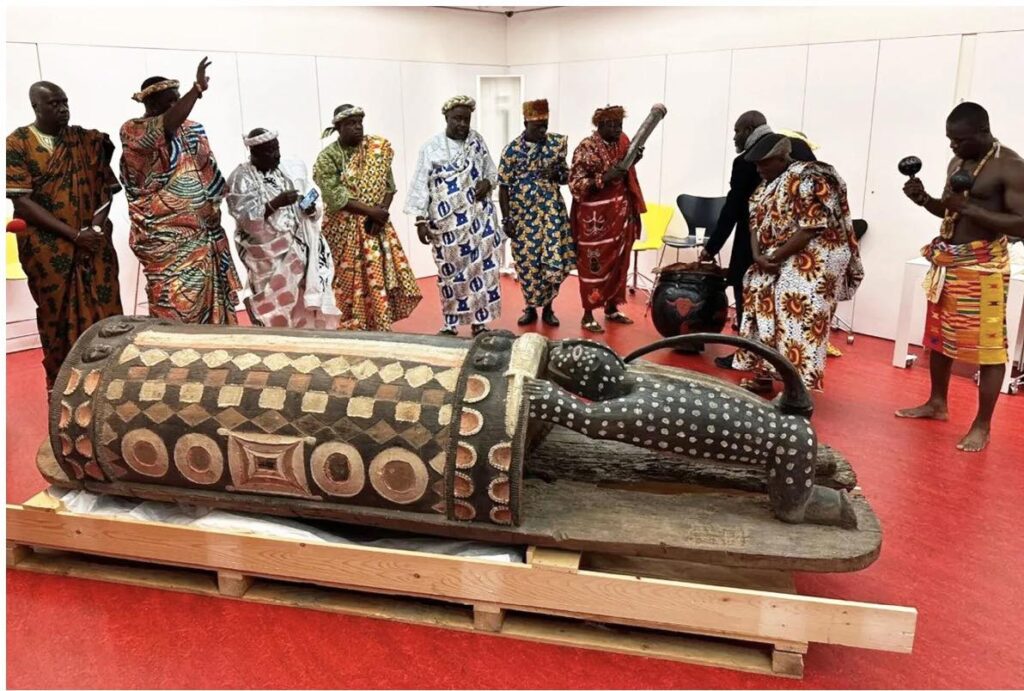
Among the Ebrie people, the drum once served as a vital communication system. Long before modern technology, its sound carried across villages, delivering messages about celebrations, deaths, warnings of danger, or calls to gather.
But its influence extended beyond communication. The drum became a symbol of unity and resistance during the colonial era.

In 1916, French colonial authorities confiscated the instrument after villagers resisted forced labour during the construction of a road. The drum was taken to France, where it remained for over a century- displayed in museums while the community it belonged to lived without it.
Now, after decades of debate about colonial-era looted artefacts, the drum has come back.
Emmanuel Macron first promised to return the drum in 2021 as part of a broader push to address the legacy of colonial-era cultural theft. But translating that pledge into reality proved slow and complicated. French law required parliamentary approval to remove the artefact from national museum collections, a process that took nearly four years of negotiations.
In Abidjan, the homecoming sparked emotional scenes.As the crate containing the drum was unloaded from the aircraft, traditional dancers performed the Tchaman dance, celebrating the long-awaited return. Community leaders described the moment as both symbolic and deeply personal.
Aboussou Guy Mobio, a chief from the Adjame-Bingerville community, said the drum’s return reconnects people with their ancestors.
“After a long stay away from this land, it is returning to its own people,” he said. “It is the missing piece of the puzzle.”
Officials in Cote d’Ivoire also framed the moment as a step toward restoring historical justice. Culture minister Francoise Remarck called the return “a moment of justice and remembrance,” thanking both Alassane Ouattara and Macron for supporting the restitution.
The Djidji Ayokwe will eventually be placed at the Musee des Civilisations de Cote d’Ivoire in Abidjan, where the public will be able to view the instrument after conservation work and research.
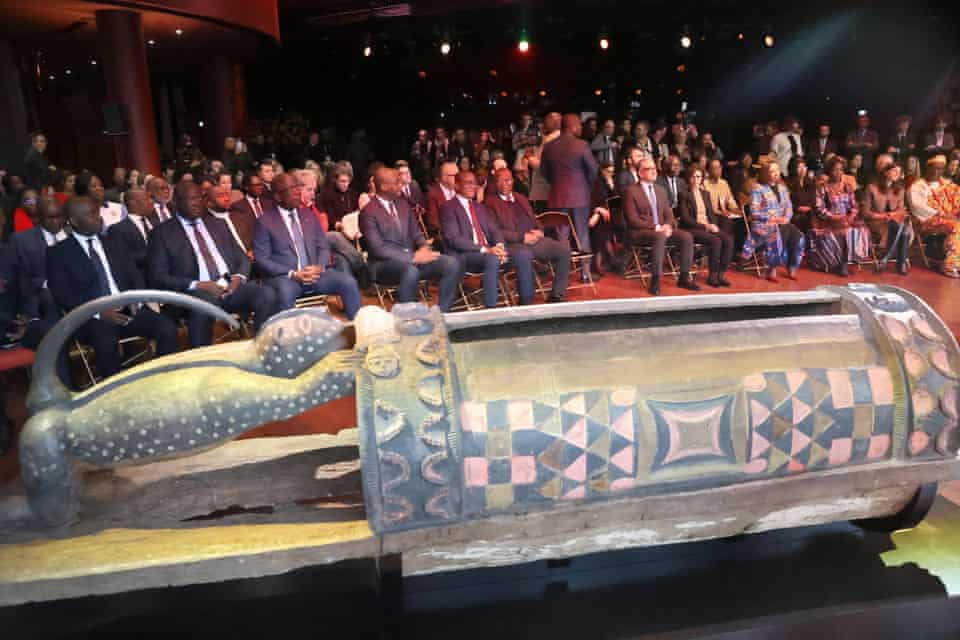
The UNESCO has pledged $100,000 to support museum research and training linked to the drum’s return. For cultural experts, the moment could signal the beginning of a broader shift. Ivorian officials say they are already discussing the possible return of at least eight more artefacts currently held in French institutions.
More than a century after colonial authorities carried the drum away, its journey back to Cote d’Ivoire is now echoing far beyond the museum walls -raising fresh questions about history, restitution, and who truly owns Africa’s cultural heritage.
RELATED: