
Njoki Kangethe

PART 5: ‘Building Dreams or Wasting Land? The Risks of African Tech Cities’
Introduction: Big Dreams, Big Risks

Across the continent, tech cities have been presented as bold symbols of Africa’s future: smart, modern spaces designed to attract investment, create jobs, and position African economies within the global digital landscape. Governments have committed land, resources, and public funds. Investors have promised innovation, infrastructure, and opportunity. But mega-projects come with real risks.

When large-scale developments move slowly, stall, or fail, the consequences are not just financial. Land remains locked away from communities, public funds are tied up in incomplete infrastructure, and expectations raised among local populations can turn into frustration.

The question is becoming harder to ignore: what happens if these cities don’t fully materialize, or don’t deliver what they promised?
Environmental and Social Sustainability: The Hidden Costs

Tech cities are often marketed as ‘smart’, ‘green’ and sustainable. Yet building entirely new urban spaces places significant pressure on land, water, energy systems, and waste management.
Many projects are located on previously undeveloped land. Construction changes natural landscapes, affects drainage patterns, and increases demand for water and electricity. In regions already facing water stress or energy shortages, this added pressure can affect surrounding communities.
There is also the issue of waste. New developments generate construction debris, electronic waste, and increased household waste as populations grow. Without robust planning systems, nearby towns and settlements can end up carrying the burden.
Social sustainability is just as important. When tech cities rise next to long-established communities, they can create sharp contrasts: modern infrastructure beside under-resourced neighborhoods. If local people do not benefit from jobs, services, or improved living conditions, resentment can grow.
True sustainability is not just about energy-efficient buildings. It is about whether development improves life for the people who live around it.
Slow Progress and Uncertain Outcomes: When Projects Stall
Not all tech city projects move at the pace they were promised. Some developments have taken years longer than expected. Others have launched with big announcements but struggled to attract tenants, investors, or residents at the scale initially projected. Infrastructure may be built in phases, leaving large areas unused for long periods.
Konza Technopolis in Kenya, for example, has seen steady but slow progress since its announcement more than a decade ago. While parts of the development are now active, many expected benefits have taken time to materialize. Similar patterns can be seen across the region, where ambitious plans meet financial, logistical, or political challenges.
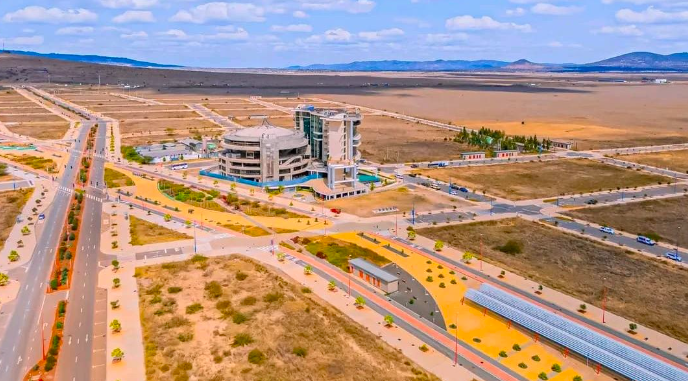
When timelines stretch, communities who gave up land or expected jobs are left waiting. Public confidence can begin to fade. And in some cases, land that once supported farming or local livelihoods remains underutilized. These delays do not necessarily mean failure, but they do highlight the uncertainty that comes with large-scale, long-term projects.
Policy and Planning Gaps: Who Is Protected?
The success of tech cities depends not just on infrastructure, but on governance.In some cases, regulations have struggled to keep up with the speed and scale of development. Questions arise around labor protections, land rights, and how benefits are shared. If jobs created within special economic zones come with weaker worker protections or lower standards, the long-term gains for ordinary citizens may be limited.
There is also the issue of public investment. Governments often provide tax incentives, infrastructure support, and policy backing to attract investors. While this can stimulate growth, it can also mean that public resources are heavily directed toward specific projects. If these investments do not translate into broad-based opportunity, citizens may begin to question whether the balance is right.
Planning gaps can also lead to uneven development: high-end infrastructure inside tech city boundaries, while nearby communities continue to struggle with basic services like roads, water, or sanitation.
The Future: How Tech Cities Could Work for Everyone
Despite the risks, tech cities are not inherently a bad idea. In fact, they hold enormous potential. They can create jobs, attract investment, and inspire innovation. But their success will depend on how inclusive and sustainable they become.
There are clear ways to ensure they benefit ordinary Africans more directly:
–Investing in local skills development so that nearby communities can access tech jobs, not just watch them from a distance.
•-Strengthening labor protections to ensure that new forms of work are fair, stable, and safe.
–Planning for environmental sustainability through responsible water use, renewable energy, and effective waste management.
– Integrating surrounding communities by improving infrastructure beyond tech city boundaries, not just within them.
–Ensuring transparency in land acquisition, compensation, and public spending.
When communities feel included, projects are more likely to succeed. When people see real improvements in their daily lives, development becomes meaningful.
The future of Africa’s tech cities will not be defined by how modern the buildings look, but by how widely the benefits are shared.
Conclusion: From Vision to Reality
Africa’s tech cities are among the continent’s boldest development experiments. They carry real ambition: the promise of innovation, jobs, global relevance, and economic transformation. But as this series has shown, they also bring difficult trade-offs: land displacement, rising costs, unequal access to opportunity, concentrated investment, and long-term sustainability risks.
The future of these cities is not predetermined. They can become enclaves of privilege: impressive, efficient, and disconnected from the communities around them. Or they can evolve into genuinely inclusive ecosystems that expand opportunity, strengthen local economies, and protect both people and the environment.
That outcome depends on choices:
How land is acquired.
How jobs are distributed.
How workers are protected.
How infrastructure is financed.
How surrounding communities are included.
Behind every policy and master plan are real lives: farmers who surrendered land, graduates navigating a competitive job market, informal workers adapting to digital disruption, families facing rising living costs, and entrepreneurs chasing possibility within these new spaces.
Taken together, these stories reveal something important: Africa’s tech future is not just about smart infrastructure or foreign investment. It is about governance, fairness, sustainability, and participation.
If planned intentionally, tech cities can still become engines of broad-based growth. They can train local talent, protect workers, steward resources responsibly, and ensure that innovation does not come at the expense of dignity or equity.
As this conversation moves from article to documentary, the focus shifts to the people living this transformation. Because in the end, the success of Africa’s tech cities will not be measured by skylines or startup valuations.
It will be measured by whether ordinary Africans see their futures reflected within them.
RELATED: