Faith Nyasuguta

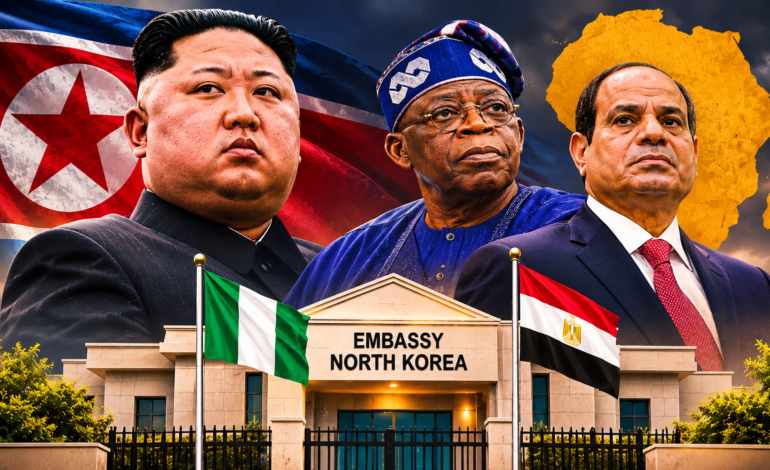
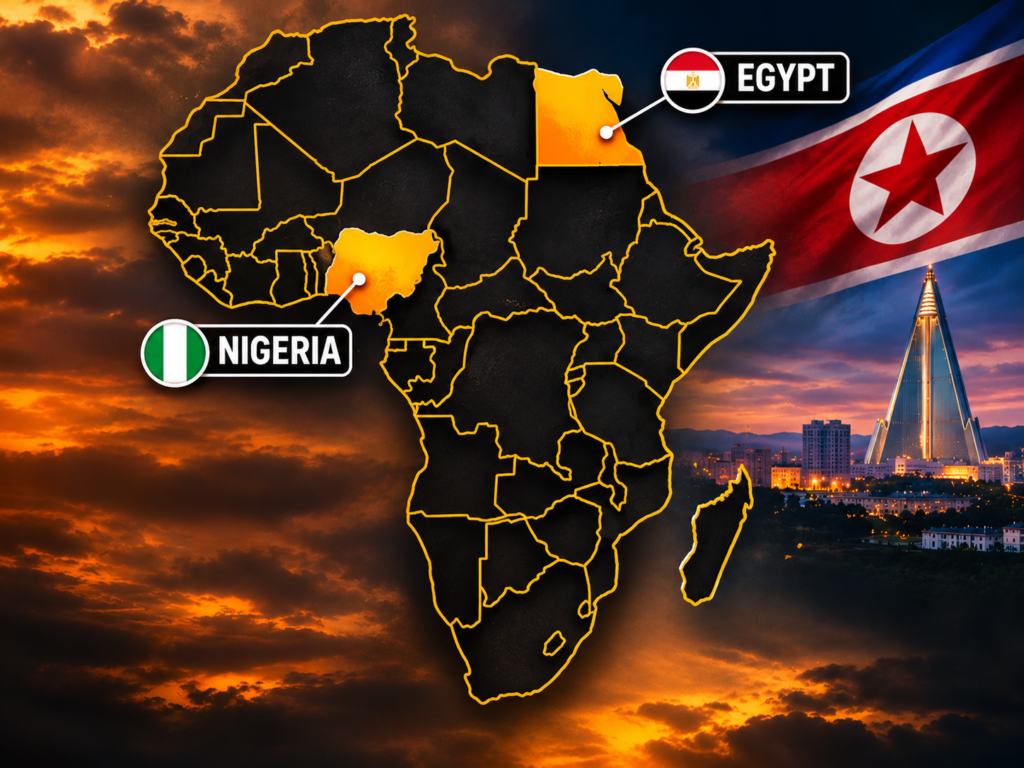
Africa has 54 internationally recognised countries, but only two maintain resident embassies in one of the world’s most isolated nations: North Korea.
Nigeria and Egypt stand apart as the continent’s only countries with a diplomatic presence inside Pyongyang, the capital of the nuclear-armed state ruled by Kim Jong Un.

While international sanctions, diplomatic isolation and political tensions have complicated relations with North Korea, Abuja and Cairo have maintained connections that stretch back decades. But how did two African countries become part of such an exclusive diplomatic circle?

How Africa Became Connected to North Korea

The relationship between Africa and North Korea is older than Kim Jong Un’s leadership. During the Cold War, newly independent African countries were navigating intense competition between Western powers and the communist bloc.
North Korea, then led by Kim Il Sung, actively pursued diplomatic relationships across Africa, presenting itself as an anti-imperialist partner willing to support countries emerging from colonial rule.

Pyongyang offered military training, technical assistance and political cooperation to several African governments and liberation movements. For African leaders seeking alternatives to Western influence, these relationships provided opportunities to diversify their international partnerships.
Nigeria established diplomatic relations with North Korea in 1976, while Egypt also developed ties with Pyongyang during the 1970s. However, maintaining diplomatic relations does not necessarily require operating an embassy.
Many African countries have maintained formal ties with North Korea without establishing permanent missions in its capital.
Why Nigeria Returned to Pyongyang
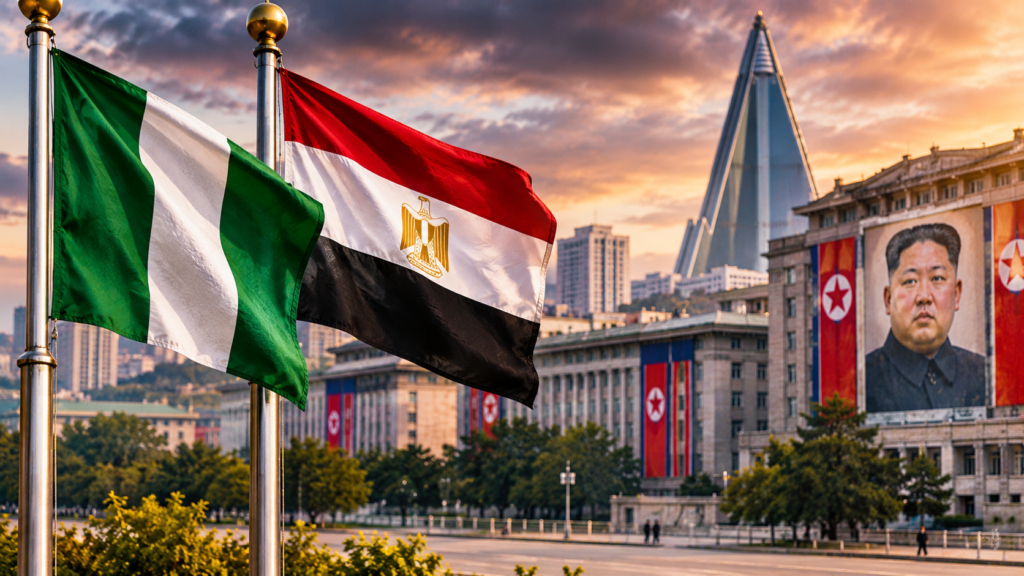
Nigeria’s diplomatic presence became particularly significant in December 2024. After nearly four years of suspended embassy operations following North Korea’s COVID-19 restrictions, Nigeria moved to restore its mission in Pyongyang.
The development emerged after Nigerian chargé d’affaires Patrick Imodu Imologhome met Russian Ambassador Alexandr Matsegora in the North Korean capital. Nigeria’s return made it the second African country with an active diplomatic presence there, alongside Egypt.
North Korea had imposed some of the world’s strictest border restrictions during the pandemic, forcing numerous foreign diplomats to leave. Its gradual reopening began in August 2023.
Nigeria’s decision to return demonstrated its willingness to preserve a diplomatic relationship despite Pyongyang’s international isolation.
Why Egypt Never Completely Left
Egypt’s relationship with North Korea has deeper strategic roots. During the Cold War, the two countries developed military and diplomatic cooperation, including connections linked to Egypt’s regional security interests.
Unlike Nigeria, Egypt maintained limited embassy operations in Pyongyang during the pandemic. Its continued presence reflects a longstanding relationship that has survived major changes in international politics.
However, Egypt’s North Korean connections have also attracted scrutiny. In 2017, international attention focused on a North Korean weapons shipment intercepted before reaching Egypt, highlighting concerns about sanctions enforcement.
The episode demonstrated the complicated balance between maintaining diplomatic relations and complying with international restrictions.
Diplomacy Does Not Mean Endorsing Pyongyang
North Korea faces extensive United Nations sanctions over its nuclear weapons and ballistic missile programmes. These restrictions prohibit various forms of military cooperation and commercial activity.
Nigeria has also faced scrutiny over suspected sanctions-related dealings involving North Korean entities. United Nations investigations have raised concerns about attempted arms transactions and other business activities.
However, allegations of prohibited dealings should not be confused with proof that maintaining an embassy is itself unlawful. Diplomatic relations remain legal. An embassy provides channels for communication, negotiation and consular representation, even between governments with sharply different political systems.
For Nigeria and Egypt, maintaining those channels can be understood as an exercise of diplomatic independence. But independence does not eliminate the obligation to respect international sanctions.
What Does This Mean for Africa?
The presence of just two African embassies in Pyongyang highlights how differently African governments approach international diplomacy.
Some prioritise relationships with major Western and Asian economic partners. Others maintain historical connections with countries facing international isolation.
Nigeria and Egypt demonstrate that African foreign policy is not necessarily dictated by Western diplomatic preferences. Nevertheless, the practical benefits of maintaining missions in North Korea remain difficult to assess publicly.
Trade opportunities are heavily restricted, security cooperation faces legal limitations, and diplomatic engagement carries reputational risks. The question is whether maintaining a physical presence delivers meaningful strategic value beyond symbolism.
For Africa, the wider issue concerns diplomatic sovereignty and the freedom to pursue independent foreign policies without abandoning international responsibilities.
Out of 54 African nations, only Nigeria and Egypt maintain embassies in Kim Jong Un’s North Korea. Is this a demonstration of African diplomatic independence, or are these countries preserving relationships whose strategic value has become increasingly questionable?
RELATED: