Njoki Kangethe

A tree has a price. A mature tree can be sold for timber. Its wood can become furniture, doors, flooring, paper or construction material. A plantation can be valued according to how much timber it is expected to produce and when that timber can be harvested. There are markets, invoices and receipts for all of these things, which makes the economic value of a tree relatively easy to understand.
A forest is harder to price. Its value is partly hidden in things that never pass through a market. A forest catches and filters water. It holds soil on a hillside. It stores carbon. It provides habitat for pollinators and wildlife. It supports tourism and recreation. It supplies food, medicine, fuelwood and other products to communities. It can reduce flooding and regulate water flows downstream. These are real economic benefits, but because no one necessarily receives a bill for them, they can disappear from the calculations made when decisions about land use are being made.

Kenya has attempted to put some of those invisible values into numbers, and the results are striking. A KEFRI study of the Mau, Cherangany and Mt Elgon ecosystems estimated their combined total economic value at about KSh339 billion per year. The largest share did not come from timber or other products that could be harvested and sold. Regulating services accounted for 84 percent of the estimated value of the Mau ecosystem, 66 percent of Cherangany and 93 percent of Mt Elgon. These included services associated with water regulation, carbon and other ecological functions. The researchers described the estimate as conservative because it did not capture every ecosystem service.

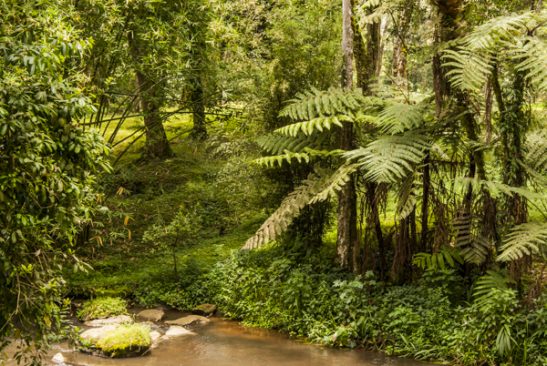
This is an important way of looking at forests because it changes what ‘economic value’ means. If we only count what can be extracted from a forest, then cutting it down can look like an economic transaction. There is timber to sell, workers to employ and businesses to supply. But if we also count the water a forest helps regulate, the soil it protects, the carbon it stores and the livelihoods it supports, the calculation becomes more complicated.
The forest has value both when something is taken from it and when nothing is taken from it, but the latter is often harder to see. Consider water. A forested catchment does not send an invoice to the farmer whose crops benefit from a reliable water supply, or to the city whose reservoirs depend on functioning watersheds. Yet forests influence infiltration, runoff, erosion and water quality. FAO’s Kenya office noted in 2026, during the International Day of Forests, that forests filter and infiltrate water, reduce erosion, improve water quality and help mitigate floods. In a country where agriculture contributes roughly a quarter of GDP and employs a large share of the population, these ecological functions have consequences far beyond the boundary of a forest.
The Mau Forest Complex provides an even more detailed example. A UNEP-led TEEBAgriFood assessment compared different land-use scenarios and found annual returns of about US$300 per hectare under business as usual, compared with US$1,816 for an enhanced-forest scenario and US$2,493 for carbon farming. The study also projected that restoration and improved management could contribute to the recovery of up to 20,000 hectares of forest removed since the 1960s and at least 500 kilometres of surface rivers that had dried up.

These figures shouldn’t be read as a simple price tag for a forest. Different valuation methods measure different things, and estimates depend on assumptions about markets, future benefits and ecological change. But they demonstrate something important: the economic value of a functioning forest can extend far beyond the price of its wood. There is also the value that comes directly through people.
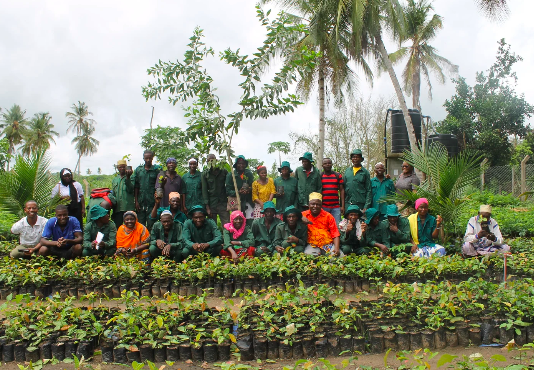
The previous article in this series looked at communities that depend on forests for firewood, honey, medicinal plants, fruits, grazing, tourism and other products. Those activities are economic whether or not they always appear neatly in national accounts. Kenya’s forest policy recognises the importance of forest-based enterprises, non-wood forest products, ecotourism and value addition. The country’s National Forest Policy also calls for the total economic valuation of forests to be integrated into national accounting and for frameworks for payment for ecosystem services to be developed.
This is particularly significant because forests are often asked to compete with activities whose financial returns are much easier to calculate. A piece of forested land can be compared with agricultural land by looking at the income that crops might generate. It can be compared with development land by calculating the value of buildings that could be constructed. It can be compared with timber production by estimating the value of a future harvest. But if the forest’s water regulation, biodiversity, carbon storage, tourism potential, cultural value and livelihood benefits are not included in that comparison, then the forest enters the conversation carrying only part of its actual value. It is a little like deciding whether to sell a house by pricing the bricks while ignoring the fact that someone lives in it.
There is a growing global effort to correct this imbalance. UNEP’s State of Finance for Forests 2025 found that annual investment in forests would need to rise from about US$84 billion in 2023 to US$300 billion by 2030 to meet global goals related to climate, biodiversity and land degradation. The report also points to emerging sources of forest finance, including carbon markets, biodiversity markets, sustainable commodity supply chains and impact investment.
The existence of these markets does not mean that every forest should become a financial asset, nor that carbon credits or biodiversity credits automatically solve the problems facing forests. They introduce their own questions about measurement, ownership, permanence, benefit sharing and accountability. But their growth reflects a wider realisation that protecting forests requires money, and that the services forests provide need to be recognised in economic decision-making.
Kenya’s challenge is therefore not simply to stop people from cutting trees. It is to build an economic system in which keeping forests healthy can compete with, and sometimes outweigh, the short-term financial incentive to clear them.
That could mean better markets for sustainably produced timber from plantations, so that commercial demand does not have to be met through natural forests. It could mean stronger community enterprises based on honey, ecotourism, indigenous foods and other non-timber products. It could mean payments for ecosystem services where downstream beneficiaries contribute to the protection of the landscapes that provide their water.
It could mean incorporating the value of forests into infrastructure, agriculture and land-use decisions before projects are approved rather than attempting to calculate the cost after a forest has already been degraded. And sometimes it may simply mean recognising that leaving a forest alone is itself an economic decision.
Kenya’s national forest assessment found forest cover of 8.83 percent and tree cover of 12.13 percent, an increase in forest cover from the 5.9 percent recorded in 2018. Those numbers are encouraging, but they do not tell us whether every forest is healthy, connected, biodiverse or secure. Nor do they tell us whether the economic systems surrounding forests are making their continued existence viable. That is perhaps the central lesson of this series.
We began with the trees being cut down. We looked at what forests do beyond producing timber, who has authority over them, how communities depend on them and why planting a seedling is not the same thing as restoring an ecosystem. All of those questions eventually lead back to value.
What do we consider valuable enough to protect? For a long time, the easiest forest value to see was the value of wood. But a forest is doing its most important work long before the chainsaw arrives. It is holding soil. Regulating water. Storing carbon. Supporting livelihoods. Providing habitat. Shaping local climates. Carrying knowledge and culture across generations.
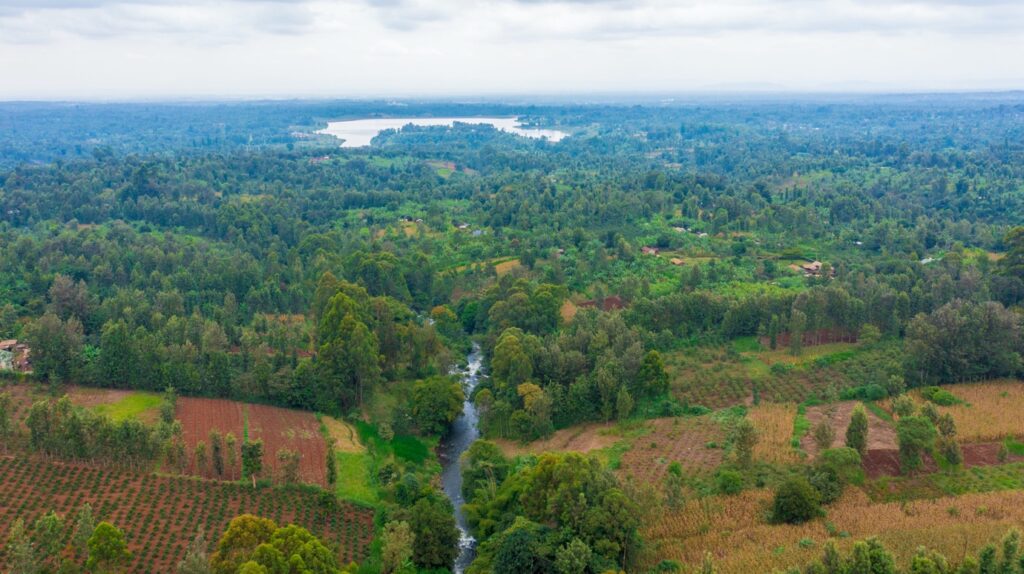
Some of those services can now be measured in billions of shillings. Others may never fit comfortably into an economic spreadsheet. Perhaps that is a reason to become more careful about what we count. Because if we calculate the value of a forest only after it has been reduced to timber, we have not really valued the forest at all.
References
• Kenya Forestry Research Institute (KEFRI), The Value of Forest Ecosystem Services of Mau Complex, Cherangany and Mt. Elgon, Kenya.
• Kenya Forest Service, National Forest Resources Assessment Report 2021.
• FAO Kenya, International Day of Forests in Maragoli Hill, Vihiga County, 21 March 2026.
• UNEP, Forests and Food Systems in Kenya: TEEBAgriFood Kenya.
• UNEP, State of Finance for Forests 2025.
• UNEP, High-risk forests, high-value returns: A co-benefits assessment for decision-makers, 2025.
• Republic of Kenya, National Forest Policy 2023.
• FAO, FOSA Country Report – Kenya.