AFRICA FEEDS THE WORLD. WHY CAN’T IT FEED ITSELF?

Njoki Kangethe
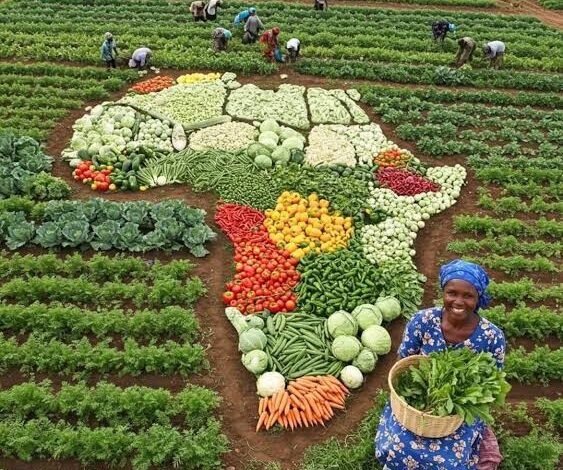
Every morning, millions of people around the world begin their day with Africa. They may not realize it, but they do.The coffee they pour into their favourite mug may have been grown on the misty highlands of Ethiopia. At lunchtime, they might eat a salad topped with Kenyan green beans or Moroccan tomatoes. That evening, they may nibble on Belgian chocolate made from cocoa grown in Côte d’Ivoire or Ghana, while the oranges in their fruit bowl were picked from orchards in South Africa or Morocco. Every day, African farmers produce food that crosses oceans and fills supermarkets thousands of kilometres away.

They probably never think about where these foods began their journey, and they certainly don’t imagine that the same continent producing them is also home to nearly 300 million people who experience chronic hunger. Yet this contradiction lies at the heart of Africa’s food story. We are a continent that helps feed the world, but somehow struggles to feed itself. It is one of the greatest paradoxes of the twenty-first century, and one that cannot be explained by laziness, lack of fertile land or even population growth. The real story is far more complicated, and far more interesting.

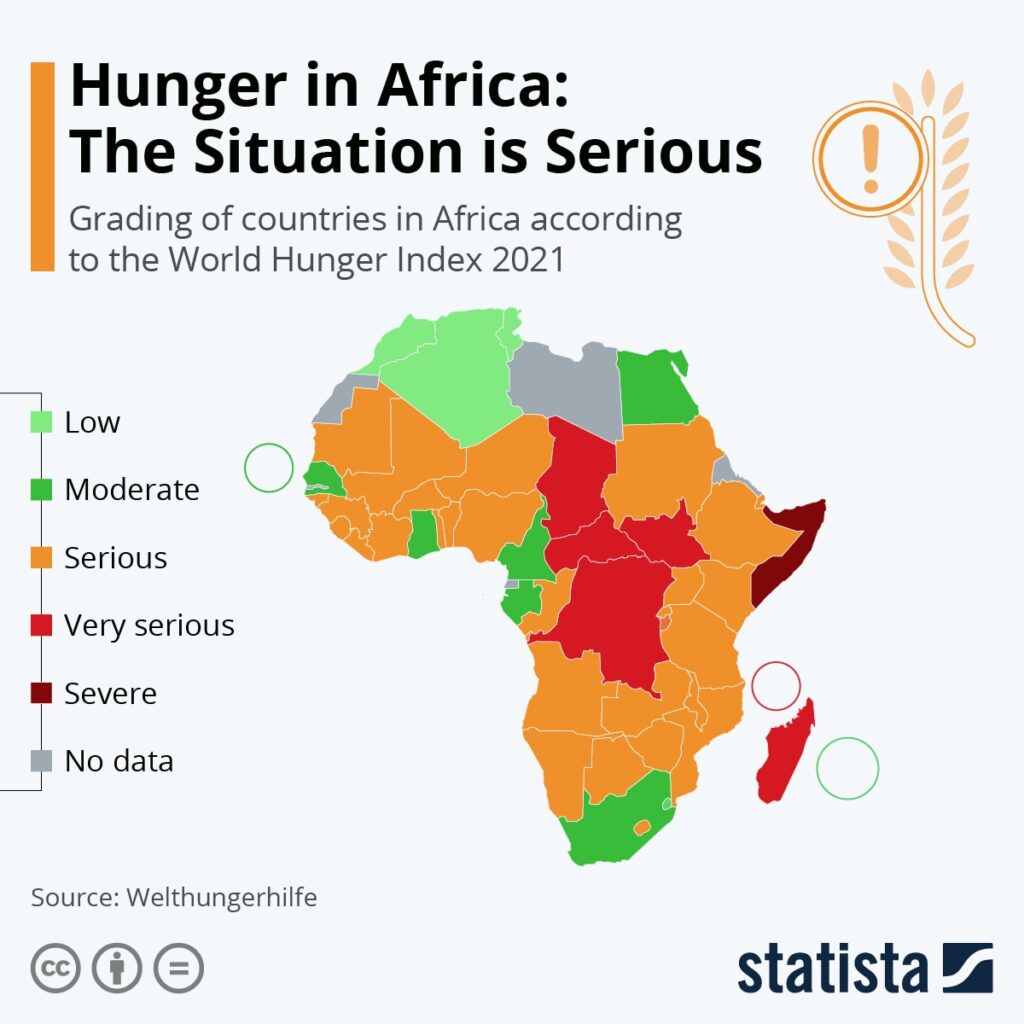
The image of hunger in Africa has become so familiar that it is often treated as an inevitable fact of life. Television screens have conditioned us to associate the continent with drought, food aid and humanitarian appeals. What rarely makes the headlines is the paradox behind those images. Africa is not a continent incapable of producing food. Quite the opposite. It is blessed with vast stretches of fertile land, diverse climatic zones and an agricultural workforce that numbers in the hundreds of millions. The United Nations estimates that Africa contains around 60 per cent of the world’s uncultivated arable land, a statistic repeated so often that it has almost become cliché. Yet clichés often persist because they are true.

If the continent possesses so much agricultural potential, why does it spend more than US$100 billion every year importing food? Why do countries that export coffee import instant coffee? Why do nations that grow cocoa import expensive chocolate? Why do regions capable of producing bumper harvests still experience chronic food shortages?
These questions have no single answer because there is no single problem. Hunger in Africa is rarely the result of empty fields. More often, it is the consequence of broken systems. The story begins long before food reaches the dinner table and, in many cases, long after it has left the farm.

To understand this contradiction, it helps to imagine a farmer standing in a tomato field somewhere in northern Tanzania. The rains have been kind this season. Months of hard work have paid off, and the plants are heavy with bright red fruit ready for market. There is every reason to believe this should be a profitable harvest, and then, the clock starts ticking.
Tomatoes are among the most perishable crops in agriculture. Without refrigeration, they begin to deteriorate almost immediately after harvest. The nearest cold storage facility may be several hours away, if one exists at all. The road connecting the farm to the main highway has been scarred by years of heavy rains and underinvestment. Transport trucks arrive late because they are serving dozens of small farms spread across difficult terrain. By the time the tomatoes reach the wholesale market, a significant portion has already spoiled. The remainder arrives alongside thousands of other farmers’ harvests, flooding the market at exactly the same time and pushing prices down. After months of labour, the farmer returns home having earned little more than enough to prepare for another uncertain season. Multiply that story by millions of farmers across the continent and the paradox begins to make sense.
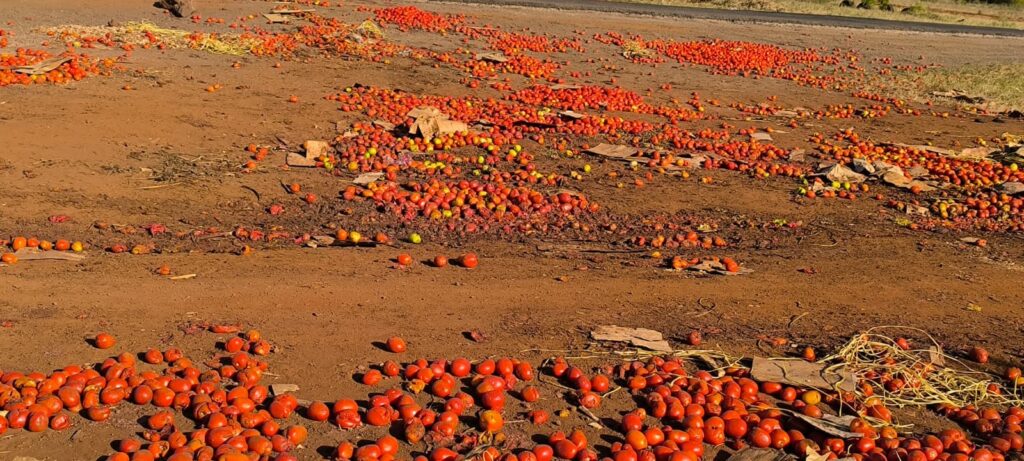
Food insecurity in Africa goes beyond just producing more food. In many places, the food already exists. The greater challenge lies in preserving it, transporting it, processing it, financing it and ensuring it reaches the people who need it before it is lost. According to the Food and Agriculture Organization, between a fifth and nearly half of fresh produce harvested in sub-Saharan Africa is lost before it ever reaches consumers. Those losses represent more than wasted food. They represent wasted water, wasted fertilizer, wasted labour and, most painfully, wasted opportunities for farmers whose livelihoods depend on successful harvests.
For decades, discussions about African agriculture have focused almost exclusively on increasing production. Governments have invested in improved seeds, fertilisers and irrigation schemes, while development agencies have funded programmes aimed at boosting yields. These efforts matter, but they address only one piece of a much larger puzzle. Producing more food means little if the systems responsible for moving that food from farm to fork remain fragile. A bumper harvest loses much of its value when crops rot in the field because there are no storage facilities, when farmers cannot access affordable credit to purchase modern equipment, or when poor roads and inefficient border crossings make it easier to export produce overseas than to sell it to neighbouring countries. Food security, therefore, is a question of infrastructure, governance, markets and investment. Every missing link in that chain chips away at the value of what farmers have worked so hard to produce.
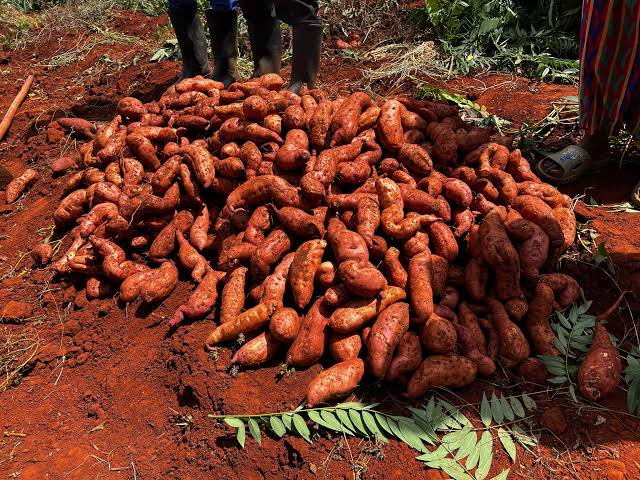
That is why the future of African agriculture will depend on far more than the next planting season. Across the continent, entrepreneurs are developing solar-powered cold rooms that extend the life of fresh produce, researchers are breeding crops that can withstand harsher climates, and digital platforms are connecting smallholder farmers with buyers, insurers and financial services that were once out of reach. The African Continental Free Trade Area also offers an opportunity to strengthen regional food systems by making it easier for food to move from areas of surplus to areas experiencing shortages. None of these innovations is a silver bullet, but together they point towards a different future, one in which Africa is no longer known simply as a producer of raw commodities, but as a continent that captures the full value of what it grows.
Perhaps, then, the question has never been whether Africa can feed itself. The continent has the land, the knowledge, the people and, increasingly, the innovation to do exactly that. The challenge lies in building food systems that are as resilient as the farmers who sustain them; systems that preserve harvests instead of losing them, create value instead of exporting it, and ensure that the food nourishing tables around the world also nourishes the communities from which it came. Africa has already proven that it can help feed the world. The next chapter in its agricultural story will be written when it fully succeeds in feeding itself first.
RELATED: