Faith Nyasuguta
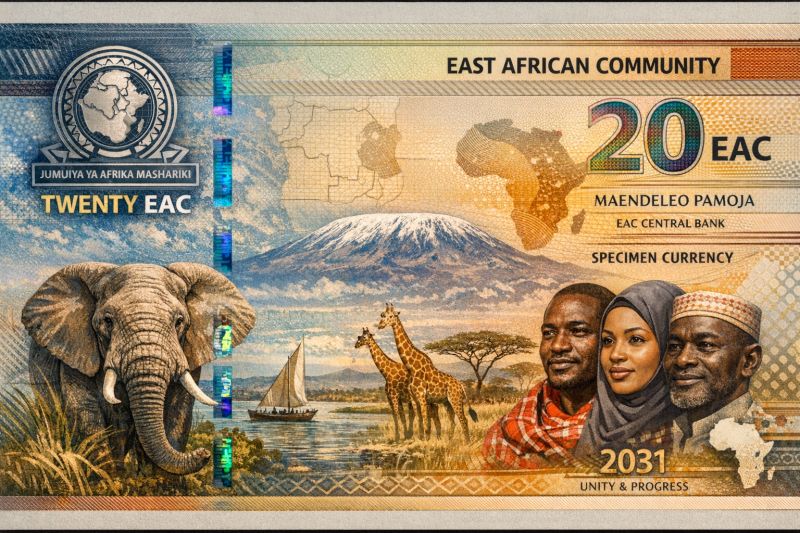
The dream of carrying one currency across East Africa is back on the table—this time with a new deadline and a renewed sense of urgency.
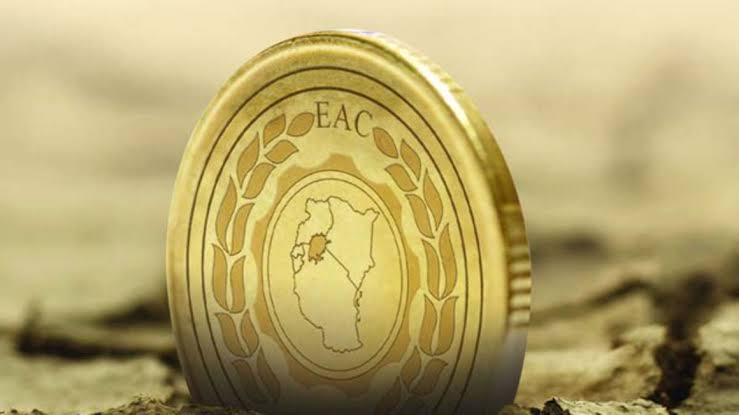
The East African Community (EAC) has reaffirmed its commitment to launching a single regional currency by 2031, marking a major milestone in its long-term ambition to create a fully integrated regional economy. The revised timeline comes after the bloc abandoned its original 2024 target, citing the economic shock of the COVID-19 pandemic, global inflation, and uneven economic performance among partner states.

The common currency forms one of the most ambitious pillars of the East African Monetary Union (EAMU), whose protocol was signed in 2013. It is designed to complement the EAC Common Market by eliminating exchange-rate barriers, reducing transaction costs, and making trade, investment, and movement of capital much easier across member states.

Speaking during recent regional engagements, EAC officials stressed that the target remains achievable, but only if partner states meet the agreed macroeconomic convergence criteria before the final rollout. Rather than rushing implementation, the bloc has opted for a phased approach that prioritizes financial stability over speed.

Under the revised roadmap, countries must meet and sustain several key benchmarks before adopting the shared currency. These include keeping inflation below 8 percent, maintaining foreign exchange reserves equivalent to at least four-and-a-half months of imports, limiting fiscal deficits to 3 percent of GDP, and ensuring public debt remains below 50 percent of GDP in net present value terms. Those conditions are expected to be achieved by 2028 and maintained through 2031.
For major economies such as Kenya, Uganda, and Tanzania, the journey is well underway, but officials acknowledge that significant work remains. Differences in fiscal policy, debt levels, inflation trends, and monetary management mean that not all member states are progressing at the same pace. That uneven performance was one of the main reasons the original deadline had to be postponed.

The EAC Secretariat says several institutional foundations for the monetary union are already taking shape. The East African Monetary Institute has been established, while other institutions envisioned under the Monetary Union Protocol—including statistical, surveillance, and compliance bodies—are at advanced stages of development. These institutions will eventually provide the regulatory backbone needed before a single regional central banking system can emerge.
If implemented successfully, the new currency would transform commerce across one of Africa’s fastest-growing regional blocs. Businesses would no longer need to convert currencies when trading across borders, investors would face lower exchange-rate risks, and cross-border payments could become significantly faster and cheaper. Supporters also believe a common currency would strengthen the region’s bargaining power in global markets while deepening economic integration under the African Continental Free Trade Area (AfCFTA).
However, economists caution that introducing a shared currency without sufficient economic convergence could expose weaker economies to financial instability. The European Union’s experience with the euro is frequently cited as a reminder that monetary unions require disciplined fiscal management, strong institutions, and sustained political commitment—not simply a shared currency.
For now, East Africa’s single currency remains a work in progress rather than a finished product. But after years of delays, EAC leaders insist the region is moving steadily toward its 2031 target.
If the roadmap stays on course, East Africans could soon pay, trade, invest, and travel across the region using one common currency—a development that would represent one of the biggest economic transformations in the bloc’s history.
RELATED: