Faith Nyasuguta

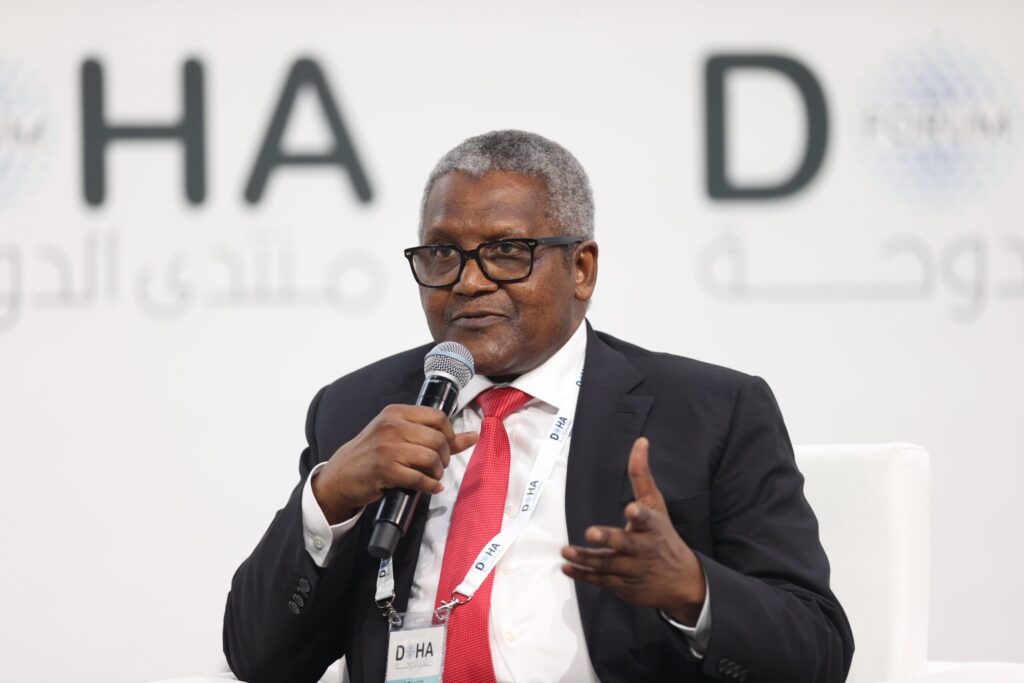
Africa’s richest businessman, Aliko Dangote, is setting his sights on transforming The Gambia’s struggling energy sector with a massive $2 billion investment that could dramatically reshape how the West African nation generates electricity and secures fuel supplies.
The proposed package includes the construction of a 250-megawatt solar power plant and a modern petroleum storage terminal—two projects that, if delivered, would rank among the most significant infrastructure investments in Gambian history.

President Adama Barrow announced the pledge after meeting Dangote in Banjul during the 2026 African Caucus meetings, describing the discussions as a major step toward strengthening the country’s energy future.

While the announcement has generated excitement, it remains an investment commitment rather than a finalized deal. Technical studies, feasibility assessments, financing arrangements, and legally binding agreements must still be completed before construction can begin. Neither side has announced a project timeline or explained how the $2 billion will be divided between the two developments.

Even so, the proposal arrives at a critical moment for The Gambia.
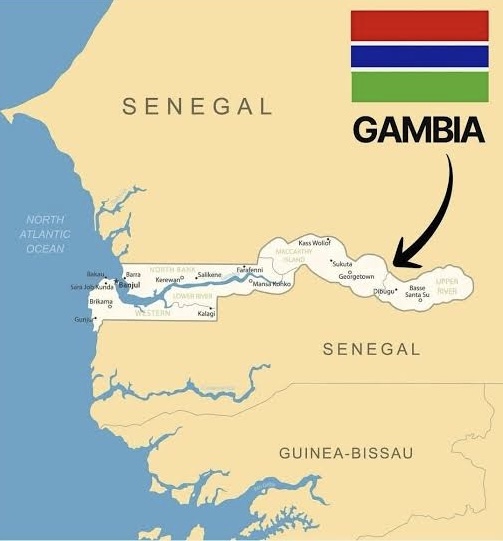
The country’s electricity sector has struggled for years with aging infrastructure, unreliable equipment, and financial difficulties affecting the state-owned National Water and Electricity Company (NAWEC). Although installed generation capacity stands at between 90 and 99 megawatts, available power has at times dropped below 40 megawatts, forcing the country to depend heavily on electricity imported from neighboring Senegal and Guinea.

During the first quarter of 2025, imported electricity accounted for more than half of The Gambia’s total power consumption. If completed, Dangote’s planned 250-megawatt solar facility would completely change that equation.
The project alone would generate more than twice the electricity currently available on the national grid and would eclipse the country’s largest renewable energy project currently under development—the 150-megawatt Soma Solar Project, expected to be completed in phases by 2030.
The investment also aligns with The Gambia’s long-term ambition to expand renewable energy. Government estimates suggest the country has a solar generation potential of more than 428 megawatts and aims to increase renewable energy’s contribution to the national electricity mix from 13 percent to 30 percent by 2030.
Beyond electricity, Dangote is also targeting one of the country’s other strategic vulnerabilities—fuel security. The planned petroleum products storage terminal would significantly expand The Gambia’s fuel reserves, helping reduce supply disruptions, stabilize domestic fuel availability, and strengthen the country’s energy resilience during periods of global market volatility.
The scale of Dangote’s proposed investment is remarkable.
Government projections estimate that The Gambia requires around $552 million in total energy-sector investment by 2030, including roughly $247 million expected from private investors. Dangote’s proposed commitment would dwarf those figures, instantly becoming one of the country’s largest private infrastructure pledges.
However, turning the announcement into reality will not be straightforward. Integrating a solar plant of this magnitude will require major upgrades to the national transmission network, while NAWEC’s financial challenges remain a concern for long-term sustainability.
Still, the proposal signals growing confidence in Africa’s ability to finance its own development. Rather than relying solely on external lenders or aid, one of the continent’s biggest industrialists is positioning himself to help power another African economy.
If the agreements are finalized and construction moves ahead, The Gambia could be on the verge of one of the biggest energy transformations in its history.
RELATED: