Njoki Kangethe

The Day Water Came: Growing Up with Thirst in Nairobi
There are certain sounds that never leave you. For me, one of them is the scraping sound of yellow jerricans against concrete at night. Another is the sound of little feet running, and others shouting, ‘Maji imekuja!’, which is Swahili for, ‘The water has finally come!’ Then there were the voices of women arguing over queues at the communal taps, children being sent back and forth to fetch ‘just one more jerrican’… It was pure madness; almost festive even, and this was mostly on Saturday evenings, right after we’d come back home from church.

I grew up in Nairobi, in the Nairobi City County Government staff quarters in Dagoretti Corner, where both my parents worked for the county government. My father taught criminology and first aid at the County Government Inspectorate College, while my mother worked at the County Cash Office in the Central Business District.

It was a deeply communal place to grow up; there were children everywhere, a social hall for games and events, and for the men to drink and smoke together in the evenings, and for church services to be held there on Sundays. That hall wore many hats! There was also Lingala music drifting through windows on Sunday afternoons, and neighbours who disciplined and fed you almost as much as your own parents did.
It was the kind of childhood where everyone knew everyone, and I loved it, especially because our house was a mini-clinic (people would bring their kids to our house, as my dad was the first aid guy, for various reasons. One had put popcorn kernels deep in his ears!! Today, I won’t tell you how my father removed them, but yes, hopefully this paints a picture of where I grew up).
All that said, beneath the warmth and community was something I did not fully understand at the time: 𝗶𝗻𝗲𝗾𝘂𝗮𝗹𝗶𝘁𝘆.

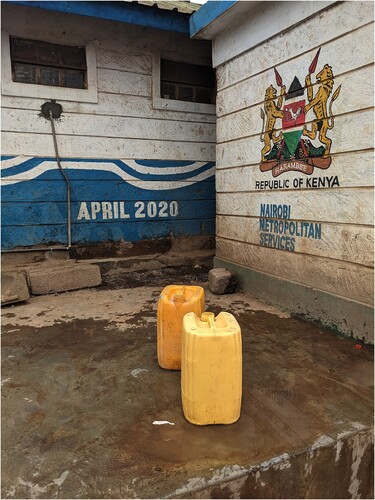
The county housing complex had more than 500 housing units, organized according to job rank and income level. The hierarchy was visible in everything: the size of the houses, their location within the compound, the reliability of electricity, and most importantly, access to water.
The highest tier was known as ‘Staffo,’ shorthand for ‘staff houses.’ These were stand-alone homes occupied mostly by directors and other senior officials. They sat in the best parts of the estate, closest to the main gates, farthest from the dumpsite and closest to the main water tanks. Their taps rarely ran dry. Rumour even had it that some houses had backup generators because power outages simply could not inconvenience certain people.
Then there was ‘Nyumba Kubwa’, that is, ‘Big House’, where my family lived. These units housed mid-level county workers like inspectors, corporals, and sergeants. We had indoor taps and showers, but running water was unreliable at best. Sometimes water came once a week. Sometimes once every two weeks.
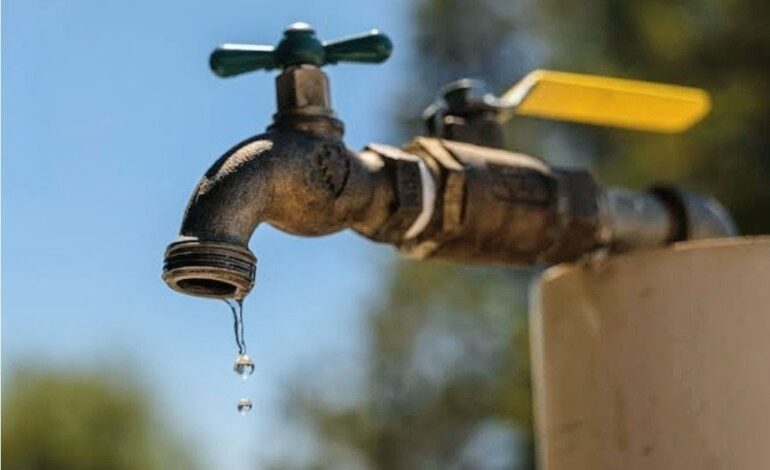
When it did come, everything stopped. Every container in the house became storage. Drums. Buckets. Laundry basins. Cooking pots. Plastic soda bottles. Anything capable of holding water was filled. Children would queue for hours at communal water points while adults hauled heavy jerricans back home late into the night.
The memories remain startlingly vivid. Mosquitoes humming around our legs. Exhaustion. Women fighting over whose child had skipped the line. The relief of finally filling the last container before the taps ran dry again, and at the time, it felt normal. Only much later did I begin to question why some households always had water while others had to organize their lives around scarcity.
The lowest tier of housing, ‘Nyumba Ndogo’, that is, ‘Small House’, consisted of tiny two-room units where entire families improvised living arrangements using curtains as partitions. Bathrooms and toilets were shared outside. Residents of Nyumba Ndogo and Nyumba Kubwa fetched water together, endured blackouts together, and built community through shared struggle. And somehow, despite the hardship, there was joy.
I remember spending nearly all my time outdoors, playing games with the many neighbourhood children until my mother or sister or aunty called my name loudly enough. I remember our neighbour, let’s call him Mr. Goodness, blasting Lingala music while polishing his shoes outside on Sundays. His wife made the softest chapatis I have ever tasted. They treated me like their own child, paying me small amounts of money to entertain them by dancing or reciting television advertisements from memory.
Long before I understood terms like ‘creative economy,’ I already knew that creativity could generate value. Long before I studied engineering and sustainable development, I already understood something else too: access to basic resources was uneven, even within the same community. The people in Staffo did not need water more than we did. Yet they had it consistently, while the rest of us waited for weekends and hoped the taps would run long enough to fill our buckets, drums, and cooking pots.
Today, there is a phrase commonly used in water governance discussions: ‘Water no longer flows toward gravity. It flows toward money.’ I think I understood that long before I had the vocabulary for it.
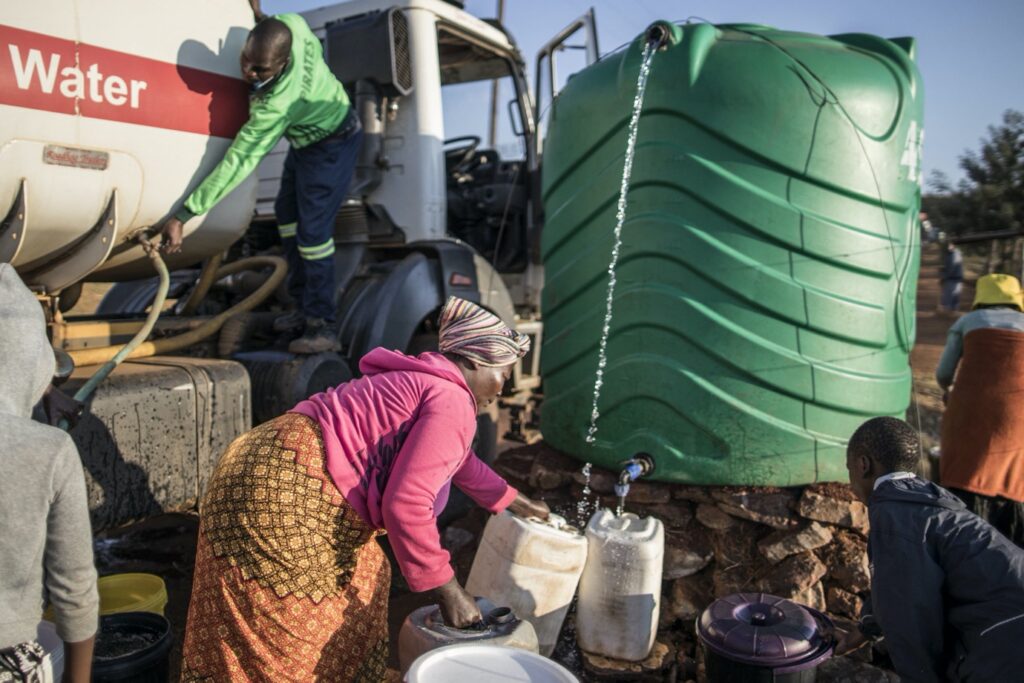
Across African cities, water inequality continues to shape everyday life in ways both visible and invisible. In rapidly growing urban centers such as Lagos, Cape Town, and Harare, access to clean and reliable water often depends not only on geography, but on income, political power, and infrastructure investment.
For millions of low-income households, water scarcity is not experienced as an abstract environmental issue. It is experienced through long queues, expensive vendors, missed school days, interrupted livelihoods, and the emotional exhaustion of constantly planning around uncertainty. And increasingly, water has become not just a public resource, but an economic and political one.
Globally, debates around water access have intensified over the role of corporations, privatization, and groundwater extraction. In parts of Kerala and Karnataka, communities have protested against companies such as The Coca-Cola Company over allegations of excessive groundwater extraction that affected local water availability. These conflicts have become symbolic of a growing global tension: who controls water, and who gets left behind when access becomes unequal?
In many ways, African cities are confronting versions of the same question.
Who gets reliable water?
Who waits?
Who pays more?
And whose needs are prioritized when infrastructure falls short?
What strikes me most, looking back now, is how ordinary all of it felt.
We normalized scarcity because we had to. We turned water collection into routine, community, even bonding. But adulthood has a way of reframing childhood memories. What once felt like ordinary life now reads differently to me: not simply as nostalgia, but as an early lesson in inequality, infrastructure, and survival.
Today, I work in sustainability and development communication, researching issues such as water inequality, waste systems, urbanization, and displacement across Africa. And perhaps part of why these stories matter so deeply to me is because they are not abstract.
I have lived inside some of these systems.
I know what it feels like to wait for water.
I know what it feels like to understand, even as a child, that some people are buffered from inconvenience while others must reorganize their lives around it.
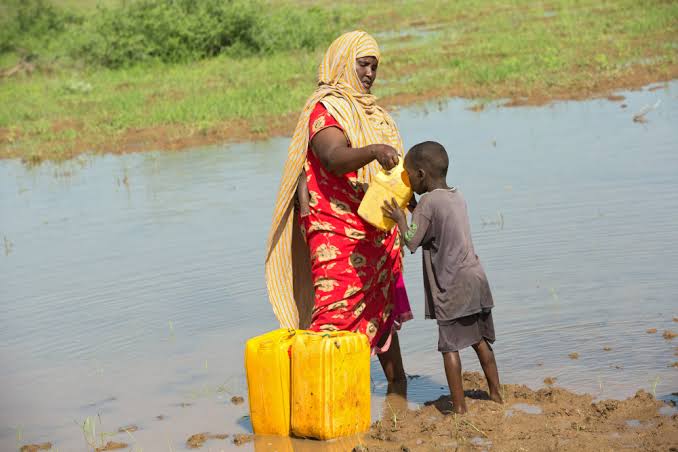
And yet, I also remember the beauty that existed alongside the hardship: the music, the neighbours, the laughter, the resilience, the deep sense of community that scarcity somehow intensified rather than destroyed.
Maybe that is what this series is really about: not simply water, but power, infrastructure, class, memory, urban survival… And the quiet ways inequality shapes everyday life long before we learn how to name it.
References
• United Nations World Water Development Report (2024)
• UN-Habitat (2020). World Cities Report
• World Bank (2021). Water Supply and Sanitation in African Cities
• OECD (2022). Water Governance and Urban Inequality
• Reports and coverage on groundwater extraction protests involving The Coca-Cola Company in India.
RELATED: