Wayne Lumbasi

South Africa’s highest court has ruled that asylum seekers whose applications have already been rejected cannot submit new asylum claims under the country’s current refugee laws, a decision that could significantly affect how immigration cases are handled.
In a landmark judgment, the Constitutional Court of South Africa found that allowing rejected applicants to file new asylum claims would create a “never-ending cycle” that delays deportations and places an increasing burden on the country’s already strained immigration system.

The ruling overturns an earlier decision by the Supreme Court of Appeal of South Africa, which had allowed rejected asylum seekers to submit new applications if circumstances in their home countries had changed. The constitutional court determined that existing refugee legislation does not provide for repeated applications once an asylum claim has been fully processed and denied.

The case that led to the judgment involved two nationals from Burundi whose asylum applications were rejected several years ago. After political unrest escalated in their home country in 2015, they attempted to file fresh claims, arguing that the worsening security situation placed them at risk if they returned. Their request triggered a long legal dispute that eventually reached the country’s highest court.

The court ruled that permitting repeat applications could undermine immigration enforcement by allowing individuals to remain in the country indefinitely through continuous legal challenges. Judges warned that such a system would make it extremely difficult for authorities to process deportations efficiently.
The decision has been welcomed by immigration authorities, who say it strengthens the government’s ability to manage the asylum system and prevent abuse of refugee protections. Officials argue that repeated applications have contributed to long backlogs and delays in resolving asylum cases.

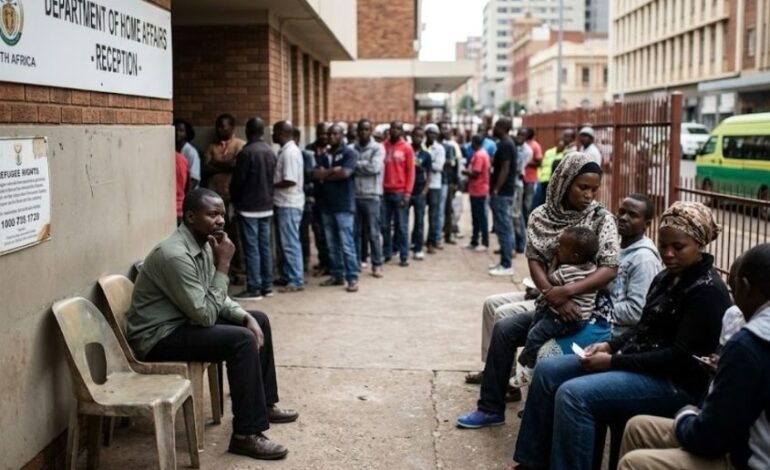
The ruling comes at a time when South Africa is facing increasing pressure over undocumented migration. The country hosts more than 167,000 refugees and asylum seekers, many of whom come from conflict-affected or politically unstable states across Africa.
Among the largest groups are people from Democratic Republic of the Congo, Somalia, South Sudan, Rwanda and Zimbabwe. Many have fled war, political persecution, or economic hardship in their home countries.
While the ruling is expected to help immigration authorities speed up deportations of rejected applicants, some migration experts and rights groups have raised concerns that the decision could make it harder for people to seek protection if conditions in their home countries deteriorate after their initial applications are denied.
Despite those concerns, the judgment establishes a clear legal interpretation of the country’s refugee laws and could reshape how asylum cases are handled in one of Africa’s main destination countries for migrants and refugees.
RELATED: