Part 1: Africa’s Waste Crisis: Problem or Opportunity?

Njoki Kangethe
A Growing Mountain

Across Africa’s cities, a quiet crisis is building; not in headlines or high-level policy discussions, but in overflowing dumpsites, clogged drainage systems, and informal settlements where waste accumulates faster than it is collected.

From Nairobi to Lagos and Accra, rapid urbanization is generating more waste than existing systems can handle. According to the World Bank (2018), Sub-Saharan Africa is expected to triple its waste generation by 2050 growing from roughly 174 million tonnes in 2016 to over 516 million tonnes annually, driven by population growth, urban expansion, and changing consumption patterns.

What was once a manageable issue has become a defining challenge of urban life.
But beneath the crisis lies a different possibility.

What if waste is not just a problem, but an opportunity?
The State of Waste: Systems Under Pressure
Waste management systems across many African cities are struggling to keep pace.
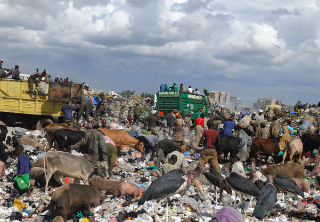
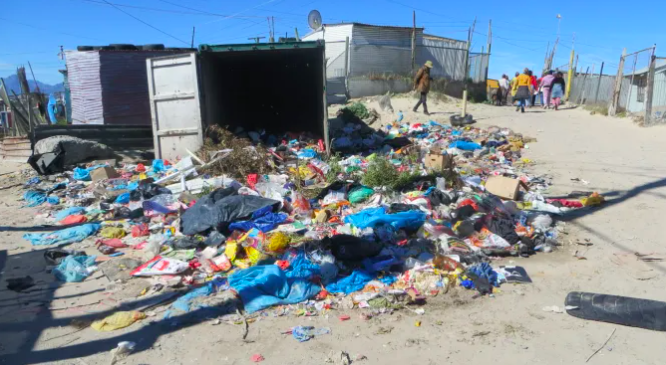
Municipal authorities are often underfunded, understaffed, and overwhelmed. Collection rates remain inconsistent, especially in low-income and informal areas, where infrastructure is limited or entirely absent. In cities like Kampala and Dar es Salaam, large portions of urban waste go uncollected, ending up in waterways, open land, or informal dumping sites (UN-Habitat, 2020).
The consequences are visible and immediate:
•Blocked drainage systems contributing to urban flooding
•Air pollution from burning waste
•Contaminated water sources
•Increased public health risks
Yet these outcomes are not just environmental; they are deeply social and economic.
Waste, in this context, reflects the limits of urban planning and governance.
The Human Reality: Living With Waste
For many residents, waste is not an abstract issue. It is part of daily life.
In informal settlements and underserved neighborhoods, waste often accumulates in close proximity to homes, schools, and markets. Without reliable collection systems, communities are left to manage it themselves, through burning, dumping, or informal recycling.
This creates a cycle where those with the least resources are disproportionately exposed to the risks of poor waste management.
But within this reality, something else is happening.
People are adapting.
Improvising.
Building systems where formal ones do not exist.
Beyond the Crisis: Waste as an Economy
While waste is often framed as a burden, it is also an economic resource.
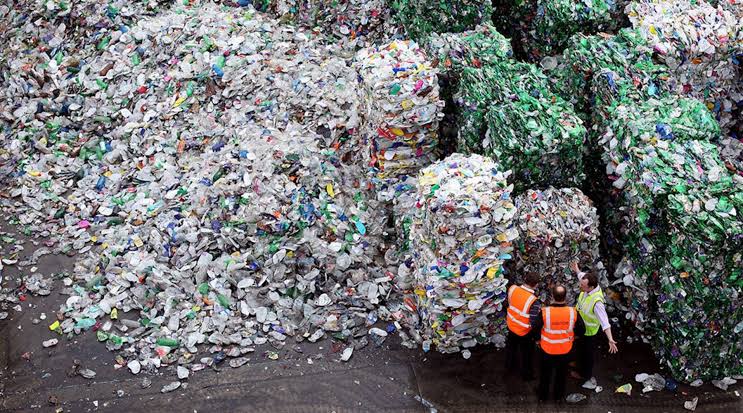
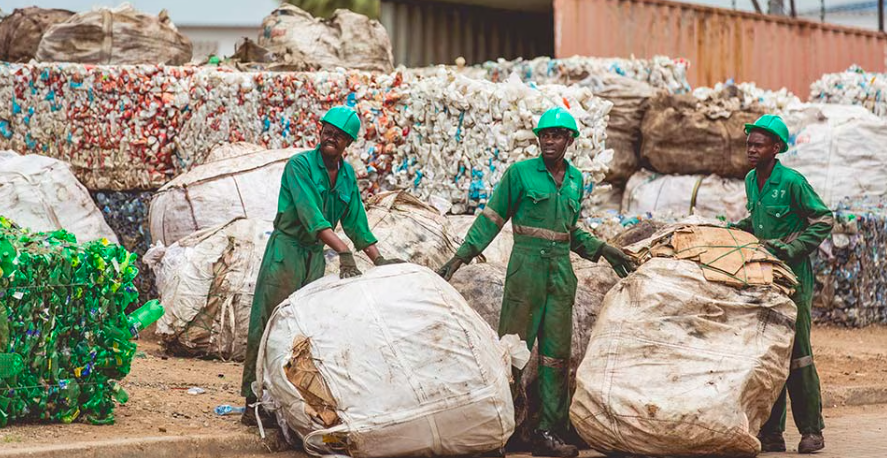
Across the continent, a growing number of individuals and enterprises are finding value in what others discard. Plastic, metal, organic waste : all of these materials can be collected, sorted, processed, and resold.
This has given rise to an informal but highly active waste economy.
Waste pickers, recyclers, and small-scale entrepreneurs are already participating in this system, often without formal recognition or support.
At the same time, a new wave of startups and private sector players is entering the space, exploring:
Recycling and upcycling businesses
Waste-to-energy solutions
Circular economy models
Digital platforms for waste collection and sorting
In cities like Lagos, entrepreneurs are building profitable ventures around waste, turning what was once seen as a liability into a source of income and innovation.
This dual reality, waste as both crisis and opportunity, is at the heart of a growing conversation.
A System at a Crossroads
Africa’s waste landscape is at a turning point.
On one side lies a continuation of current challenges: growing waste volumes, strained infrastructure, and increasing environmental and health risks.
On the other lies the possibility of transformation:
A system where waste is managed efficiently, where value is extracted sustainably, and where those already working within the sector are recognized and supported.
But this transformation is not automatic.
It requires investment.
Policy reform.
Coordination between public and private actors.
And, critically, an understanding that waste management is not just a technical issue — but a social and economic one.
Conclusion: Reframing the Narrative
Africa’s waste challenge is real.
It is visible.
And it is urgent.
But it is also incomplete.
Because within the same systems that struggle to manage waste, there are people and ideas already pointing toward a different future.
This series, Waste and Wealth: Africa’s Hidden Economy, explores that tension.
Between crisis and opportunity.
Between neglect and innovation.
Between survival and enterprise.
In the next article, we move closer to the ground, into the lives of those who are already working within this system, often invisibly.
Because before waste becomes policy or profit,
it is first handled by people.
And their story is where this conversation must begin.