
Wayne Lumbasi

The United States has deployed advanced military drones to Nigeria in a strategic move aimed at enhancing surveillance and tracking terrorist activities across the country’s conflict-prone regions. The deployment marks a deepening of security cooperation between the two nations as Nigeria continues to confront persistent threats from extremist groups operating in its northern territories.
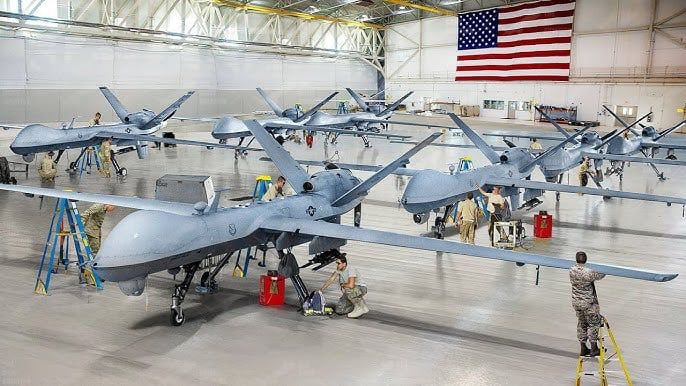
At the center of the operation are MQ-9 Reaper drones, among the most sophisticated unmanned aerial systems in modern warfare. These drones have been deployed alongside approximately 200 U.S. military personnel tasked with intelligence support, training, and operational coordination. Despite their capability to carry out precision strikes, the drones in this mission are strictly being used for surveillance and reconnaissance purposes, signaling a deliberate focus on intelligence-led counterterrorism rather than direct combat engagement.

The deployment is designed to support Nigerian security forces in identifying, monitoring, and responding to threats posed by insurgent groups such as Boko Haram and the Islamic State West Africa Province. These groups have continued to stage attacks on civilian populations, security installations, and critical infrastructure, contributing to instability in the region and raising concerns both locally and internationally.

Through the use of high-altitude, long-endurance drones, U.S. forces are able to provide real-time intelligence, covering vast and often inaccessible areas where militant groups are known to operate. The drones can remain airborne for extended periods, capturing detailed imagery and movement patterns that can be relayed instantly to Nigerian troops on the ground. This capability significantly improves situational awareness and enhances the effectiveness of military operations without exposing personnel to direct risk.

The initiative is being carried out in close collaboration with Nigerian authorities under an intelligence-sharing framework that emphasizes coordination and rapid response. A joint operational structure has reportedly been established to ensure that intelligence gathered is swiftly analyzed and acted upon. This level of cooperation reflects a growing reliance on technology and partnership-driven approaches in tackling modern security challenges.
The move comes at a time when insecurity in West Africa, particularly in the Sahel and Lake Chad Basin regions, has escalated. The resurgence of extremist violence has prompted renewed international attention, with global powers seeking to support regional efforts without becoming directly involved in ground combat.

While the United States has previously conducted targeted strikes in parts of the region, the current deployment in Nigeria underscores a shift toward a more supportive role, one that prioritizes intelligence, surveillance, and capacity building for local forces. This approach aligns with broader efforts to empower national militaries to take the lead in addressing security threats within their borders.
As Nigeria continues to grapple with evolving threats, the deployment of high-tech drones is expected to play a crucial role in strengthening its counterterrorism strategy. The partnership highlights Nigeria’s importance in regional stability and reflects a shared commitment to combating extremism through innovation, cooperation, and sustained security engagement.
RELATED: