
Faith Nyasuguta

Zimbabwe is looking skyward and outward, for partners willing to help bankroll an ambitious new leap into space.
The government has begun courting international investors to support a $200 million satellite project designed to strengthen telecommunications connectivity and expand the country’s growing space capabilities. The call for partners was announced by Finance Minister Mthuli Ncube, who said Zimbabwe is eager to collaborate with global technology and investment players to push the initiative forward.

“We are looking for partners who can support us,” Ncube said, emphasizing that improved connectivity could unlock major benefits for businesses, government services and rural communities.

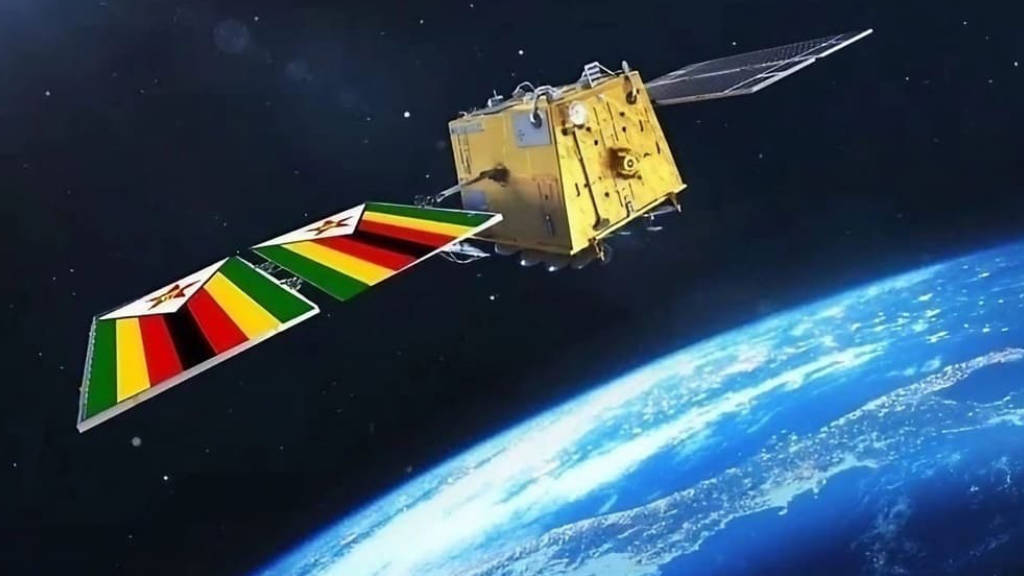
The project forms part of Zimbabwe’s broader effort to build a homegrown satellite program – one that officials say could transform sectors ranging from agriculture to mining.

Over the past few years, the southern African nation has quietly built momentum in space technology. In 2022, Zimbabwe launched its first satellite, ZimSat-1, marking the country’s entry into the global space arena. Two years later, ZimSat-2 followed, further expanding its capacity to gather Earth observation data.
Now, authorities are preparing to send ZimSat-3 into orbit later this year, continuing a fast-paced push that has surprised some observers who did not expect a country grappling with economic challenges to invest so heavily in space infrastructure.

But officials argue that satellites are not a luxury – they are strategic tools.
From the Mazowe Ground Station, ZimSat-1 already feeds critical data to scientists and policymakers. The satellite is used to monitor drought conditions, track mining activity, and gather environmental information that can guide decision-making in agriculture, climate management and natural resource planning.
Supporters of the space program say the technology could become a cornerstone of Zimbabwe’s modernization drive. By strengthening data collection and digital connectivity, the government hopes to accelerate industrial growth while improving how public institutions manage land, water and mineral resources.

Zimbabwe’s ambitions are unfolding within a wider African shift toward space technology.
Across the continent, satellites are becoming essential tools for monitoring climate change, improving telecommunications, managing disasters and supporting scientific research. Governments are increasingly investing in space infrastructure as digital economies expand.
In recent years, African governments have collectively spent around $500 million annually on space-related programs.
Several countries are leading the charge. Egypt operates one of the continent’s largest satellite fleets with about 14 satellites currently in orbit. South Africa follows with roughly 12, while Nigeria has developed a fleet of seven satellites supporting communication and Earth observation missions.
Other nations, including Morocco, Algeria and Angola, are also investing heavily in space technologies, often partnering with international agencies and private companies.
For Zimbabwe, the next phase of its space journey may depend on whether global investors are willing to buy into its vision.
If the funding materializes, the country’s satellite program could accelerate rapidly – pushing Zimbabwe deeper into Africa’s emerging space race and potentially reshaping how it gathers data, connects communities and manages its resources from orbit.
RELATED: