Faith Nyasuguta

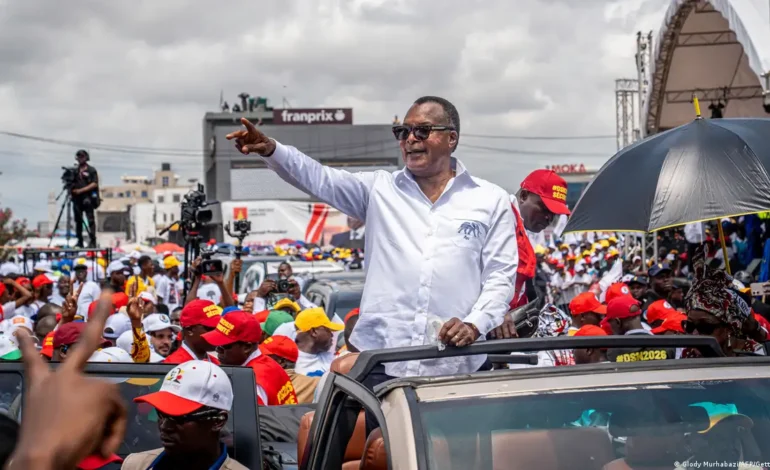
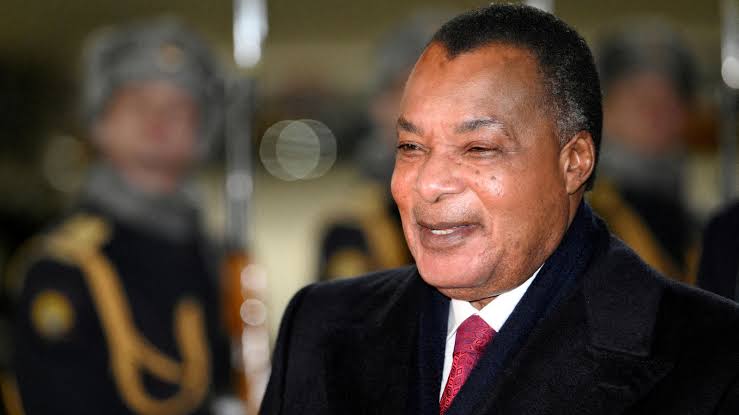
At 82, Denis Sassou Nguesso is once again the dominant figure in the presidential race in Republic of the Congo, as voters prepare to head to the polls in an election widely expected to extend his grip on power.
Sassou Nguesso, who has ruled the Central African nation for more than four decades across two separate periods, is considered the clear front-runner in Sunday’s vote. But the election is unfolding against a backdrop of political fatigue, opposition fragmentation and growing skepticism among ordinary citizens.

In the capital Brazzaville, many residents say the outcome feels predetermined.

“Honestly, I don’t see the point of voting,” said one local resident, echoing a sentiment widely shared across the city. “Whether we vote or not, the same person will win.”
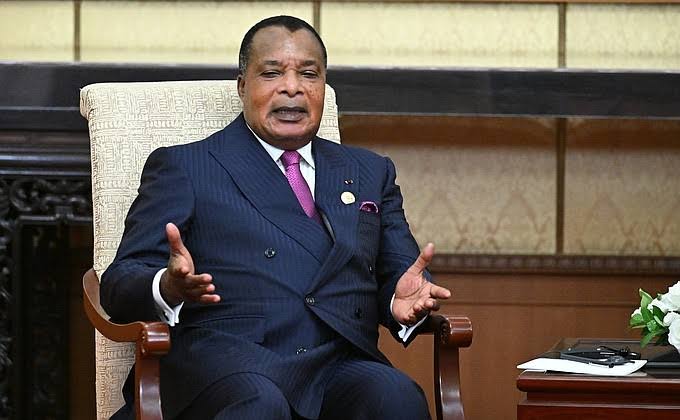
The veteran leader first came to power in 1979 as a military officer under a one-party socialist system backed by the Soviet bloc. He remained president until 1992, when he lost the country’s first multi-party election to former prime minister Pascal Lissouba.
However, Sassou Nguesso returned to power in 1997 following a civil war that ended with the overthrow of Lissouba’s government. Since then, he has remained firmly in control of the country’s political system.
Today, he stands among Africa’s longest-serving leaders, alongside figures such as Teodoro Obiang Nguema Mbasogo of Equatorial Guinea and Paul Biya of Cameroon.
Although six candidates are officially contesting the election, analysts say none possess the political machinery or resources to seriously challenge the ruling Congolese Labour Party (PCT), which has dominated the country’s political landscape for decades.
Campaign posters featuring Sassou Nguesso and the party’s red Soviet-style flags have covered streets across major cities, underscoring the ruling party’s organizational reach.
Meanwhile, several major opposition forces have chosen to stay out of the race altogether, arguing that the electoral environment does not allow for a free or transparent vote.
Opposition figure Clement Mierassa has been among the critics questioning the credibility of the process.
“Denis Sassou Nguesso controls the entire electoral process,” he said, arguing that many candidates running against the president are merely symbolic challengers rather than genuine competitors.
Two prominent opposition leaders who contested the disputed 2016 election remain in prison, serving lengthy sentences after being convicted of charges related to national security.
The political climate has raised concerns that voter turnout could fall to historically low levels, particularly among younger voters who feel disconnected from the country’s political system.
Despite its vast natural resources, the Republic of the Congo faces deep economic challenges. Oil dominates the economy, accounting for more than three-quarters of export revenues.
According to international financial institutions, roughly half of the country’s population of six million people lives below the poverty line, even as the economy recorded modest growth in recent years. Youth unemployment remains one of the country’s most pressing concerns.
In the coastal oil hub of Pointe-Noire, some young residents say they see few opportunities despite the country’s energy wealth.
Government data indicates that Congo’s proven oil reserves could last another 25 years at current production levels. Authorities are aiming to raise output to 500,000 barrels per day by 2030 while also expanding natural gas production, which reached roughly three million tonnes of liquefied natural gas last year.
Yet the broader economy remains fragile. Although the country has around 10 million hectares of arable land, only a small fraction is cultivated, leaving the nation dependent on imported food and vulnerable to fluctuations in global prices.
Beyond domestic issues, the election also reflects the country’s complex diplomatic balancing act.
Congo-Brazzaville maintains long-standing ties with France, its former colonial power and a major development partner. At the same time, the government has cultivated relations with Russia, a relationship that dates back to Cold War alliances.
During a recent campaign rally, reports emerged that Russian security personnel were present near the event venue, fueling speculation about their role in protecting key political figures. Government officials acknowledged the presence of Russian personnel but did not provide further details.
Despite speculation about succession politics, Sassou Nguesso has insisted that he does not intend to remain in office indefinitely.
“I will not stay in power forever,” the veteran leader said in a recent interview.

For now, however, the election appears poised to reinforce his long-standing dominance over the Republic of the Congo’s political landscape.
RELATED: