Faith Nyasuguta

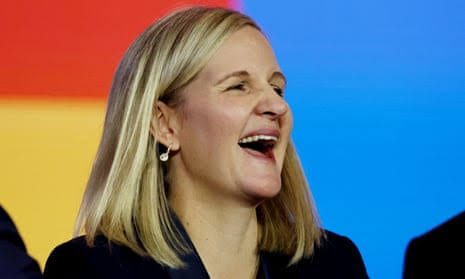
Kirsty Coventry made history on Thursday, becoming the first woman and the first African to be elected president of the International Olympic Committee (IOC), securing one of the most influential roles in global sports.
The 41-year-old Zimbabwean sports minister and two-time Olympic gold medalist won decisively in the first round, earning 49 votes from 97 IOC members , just enough for the required majority in the seven-candidate race. Coventry now embarks on an eight-year term, succeeding outgoing president Thomas Bach, whose 12-year tenure ends on June 23, Olympic Day.

In her acceptance speech, Coventry expressed gratitude and excitement, pledging to make IOC members proud of their decision. “Now we’ve got some work to do together,” she said, as she was congratulated by her competitors, including Juan Antonio Samaranch, her expected closest rival, who received 28 votes.

Coventry’s victory wasn’t just personal; it also marked a win for Bach, who had long supported her as his successor. Bach, who chose not to vote, warmly congratulated Coventry after the announcement. The election result highlighted her growing influence in the IOC since joining in 2013 and her reputation as a bridge-builder in global sports governance.

A Trailblazing Journey
Coventry’s path to the presidency has been extraordinary. She first rose to prominence as a back-to-back Olympic gold medalist in the 200-meter backstroke at the 2004 Athens Olympics and the 2008 Beijing Olympics. After her competitive swimming career, she transitioned into sports administration, eventually serving as Zimbabwe’s sports minister.
As president, Coventry faces immediate challenges. One key task will be overseeing preparations for the 2028 Los Angeles Olympics, a responsibility that may require navigating diplomatic waters with U.S. President Donald Trump. When asked about a potential White House meeting, she responded confidently: “I have been dealing with- let’s say difficult men in high positions since I was 20 years old. Communication will be key.”

Another pressing issue is finding a host for the 2036 Summer Games, with India and the Middle East emerging as strong contenders. Coventry will also steer the Olympic movement through geopolitical tensions and evolving sporting landscapes while continuing Bach’s efforts to modernize the Games.
The Road to Victory
Coventry’s win came after a tightly contested five-month campaign. Her manifesto largely aligned with Bach’s vision, promising continuity rather than sweeping changes. In contrast, some rivals pitched bold ideas. Sebastian Coe, president of World Athletics, proposed paying Olympic gold medalists and giving athletes greater control over their Olympic footage. Samaranch, an IOC vice president, promised to relax commercial rules and expand athletes’ financial opportunities.
Despite these innovative pitches, Coventry’s experience and reputation as a unifying figure won the day. “I’m really pleased that it’s an athlete at the head of the organization,” Coe said after the election. “It’s disappointing, but that’s what happens in elections.”
A Historic Moment
Coventry’s election marks a turning point in the IOC’s 131-year history. Until now, only one woman had ever run for the presidency, American Anita DeFrantz in 2001. DeFrantz, who traveled from the U.S. despite serious health issues, cast her historic vote for Coventry. Afterward, Coventry teared up, calling DeFrantz an inspiration.

For Africa, this victory is deeply symbolic. Coventry’s presidency is seen as a signal that the Olympic movement is becoming more inclusive and global. “It is a signal that we are truly global,” she said after the election.
Coventry’s leadership will be closely watched as she works to balance the Olympic ideals of unity and fairness with the political and commercial realities of modern sports. Her ability to navigate these challenges will shape not only the future of the IOC but also the global sporting landscape.
As Coventry prepares to take the reins, she does so with the backing of a diverse group of IOC members, including royals, former athletes, business leaders, and even Oscar-winning actress Michelle Yeoh, all united in the belief that she is the right person to lead the Olympic movement into its next chapter.
RELATED: