Faith Nyasuguta

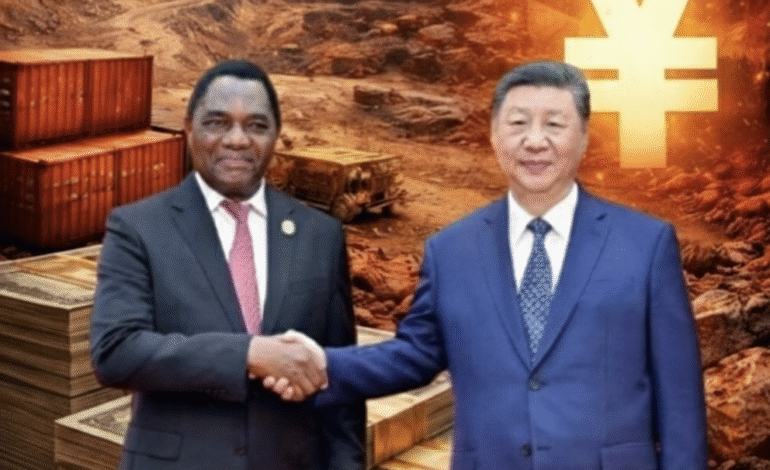
Zambia has become the first African nation to formally accept China’s yuan for mining taxes and royalties, a move that highlights Beijing’s expanding financial influence across the continent’s strategic resource sectors.
The Bank of Zambia confirmed that payments in renminbi, the official currency in China,began in October, marking a major shift in how Africa’s second-largest copper producer manages its mining revenues. Chinese-owned mining firms are now settling part of their tax obligations in yuan, reflecting the growing role of China as both Zambia’s largest copper buyer and one of its biggest creditors.

Officials said the change aligns with Zambia’s reserve-management strategy and trade realities. “A large portion of copper exports go to China, and Chinese mining firms already receive some, if not all, of their payments for exports in renminbi,” the central bank explained. Accepting yuan allows Zambia to diversify its reserves and better match them with actual trade flows.

The move also offers financial advantages, particularly in servicing debts owed to China. By holding yuan, Zambia can reduce currency conversion costs, making repayments more efficient and cost-effective. The country has faced heavy debt pressures in recent years, and this measure is expected to ease some of that strain.

Zambia’s decision reflects a growing trend across Africa as China seeks to internationalize its currency. In October, Kenya converted part of its Chinese debt into yuan, aiming to relieve pressure on its finances and potentially save $250 million annually on a $5 billion railway loan from the Export-Import Bank of China. Ethiopia is also in talks to follow a similar path.
To facilitate the change, the Bank of Zambia recently began publishing an official renminbi – kwacha exchange rate, giving mining companies the option to pay taxes in dollars or yuan. The system builds on rules introduced in 2018 and expanded in 2020, which required miners to sell foreign currency to the central bank to bolster depleted reserves during Zambia’s debt crisis.


By officially accepting the yuan for mining taxes, Zambia is not only streamlining payments for Chinese firms but also signaling a deeper financial alignment with Beijing. This showcases how China’s influence in Africa’s mining sector is now being mirrored by its growing currency footprint on the continent.
RELATED: