Faith Nyasuguta

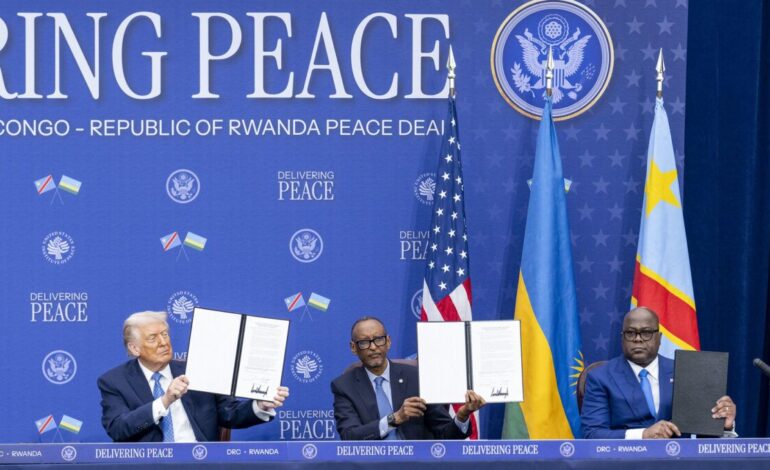
The Democratic Republic of the Congo and Rwanda have agreed to take steps toward de-escalating tensions following high-level talks held in Washington, D.C., in what marks a renewed diplomatic push to ease one of Africa’s most volatile conflicts. The discussions, facilitated by the United States, come amid growing international concern over escalating violence in eastern Congo and the risk of a broader regional confrontation.
In a joint understanding reached after the March 17–18 meetings, both sides committed to coordinated measures aimed at reducing hostilities and reviving a stalled 2025 peace agreement. The framework includes the potential disengagement of Rwandan forces from parts of eastern Congo, alongside renewed efforts by Congolese authorities to dismantle armed groups operating in the region, particularly the Democratic Forces for the Liberation of Rwanda (FDLR). Both countries also pledged to strengthen civilian protection in areas heavily affected by the conflict.

Tensions between Kinshasa and Kigali have remained high for months, largely driven by the resurgence of the M23 Movement, a rebel group that has seized strategic territory in eastern Congo. The Congolese government, supported by Western powers, has repeatedly accused Rwanda of backing the group claims that Rwanda continues to deny. The conflict is further complicated by the presence of multiple militias, longstanding ethnic divisions, and competition over the region’s vast mineral wealth, including cobalt and gold.

The United States has played an increasingly assertive role in mediating the crisis, seeking to prevent further destabilization in the Great Lakes region. Washington recently stepped up pressure on Kigali through diplomatic channels and targeted measures, signaling its frustration over the slow implementation of previous agreements. The latest talks are seen as an attempt to restore momentum to the peace process and bring both parties back to the negotiating table.

Despite the diplomatic progress, the situation on the ground remains fragile. Fighting between armed groups and Congolese forces continues in parts of North and South Kivu, with repeated ceasefire violations undermining confidence in any lasting truce. Millions of civilians have been displaced by years of violence, creating one of the world’s most severe humanitarian crises.
While the agreement reached in Washington represents a cautious step forward, significant challenges remain. Deep mistrust between the two governments, coupled with the complex network of armed groups operating in eastern Congo, continues to threaten stability. The success of this latest de-escalation effort will depend not only on political will in both capitals but also on sustained international engagement and effective implementation of agreed measures.

RELATED: