Faith Nyasuguta

The United States has turned up the heat on Kigali, slapping sanctions on the Rwandan Defence Forces and four of its top commanders over alleged support for the March 23 Movement (M23), the rebel force destabilizing eastern Congo.
The move signals growing frustration in Washington that a December peace agreement – brokered in the U.S. capital – has failed to silence the guns.

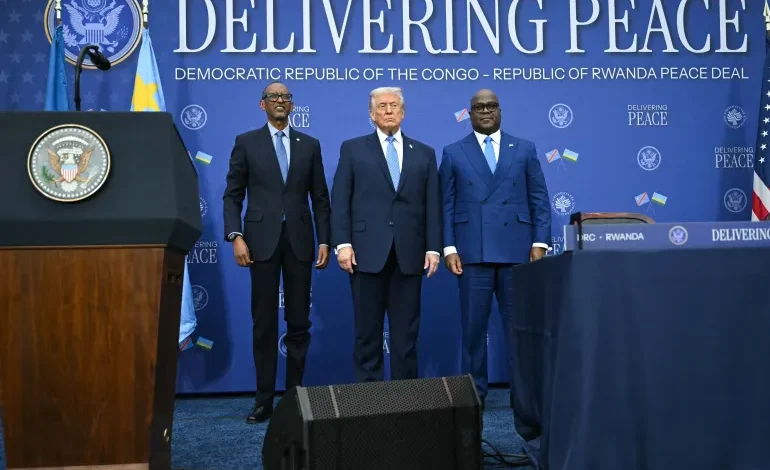
That deal, signed by Congolese President Felix Tshisekedi and Rwandan President Paul Kagame, was hailed by U.S. President Donald Trump as a breakthrough. It not only aimed to cool tensions but also opened the door for U.S. access to the region’s vast critical mineral reserves – a strategic prize in the global race for batteries and high-tech supply chains.

But on the ground in eastern Democratic Republic of Congo, peace remains elusive.
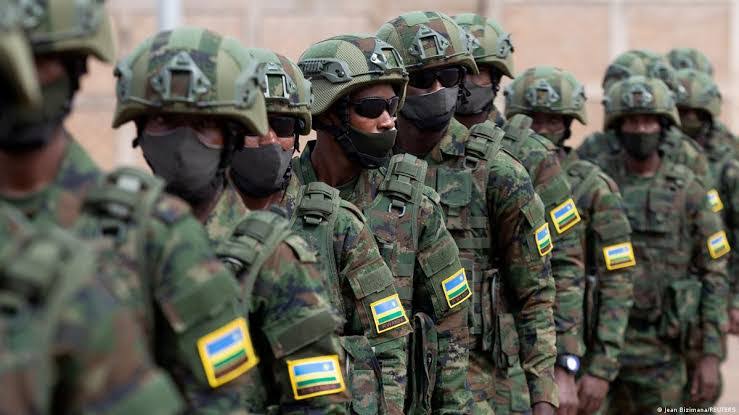
Fighting continues across multiple fronts. M23 – one of roughly 100 armed groups active in the region – has expanded dramatically in recent years, swelling from a few hundred fighters in 2021 to an estimated 6,500, according to UN assessments. The broader conflict has displaced more than seven million people, fueling one of the world’s largest humanitarian crises.
Washington, Kinshasa, and UN experts have long accused Rwanda of backing M23 with troops, weapons, and logistical support – allegations Kigali denies.

On Monday, the U.S. Treasury’s Office of Foreign Assets Control accused senior Rwandan officials of enabling M23’s battlefield gains. Those sanctioned include Rwanda’s army chief of staff Vincent Nyakarundi, Chief of Defence Staff Mubarakh Muganga, Major General Ruki Karusisi, and Special Operations Force commander Stanislas Gashugi.
Under U.S. sanctions law, any American-linked assets they hold are frozen, and U.S. persons are barred from dealing with them.
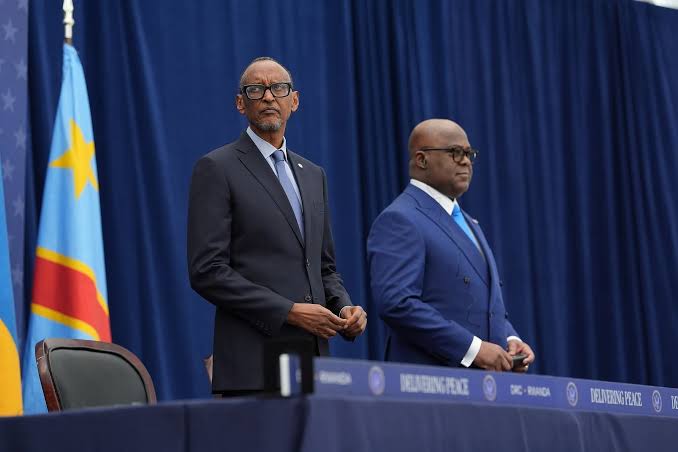
Treasury Secretary Scott Bessent made Washington’s position clear: the United States expects the “immediate withdrawal” of Rwandan troops, weapons, and equipment from Congolese territory, warning that the U.S. will use “all tools at its disposal” to enforce compliance with what has become known as the Washington Accords.
The U.S. State Department added that M23 remains responsible for grave human rights abuses, including summary executions and violence against civilians. The group has been under U.S. sanctions since 2013.
Kigali, however, pushed back sharply.
Government spokesperson Yolande Makolo has called the sanctions unjust and accused Congo of violating the peace deal through alleged indiscriminate drone strikes and ground offensives. Rwanda maintains that it faces security threats from armed groups operating along its border and denies direct command over M23.
Meanwhile, negotiations between Kinshasa and M23 continue under Qatari and U.S. mediation, but momentum appears fragile.
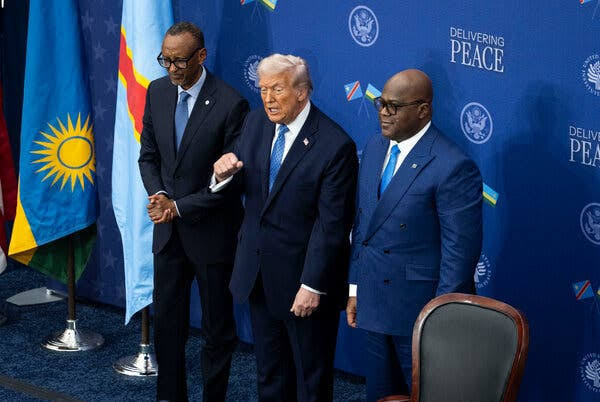
The sanctions mark a diplomatic escalation – and a reminder that mineral deals and handshake ceremonies do not automatically translate into stability on the battlefield.
Eastern Congo remains a highly volatile region. And with global powers eyeing its resources, the line between peacemaking and power politics is increasingly blurred.
RELATED: