Wayne Lumbasi

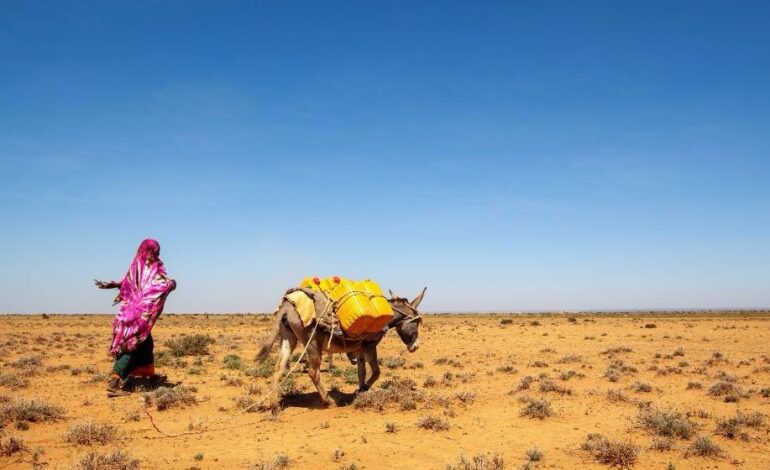
Authorities in Somaliland are seeking technical assistance from Israel to address a worsening water crisis that has left farms parched, livestock weakened and rural communities increasingly vulnerable to displacement.
After consecutive seasons of below-average rainfall, reservoirs around the capital, Hargeisa, are running low, while many rural households rely on shrinking groundwater sources and expensive trucked water deliveries. Agriculture, which remains largely rain-fed, has been hit particularly hard, threatening food security and household incomes in drought-prone regions.

Government officials say the partnership with Israel will focus on modern water management systems, desalination technology, irrigation efficiency and long-term planning frameworks designed to make better use of scarce resources. Somaliland has already begun sending water sector specialists for training programs aimed at strengthening technical capacity in areas such as wastewater recycling, leak detection and national water strategy development.

Israel is widely recognised for its advanced water technologies, having transformed itself from a water-scarce nation into a global leader in desalination and water recycling. Nearly all of its wastewater is treated and reused, primarily for agriculture, and desalination plants now supply a significant portion of its domestic drinking water. Somaliland officials believe similar approaches, adapted to local conditions, could help stabilise supply and reduce vulnerability to erratic rainfall.
Cooperation is expected to include knowledge exchange through Israel’s international development agency, MASHAV, as well as feasibility studies for potential infrastructure projects. Discussions have centred on small-scale desalination facilities for coastal communities, modern irrigation systems to reduce agricultural water loss, and improved data systems to monitor groundwater reserves.
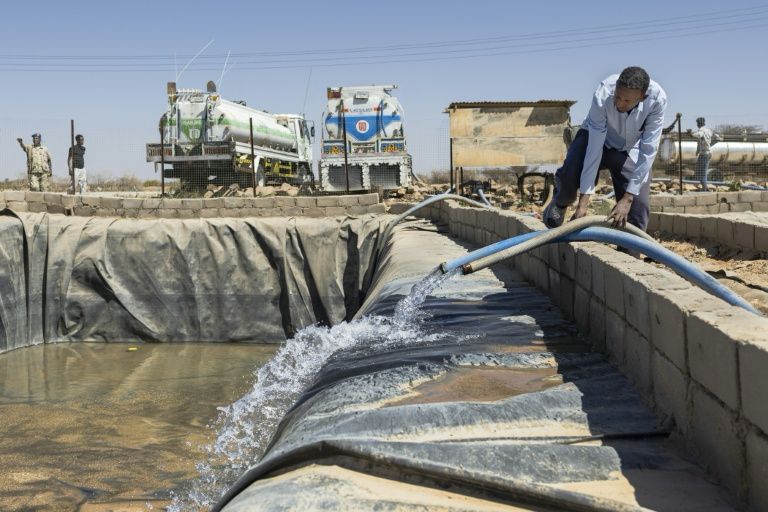
The water initiative follows a diplomatic shift that has strengthened ties between the two sides. In late 2025, Israel formally recognised Somaliland, a move that expanded avenues for bilateral cooperation across sectors including agriculture, health and infrastructure. While the recognition has drawn criticism from Somalia and some regional actors, Somaliland’s leadership has framed the water partnership as a humanitarian and development-driven effort.
Local farmers and business owners have expressed cautious optimism. Many say practical solutions rather than political symbolism will determine the success of the relationship. “We need sustainable water systems more than anything,” said a farmer near Hargeisa whose crops have withered due to lack of rainfall. “If technology can help us grow food again, that is what matters.”
Climate variability across the Horn of Africa has intensified over the past decade, with longer dry spells and unpredictable rainy seasons. Experts warn that without structural investment in water infrastructure, drought cycles will continue to undermine economic stability and increase humanitarian pressure.
For Somaliland, the outreach to Israel represents both necessity and strategy: a bid to secure technical expertise capable of transforming its fragile water systems into a more resilient foundation for growth.
RELATED: