
Wayne Lumbasi

A controversial refugee pathway that brought South African Afrikaners to the United States is drawing renewed attention after investigative reporting revealed that some of the families who relocated are struggling to meet basic needs months after arrival.
The programme, introduced under US president Donald Trump, prioritized applications from white South Africans of Afrikaner heritage, arguing they faced discrimination at home. The move triggered international debate, particularly from South Africa, whose government rejected the premise that Afrikaners are subject to state persecution. President Cyril Ramaphosa criticized the refugee classification, saying social and economic challenges affect many communities and should not be framed as targeted ethnic oppression.

Despite the diplomatic tension, Afrikaner families began arriving in the United States in mid-2025 after being granted legal refugee status, work authorization and short-term resettlement assistance. For many, the relocation was presented as an opportunity for safety and stability.

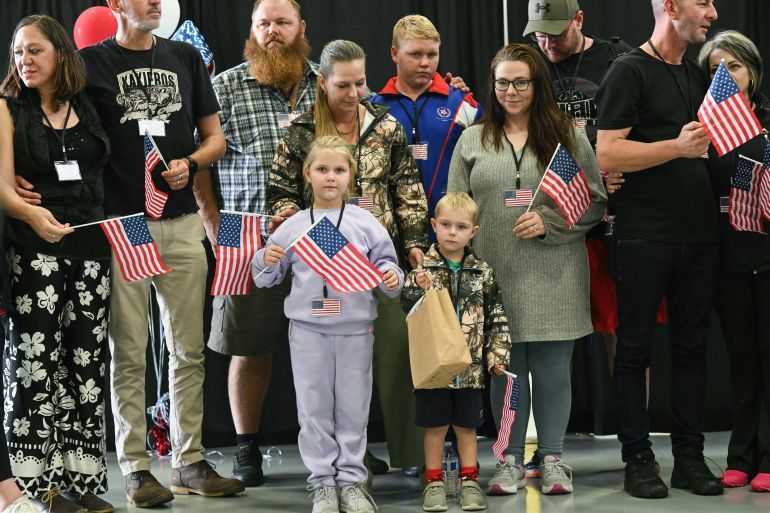
However, recent investigations suggest the transition has been more difficult than anticipated for a portion of those arrivals.

Families interviewed in multiple reports describe being placed in low-cost apartments or temporary accommodation that they say are overcrowded or poorly maintained. With rents consuming much of their initial stipends reportedly around $2,000 per person newcomers say they are left stretching limited funds to cover food, transport and essential living expenses. Some have reported skipping meals while searching for employment.
Employment prospects have varied. While several arrivals have secured entry-level work and begun integrating into local communities, others say their professional qualifications do not easily translate into the US labor market. Without savings or established support networks, the adjustment period can be financially punishing, particularly in cities with high living costs.

Resettlement agencies note that assistance programmes are designed to provide short-term support rather than long-term financial security. Housing shortages and rising costs have affected refugee placements broadly, not only those involving Afrikaner arrivals. Analysts say the situation highlights structural pressures within the US refugee system, where newcomers are expected to achieve self-sufficiency quickly.
The result is a mixed picture. Some Afrikaner families report steady progress as they adapt to their new environment, while others describe a daily struggle to maintain housing and food security. As debate over the programme continues, their experiences indicate the gap that can emerge between immigration policy promises and the realities of rebuilding a life in an unfamiliar country.
RELATED: