Wayne Lumbasi

Large-scale protests have erupted in parts of South Africa as demonstrators demand tougher border security measures and the deportation of undocumented migrants. The demonstrations, led by civic movements and supported by some political groups, reflect rising public frustration over immigration management, unemployment and pressure on public services.
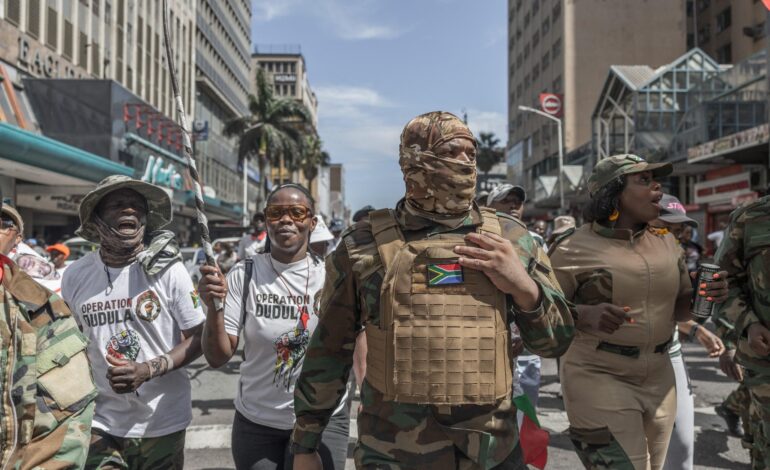
The protest movement has been driven in part by the anti-immigration campaign group Operation Dudula, which has gained attention in recent years for organizing community actions against undocumented foreign nationals. Activists argue that weak immigration enforcement has allowed illegal migration to grow, placing additional strain on local communities already grappling with economic challenges.

Protesters marched through the streets carrying placards and chanting slogans calling on the government to tighten border controls and implement stricter immigration laws. Many demanded that undocumented migrants be arrested and deported, claiming that the presence of illegal foreign nationals contributes to crime, job competition and overcrowded public services.

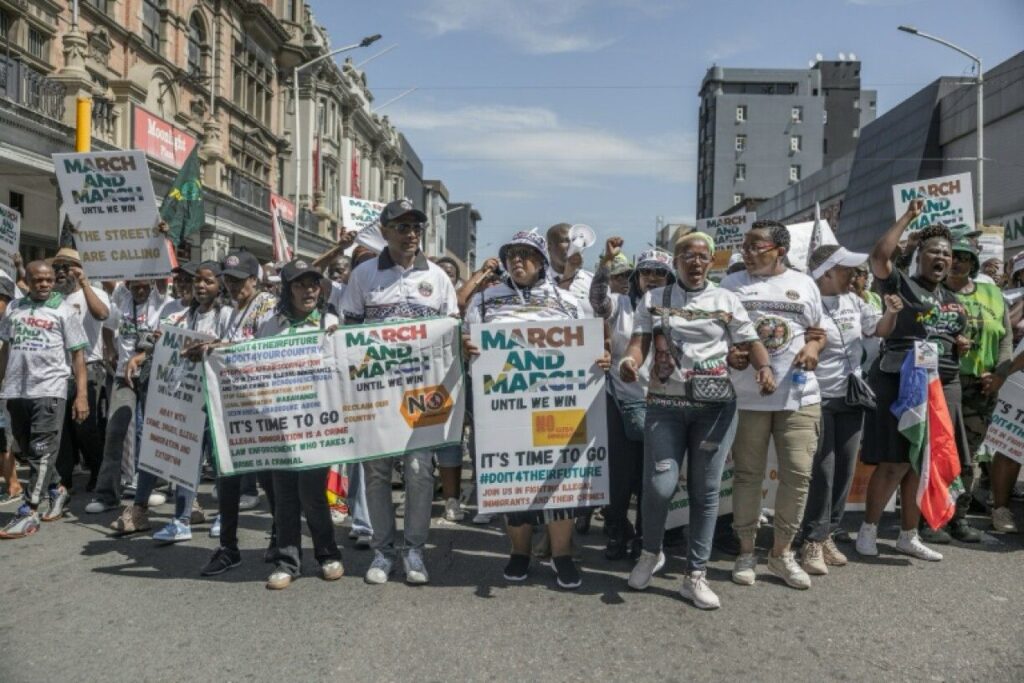
Several political figures and organizations also expressed support for the demonstrations, including members of the opposition party ActionSA. Supporters of the protests argue that the government must urgently reform the immigration system and improve border security to address what they describe as an uncontrolled influx of migrants.

South Africa has long been a major destination for migrants from neighboring countries seeking employment and better economic opportunities. Many migrants come from countries such as Zimbabwe, Mozambique and the Democratic Republic of the Congo, often crossing borders in search of work or safety from economic and political instability in their home countries.
However, the issue of immigration has become increasingly politicized amid South Africa’s persistent economic challenges. The country faces one of the highest unemployment rates in the world, with millions of citizens struggling to find work. Critics of undocumented migration argue that foreign workers often accept lower wages, which they believe undermines employment opportunities for local residents.

During the demonstrations, protest organizers submitted memorandums to government officials, including the Department of Home Affairs (South Africa), outlining demands for stronger enforcement of immigration laws, improved border surveillance and a crackdown on corruption within the immigration system.
Human rights organizations have warned that anti-immigrant protests risk fueling xenophobia and discrimination against foreign nationals living in the country. They have urged the government to address public concerns about immigration while also protecting the rights and safety of migrants and refugees.
The protests highlight the growing debate within South Africa over immigration policy, economic inequality and national security. As public pressure mounts, the government faces increasing calls to reform immigration laws while balancing humanitarian obligations and regional migration dynamics.
RELATED: