Faith Nyasuguta

The East African Crude Oil Pipeline (EACOP), one of the region’s most ambitious infrastructure projects, is steadily nearing completion, with officials confirming that construction is on track to deliver first crude oil exports by October. The milestone is expected to mark a turning point for Uganda’s long-awaited oil industry and significantly strengthen Tanzania’s position as a key regional energy transit hub.
Spanning approximately 1,443 kilometres, the pipeline runs from the oil fields of Hoima in western Uganda to the Chongoleani Peninsula near Tanga on Tanzania’s Indian Ocean coast. Once operational, EACOP will be the longest heated crude oil pipeline in the world, specifically designed to transport Uganda’s waxy crude by maintaining it at high temperatures throughout the journey to the export terminal.

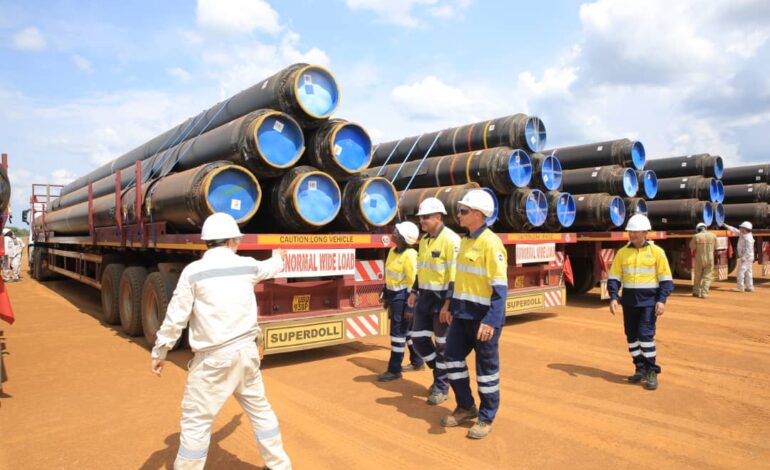
Project authorities report that construction has entered its final and most intensive phase, with the majority of the pipeline already welded, insulated, and buried along the route. Supporting infrastructure, including pumping stations, electrical and fibre-optic systems, access roads, and the marine export terminal at Tanga, is also advancing in parallel. Technical commissioning is expected later this year, ahead of the planned first oil shipment in October.


The project is being developed by the East African Crude Oil Pipeline Company, whose shareholders include TotalEnergies, the Uganda National Oil Company and the Tanzania Petroleum Development Corporation. Governments in both Uganda and Tanzania have repeatedly reaffirmed their commitment to the pipeline, describing it as a strategic investment that will unlock Uganda’s oil reserves while delivering long-term economic benefits to both countries.

Once fully operational, EACOP is expected to transport up to 230,000 barrels of crude oil per day, linking Uganda’s upstream oil developments to international markets. Supporters say the pipeline will generate thousands of direct and indirect jobs, stimulate local businesses along the corridor, and contribute billions of dollars in revenues over its lifespan. Local participation has been emphasised throughout construction, with a significant share of the workforce drawn from communities along the route.
However, the project has not been without controversy. Environmental and human rights groups have raised concerns about potential ecological risks, land acquisition, and the displacement of communities. There has also been sustained criticism from climate activists who argue that new fossil fuel infrastructure contradicts global efforts to curb carbon emissions. Project developers and governments have countered these claims by pointing to environmental mitigation measures, compensation programmes, and the role of oil revenues in supporting economic development and energy transitions.


Despite earlier financing hurdles and global scrutiny, the pipeline has remained on schedule, a development officials describe as a testament to strong political backing and coordinated regional cooperation. As the final construction works continue, attention is now turning to operational readiness, export logistics, and global market conditions ahead of first oil.
With October drawing closer, the East African Crude Oil Pipeline stands poised to usher Uganda into the league of oil-exporting nations and redefine energy trade dynamics in the region, even as debates over its long-term environmental and social impact continue.
RELATED: